

Two years on from the first COVID case, New Zealand's successful pandemic response still faces major challenges
- Written by: Michael Baker, Professor of Public Health, University of Otago
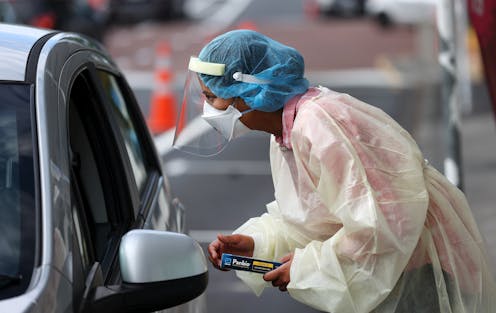
Two years ago today, the first confirmed case of COVID-19 was reported in Aotearoa New Zealand. Few of us could have imagined the huge impact this pandemic would still be having two years later.
As New Zealand enters its third year of the pandemic, we are facing widespread community transmission as an epidemic wave of the Omicron variant sweeps across the country. A majority of New Zealanders may become infected in coming months, but many with few or no symptoms.
Australian experience suggests we might see a peak of around 1,100 people with COVID-19 in hospitals during March and April.
We have previously written about the challenges apparent after six months and one year of the pandemic. Today, we examine what we’ve learned — the major challenges that have persisted or emerged and how New Zealand can manage them to achieve the best possible outcomes.
Shifting strategies
New Zealand has demonstrated the benefits of a science-informed response with a strong strategic focus. During the first year of the pandemic when there were no vaccines available, the elimination strategy protected people and the economy.
Following the emergence of the Delta variant, tight suppression was also highly effective. Now, with the growing surge driven by the Omicron variant, New Zealand has been forced to shift to a mitigation strategy.
New Zealand’s strategic approach has supported the country in achieving some of the world’s lowest COVID-19 mortality rates and increased life expectancy. New Zealand has also had a relatively small amount of time in lockdown and comparatively good economic performance.
To achieve these successes, New Zealand has had to deliver major public health interventions very rapidly and their limitations have become apparent over time.
Border quarantine is difficult to maintain if not done well and creates severe consequences for some. The vaccine rollout has been highly inequitable. Mandates for vaccine and mask use have been divisive and sometimes vigorously opposed by a vocal minority.
Challenges and opportunities ahead
The experience of the last two years highlights five major opportunities to enhance New Zealand’s pandemic response and achieve lasting benefits for our ability to manage other major public health threats.
1. Taking a precautionary approach in the face of uncertainty
Possibly the biggest challenge has been the changing nature of the pandemic threat itself. The virus continues to evolve and new variants of concern with increased infectiousness have emerged. We do not know whether future variants will be more or less virulent.
Omicron shows a high capacity for reinfection which will need to be managed if this variant remains dominant. Optimistically, we may see the end of the pandemic though not the end of COVID-19. The full population impact of post-acute illness (long COVID) is not yet known and evidence about prevention and management is still at an early stage.
2. Enhancing equity and better protecting the most vulnerable
The move to mitigation (from elimination and suppression) shifts protection away from the collective, population-level focus to individual measures like vaccination, mask use and self-isolation.
Despite a strongly stated commitment to equity, Māori and Pasifika have lower vaccine and booster coverage rates. They are also over-represented among COVID-19 cases and hospitalisations.
Mitigation aims to flatten the epidemic curve to protect the healthcare system from being overwhelmed. During such periods, there is potential for the most vulnerable (people who are Māori, Pasifika, low-income, living with other illnesses and disabilities) to miss out on care.
There are multiple ways of improving equity in the response. These include greater support for Māori and Pasifika health providers, further efforts to raise vaccine coverage for Māori in particular, policies to support sick workers staying at home and a national mask strategy that makes effective masks freely available.
We also need a stronger focus on protecting children’s health and well-being, including a pivot to a whānau-centred approach and efforts to reduce transmission in schools and early childhood education.
3. Improving communication, policy responsiveness and trust
Pandemics are different from other public health emergencies because the behaviour of individuals directly affects the level of risk for the wider population. Inevitably, after two years, the response has become more contested and social cohesion has weakened. Some of this shift appears fuelled by the global pandemic of disinformation.
The New Zealand government can enhance public trust by showing that the response is risk-based, for example by phasing out travel restrictions and border isolation requirements now that Omicron infection is widespread. Some mandates are needed for critical public health interventions but require continuing review to ensure they are proportionate.
Trust and social cohesion will also be improved by maximising transparency around the pandemic response, with clear statements about the rationale and level of risk, supported with evidence and local surveillance data presented in meaningful ways. We also need specific strategies to reduce misinformation and disinformation on social media.
4. Improving evidence-informed leadership and adaptability
While New Zealand’s science-informed strategic response has been generally successful, it has at times been reactive rather than proactive in rapidly adapting to changes in the pandemic. We need better mechanisms, such as the multi-party epidemic response committee of parliamentarians, and advisory processes that ensure high-level science input into the all-of-government response. This could include the formation of a COVID-19 science council/rōpu.
Other measures include a well-resourced research strategy to provide high-quality scientific evidence and an official inquiry to assess the pandemic response and drive wider system improvements.
5. Investing in public health infrastructure
The current health sector reforms are an opportunity to establish essential infrastructure, including a Public Health Agency and Māori Health Authority.
Investment in the national immunisation register may help with reversing the recent decline in childhood immunisations. The pandemic also demonstrates that clean indoor air is as essential to health as clean drinking water.
We should learn from other countries that have also delivered effective responses. Taiwan is an example we have previously documented.
In summary, New Zealand is well placed to navigate the pandemic and the Omicron wave successfully. As we enter our third pandemic year, we can improve the effectiveness of our response by maintaining a precautionary approach in the face of uncertainty. We also need to improve equity, communication and trust, and evidence-informed leadership, as well as investing in public health infrastructure.
These improvements will provide legacy benefits that prepare us well for other public health challenges we face.
Authors: Michael Baker, Professor of Public Health, University of Otago


















