

Japanese encephalitis virus has been detected in Australian pigs. Can mozzies now spread it to humans?
- Written by Cameron Webb, Clinical Associate Professor and Principal Hospital Scientist, University of Sydney
With our summer dominated by wet weather and booming mosquito populations, health authorities have been alert to the threat of mosquito-borne disease.
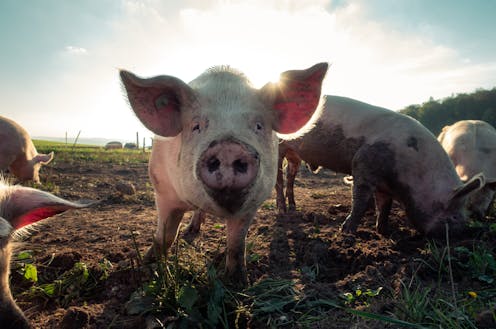
One such disease is Japanese encephalitis virus, which has been detected for the first time in southeastern Australia. It has been found in pigs at pig farms in Victoria, New South Wales and Queensland, indicating the virus is likely circulating in the local mosquito populations, which could infect humans.
Ongoing rain and flooding ensures suitable conditions for mosquitoes will persist well into Autumn.
What is Japanese encephalitis virus?
Japanese encephalitis virus is part of the flavivirus family, closely related to West Nile, Zika, Murray Valley encephalitis, dengue and yellow fever.
An estimated 68,000 cases of encephalitis occur annually across Southeast Asia and Western Pacific regions.
The virus is maintained in a cycle between mosquitoes and waterbirds. Pigs are also an important host, especially where pigs, mosquitoes, waterbirds, and water bodies all occur together.
Outbreaks are more likely to occur during the wet season.
Read more: La Niña will give us a wet summer. That's great weather for mozzies
How serious is Japanese encephalitis?
Most infected people have mild illness or no symptoms at all. Symptoms of fever, joint pain, and rash are common but severe cases also experience headache, neck stiffness, confusion, seizures, and sometimes coma and death.
Less than 1% of those infected will develop a severe brain infection, encephalitis, which may be fatal.
The disease is particularly problematic in children, with survivors often left with significant brain injuries.
To confirm infection, cerebrospinal fluid (that surrounds the brain and spinal cord) and blood are tested by specialised public health laboratory.
Why has Japanese encephalitis virus appeared in Australia?
Outbreaks of Japanese encephalitis virus have occurred in countries neighbouring Australia’s north, including Papua New Guinea and Indonesia.
Concern has often been raised about the potential introduction and spread of the virus onto the Australian mainland, given the high populations of mosquitoes, wild pigs and waterbirds in the north.
During outbreaks of Japanese encephalitis virus in Torres Strait during the 1990s, the virus even spread to the Cape York Peninsula. But the virus didn’t take hold and the last definitive evidence of activity on the mainland was in 2004.
Now the virus is back. A new incursion occurred in early 2021, when a human case was diagnosed in the Northern Territory.
Now there is evidence of Japanese encephalitis virus in pigs in multiple pig farms in New South Wales, Victoria and Queensland. And there is a risk of transmission to humans.
How did the virus make its way south?
Investigations are underway to work out how much virus is in the region and assess the ongoing risk to human and animal health. But we will never definitively know how (or when) the virus managed to move south.
It could be linked to overlapping transmission cycles fuelled by favourable weather conditions that bring water to flood plains, wetlands, and other habitats shared by mosquitoes and waterbirds. Or it could be due to migration of infected birds or mosquitoes.
There is little doubt the La Nina-dominated weather patterns that impacted southeastern Australia over the past two years played a role.
The spread of mosquito-borne viruses, such as Murray Valley encephalitis virus, from northern Australia to southeastern Australia has been documented before. We just never expected Japanese encephalitis virus to take this pathway too.
How can you avoid catching Japanese encephalitis virus?
A vaccine is available to protect against Japanese encephalitis virus. This has been demonstrated as an effective way to prevent disease outbreaks.
Some Australians have been vaccinated but it hasn’t been a routine part of international travel, even to countries where the risk is high.
Consideration could be given to vaccinating at-risk groups in Australia.
Reducing further transmission of the virus to people will rely on the use of insecticides around high-risk locations, such as piggeries where infections have been identified, and the use of personal protection measures against mosquito bites.
Fortunately, the steps we routinely take to avoid mosquitoes bites during the Australian summer will work just as well against the mosquitoes likely to be carrying the virus. People just need to be more vigilant to protect themselves and family against mosquito bites.
Read more: Mozzies biting? Here's how to choose a repellent (and how to use it for the best protection)
Health authorities are recommending a number of steps to avoid mosquito bites. Minimimse time outdoors when mosquitoes are most active, especially dawn and dusk. Wear a long sleeved shirt, long pants and covered shoes. Apply a topical insect repellent containing Diethyltolumide, picaridin, or oil of lemon eucalyptus.
The weather has clearly contributed to this outbreak but it may also assist ending it. The onset of cooler weather in autumn will slow mosquito population growth and once winter arrives, most of the mosquitoes across southern regions of Australia will disappear. At least for a few months.
Authors: Cameron Webb, Clinical Associate Professor and Principal Hospital Scientist, University of Sydney

















