

New research asked government insiders how to fix gender discrimination in Australia
- Written by Yolanda Vega, Lecturer and PhD Researcher, Swinburne University of Technology
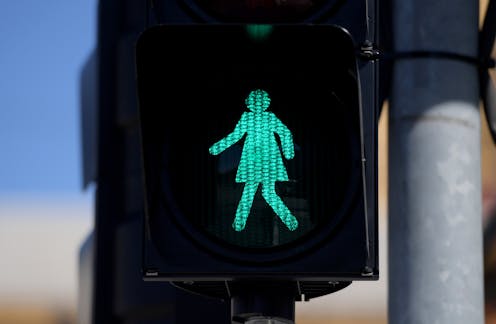
We are about to mark another International Women’s Day.
But amid the breakfasts and uplifting speeches about girl power, we will also be reminded of the appalling rates of violence against women, the stubborn gender pay gap and pervasive sexism that is seemingly entrenched in our society. An imbalance remains: women do the vast bulk of unpaid work at home while men make the bulk of the laws and policies that affect us all.
Nothing seems to change - or change fast enough. But there are concrete things we can do to fix it. New research offers practical ideas to fix gender inequality in Australia from those at the very centre of federal government policy-making.
Talking direct to experts
As part of her PhD research, Yolanda Vega interviewed past and present MPs, senior bureaucrats, diplomats and political and public service advisers during 2018 and 2019. They were asked what works and what we need to do to eliminate sex-based discrimination in Australia.
In all, 25 interviews were conducted, and all were people who had direct experience of government policy-making and legislating around sex-based discrimination. Both sides of politics were involved and responses were kept anonymous so people could speak freely.
More women in power
Interviewees overwhelmingly believed we needed more women in the federal parliament to create a more equitable Australia (currently, 31% of lower house MPs and 52% of the Senate are women).
As one noted:
Australia has had an enviable track record of 27 years of economic growth, the best in the world, yet various cohorts of women have fared so badly, particularly over the last 20 years.
They pointed to other parliaments as evidence of the benefits of more women in power, such as Scandinavian parliaments with higher proportions of female MPs, where they have “very pro-women” policies.
As a way to address this, one interviewee suggested increasing the number of women in parliament using the “Irish model”, which uses financial incentives.
Every primary vote I received, at each election, returned to my party about A$3.00 per vote, paid from government revenue. In Ireland, which has the same system, a party can only access those payments if they have put up equal numbers of women. I think that is a great idea and would help drive change.
Others noted the importance of women being visible across the political spectrum – out proudly telling their stories.
People who go and talk about the importance of the rights of women [are] described by certain politicians as being ‘representatives of the green-left’ as if there is some political agenda involved in being in favour of women’s rights, which is really damaging.
More men prioritising equality
Interviewees also overwhelmingly wanted to see more male leaders within government prioritise gender equality. They said men needed to be encouraged to challenge the status quo and examine whether policy decisions (or a lack thereof) are based on prejudices and how these, in turn, affect women.
Read more: Hold the celebrations — the budget's supposed focus on women is no game-changer
Interviewees lamented that the attitude of male leaders has not changed over time. One structured way to ensure gender equality is incorporated into policy-making is to make it part of every aspect of the federal budget (and not just as a separate “women’s budget statement”).
What is the best way of doing macroeconomic reform that does not disadvantage women? […] What do investment strategies look like that are positive for women?
Another interviewee put it simply: “every policy needs to look at how it affects women”. This approach should be reinforced with measurements of success. As one person noted, “transparency” was needed if new policies were going to have a positive impact on women.
Another interviewees agreed, adding key performance indicators “have to be put in the job description”.
you have to have someone say, ‘I am going to measure your performance […] on this topic, off you trot!‘
Keeping the pressure on
Interviewees also wanted to see Australia take a cold, hard look at some of the infrastructure “upholding” gender equality.
The 1984 Sex Discrimination Act was a watershed moment for Australian law and women’s equality (a reform that was not coincidentally, led by women).
A 1992 review added elements to stop employers using pregnancy as a means of discriminating against women - but that was 30 years ago. Or as one interviewee said, “those legislative frameworks served us well, but they are not finished yet”.
As a starting point, it was noted there are no provisions for childcare in the Sex Discrimination Act. But interviewees also wanted to see other critical examinations of Australia’s legal and policy landscape.
Several interviewees said Australia’s award system further ingrained sex discrimination and as a legislative instrument, the Fair Work Act often functioned as a barrier. For example:
In my mind, that is where a lot of the economic disadvantage comes from – the award wage for a childcare worker versus a basic builder’s labourer are not equal. Some of them [awards] have been around and not amended for decades and decades and decades […].
Another interviewee said far more transparency when it came to pay negotiations - but this would be easy to fix if the federal government had the “political courage”.
A lot of it comes down to the fact that pay is negotiated behind closed doors and there is no visibility of what you are paid, and if you are not prepared to shine a light on it, then you are going to struggle to get there.
One expert had an even more striking idea, for a royal commission into the issue, or “what the hell is going on?”:
We will have an inquiry into our banks, but surely the bigger issue is what is happening every day in workplaces across Australia, where women are being paid differently, just because of their sex.
The benefits of equality
These are just some of the perspectives these experts at the heart of Australian government shared. Despite the serious nature of the discussions, the overriding theme was one of possibility and optimism with future governments. However, accountability, incentives and resources to include women in policy making are critical.
As a final thought, informants also spoke of the need to reframe the gender equality debate in more positive terms. And this needs to come not just from politicians, but the media and other community leaders, too:
I would turn the debate around. I would not be working for the elimination of discrimination against women in Australia or the elimination of barriers to equality, I would be celebrating the benefits of equality.
Authors: Yolanda Vega, Lecturer and PhD Researcher, Swinburne University of Technology

















