

native mammals are disappearing in Northern Australia, but few people are watching
- Written by Noel D Preece, Adjunct Asssociate Professor, James Cook University
At the time Australia was colonised by Europeans, an estimated 180 mammal species lived in the continent’s northern savannas. The landscape teemed with animals, from microbats to rock-wallabies and northern quolls. Many of these mammals were found nowhere else on Earth.
An unidentified account from the Normanton district of Northwest Queensland, dating back to 1897, told of the abundance:
“There were thousands of millions of those rats (Rattus villosissimus), and as most Gulf identities may remember, after them came a plague of native cats (the Northern Quoll).
These extended from 18 miles west of the Flinders (River) to within 40 miles of Normanton, and they cleaned up all our tucker.”
But tragically, in the years since, many of these mammals have disappeared. Four species have become extinct and nine face the same fate in the next two decades.
And we know relatively little about this homegrown crisis. Monitoring of these species has been lacking for many decades – and as mammal numbers have declined, the knowledge gaps have become worse.
A precipitous decline
Northern Australia savanna comprises the top half of Queensland and the Northern Territory and the top quarter of Western Australia. It covers 1.9 million square kilometres, or 26% of the Australian landmass.
Species already extinct in Northern Australia are:
- burrowing bettong
- Victoria River district nabarlek (possibly extinct)
- Capricornian rabbit-rat
- Bramble Cay melomys.
The Northern Australia species identified at risk of becoming extinct within 20 years are:
- northern hopping-mouse
- Carpentarian rock-rat
- black-footed tree rat (Kimberley and Top End)
- Top End nabarlek
- Kimberley brush-tailed phascogale
- brush-tailed rabbit-rat (Kimberley and Top End)
- northern brush-tailed phascogale
- Tiwi Islands brush-tail rabbit-rat
- northern bettong.
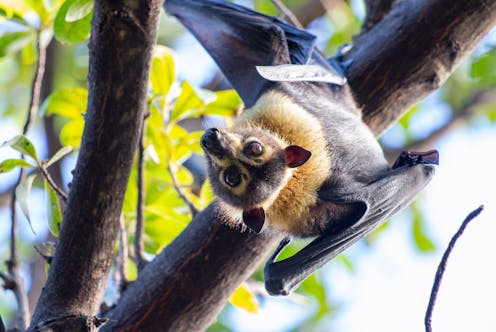
Many other mammal species have been added to the endangered list in recent years, including koalas, the northern spotted-tailed quoll and spectacled flying foxes.
So what’s driving the decline? For some animals, we don’t know the exact reasons. But for others they include global warming, pest species, changed fire regimes, grazing by introduced herbivores and diseases.
Monitoring is crucial
There’s no doubt some mammal species in Northern Australia are heading towards extinction. But information is limited because monitoring of these populations and their ecosystems is severely lacking.
Monitoring is crucial to species conservation. It enables scientists to protect an animal’s habitat, and understand the rate of decline and what processes are driving it.
Our research found most of Northern Australia lacks monitoring of species or ecosystems.
Monitoring mostly comprises long-term projects in three national parks in the Northern Territory. The trends for mammals across the region must be estimated from these few sites.
More recent monitoring sites have been established in Western Australia’s Kimberley. Very few fauna monitoring programs exist in Queensland savannas.
The lack of monitoring hampers conservation efforts. For example, researchers don’t know the status of the Queensland subspecies of black‐footed tree‐rat because the species is not monitored at all.
Research and monitoring efforts have declined significantly over the past couple of decades. Reasons for this include, but are not limited to:
a massive reduction in federal environment funding since 2013 and substantial reductions in some state and territory environment funding
reduced capacity of government-unded institutions devoted to ecosystem and species research
the existence of only two universities in northern Australia with an ecological research focus
a reliance on remote sensing and vegetation condition monitoring, which does not detect animal trends.
The lesson of the Bramble Cay Melomys
An avalanche of research shows increasing rates of decline in animal populations and extinctions. Australia has the worst mammal extinction rate of any country.
Yet governments in Australia have largely sat on their heels as the biodiversity crisis worsens.
A Senate committee was in 2018 charged with investigating Australia’s faunal extinctions. It has not yet produced its final report.
In September last year, the federal environment department announced 100 “priority species” would be selected to help focus recovery actions. But more than 1,800 species are listed as threatened in Australia. Prioritising just 100 is unlikely to help the rest.
The lack of threatened species monitoring in Australia creates a policy blindfold that prevents actions vital to preventing extinctions.
Nowhere is this more true than in the case of the Bramble Cay Melomys. The nocturnal rodent was confirmed extinct in 2016 due to flooding of its island home in the Torres Strait, caused by global warming.
The species had previously been acknowledged as one of the rarest mammals on Earth – yet a plan to recover its numbers was never properly implemented.
A crisis on our watch
Conservation scientists and recovery teams are working across Northern Australia to help species and ecosystems recover. But they need resources, policies and long-term commitment from governments.
Indigenous custodians who work on the land can provide significant skills and resources to save species. If Traditional Owners could combine forces with non‐Indigenous researchers and conservation managers – and with adequate support and incentives – we could make substantial ground.
Indigenous Protected Areas, national parks and private conservation areas provide some protection, but this network needs expansion.
We propose establishing a network of monitoring sites by prioritising particular bioregions – large, geographically distinct areas of land with common characteristics.
Building a network of monitoring sites would not just help prevent extinctions, it would also support livelihoods in remote Northern Australia.
Policies determining research and monitoring investment need to be reset, and new approaches implemented urgently. Crucially, funding must be adequate for the task.
Without these measures, more species will become extinct on our watch.
Authors: Noel D Preece, Adjunct Asssociate Professor, James Cook University

















