

Crowdfunding disaster relief offers hope in desperate times. But who gets left behind?
- Written by Matthew Wade, Lecturer in Social Inquiry, La Trobe University
At least 21 people have been killed in the devastating floods across Queensland and New South Wales. Many have lost everything they own, in part due to vicious cycles of underinsurance.
The destruction will also worsen the already “beyond dire” housing crisis. Some will have no choice but to move elsewhere and leave behind existing social ties. Rebuilding will take years, and local communities may never be the same.
It is perhaps no wonder, then, that people turn to crowdfunding to help those affected.
But while the urge to create such crowdfunding campaigns, or donate to one, is understandable and admirable, it is worth asking: who can succeed in crowdfunding, and who gets left behind?

Even a federal MP passes the hat around
Already, over a thousand crowdfunding campaigns related to the floods can be found on GoFundMe alone, with more on Australia-based crowdfunding platforms like MyCause and Chuffed.
One campaign is federal MP Peter Dutton’s, raising funds for affected people in his electorate of Dickson.
Though perhaps well-meaning, this was woefully ill-considered. Among other complaints, observers expressed frustration a federal MP would be passing the hat around, rather than focusing his energy on pulling government levers to distribute aid.
For many, Dutton’s campaign reflected a wider lack of planning and urgency to mitigate extreme weather events, but it also reveals the everyday normalisation of crowdfunding.
What does it say about the role of government, the reciprocal duties of citizens, and how we can best support each other in difficult times, when no less than the federal defence minister turns to crowdfunding?
Flying choppers and rising anger
One of the most prevalent themes of these floods – perhaps even more evident than previous disasters – is the abandonment and rage felt by those affected, who have judged the federal and state response to be despairingly inadequate.
Compounding this despair are sentiments of distrust towards both federal and state governments. Perceptions of misplaced priorities are driving these suspicions, as evident in critiques of policing actions and ill-timed photo-ops by the ADF.
Evoking memories of government responses to the Black Summer bushfires, there are concerns the slick imagery of relief was coming before the relief itself.
Of course, there have been exhaustive and heroic efforts among SES volunteers, police, ADF personnel, and other emergency workers.
Also heartening has been the spontaneous co-operative efforts among isolated groups, along with the immense generosity of volunteer organisations.
Yet a sense of horror pervades in witnessing how much has been left to lay people, not only to provide shelter and source supplies (including crucial medications), but to conduct rescue operations in high-risk situations.
Daring community-led efforts to save people with privately-owned helicopters supported via crowdfunding is a remarkable example of courage and ingenuity, but also a damning indictment of our readiness to deal with extreme weather events.
Those on the ground are tired of being lauded for their resilience. They are resilient because they were given no alternative.
Who succeeds in crowdfunding? Who doesn’t?
Meanwhile, those looking on from afar understandably want to help, ideally with immediate impact.
A direct cash donation – along with an encouraging message – can offer a quick, secure, and impactful way of providing aid. And as journalist Jenna Price observed, starting a crowdfunding campaign on behalf of someone else can be a concrete action to undertake in otherwise helpless moments.
But most folks won’t have a compelling advocate like Price in their corner. As I’ve noted previously, social crowdfunding platforms are effectively markets for sympathy, where “the crowd” weighs claims to moral worthiness. Such mechanisms create few winners and many losers.
A wealth of research confirms that crowdfunding is often only effective for people with large social networks and the ability to craft an affecting appeal.
Most campaigns raise little, if anything at all, which can feel like an injurious measure of life’s worth. COVID only worsened these trends.
An over-reliance on crowdfunding may even exacerbate existing inequalities. Still, many have no choice but to plead their case.
As researcher Bhiamie Williamson observes, Aboriginal people are over-represented and under-resourced in the floods. There’s also a strong likelihood they will be under-represented in crowdfunding appeals (but here are two campaigns trying to ensure this does not happen).
So while crowdfunding can be a great method to support individuals directly, consider who may be missing from these platforms, and get behind those agencies looking to help them.
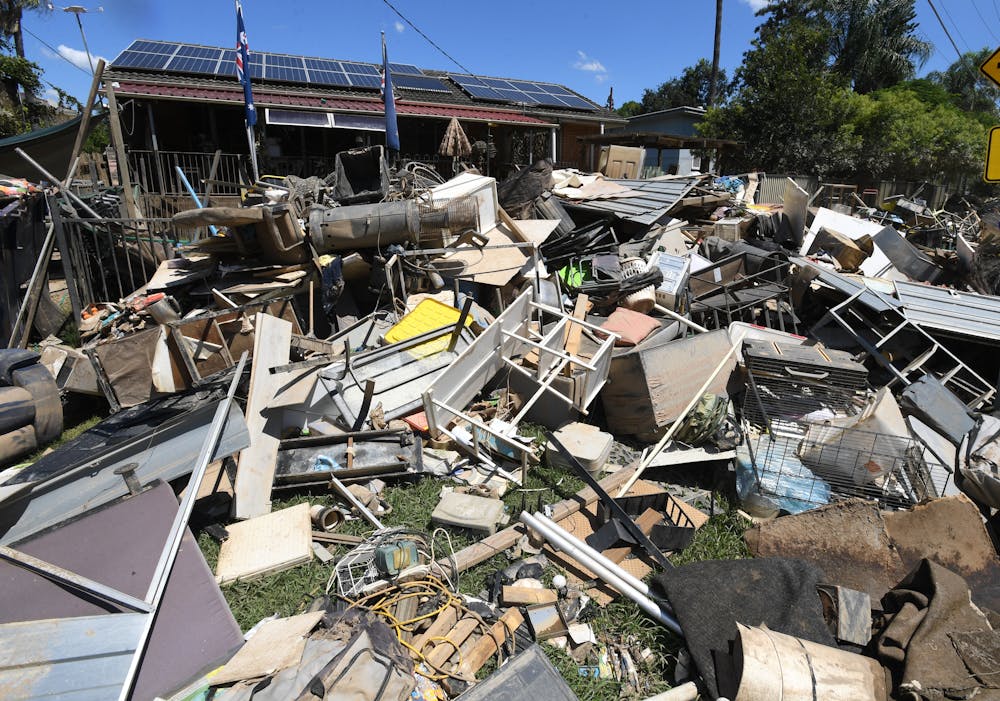 Those looking on from afar understandably want to help, ideally with immediate impact.
AAP Image/Darren England
Those looking on from afar understandably want to help, ideally with immediate impact.
AAP Image/Darren England
GoFundMe is not an answer to mass catastrophe
Recently, GoFundMe has become acutely self-conscious about its public perception as a place of desperate appeal, where only few succeed.
In response, the company has made clear it is not an alternative safety net, but rather a “complement” to existing institutional supports. This, in part, is why GoFundMe is more regularly partnering with charities and non-profits, such as Givit.
This strategic shift was apparent in a frank op-ed from GoFundMe CEO Tim Cadogan, who said “we can’t do your job for you” in urging the US government to offer more substantial relief during the height of COVID.
This, ultimately, is why Dutton’s GoFundMe campaign generated such public backlash. While well-meaning, an elected official rattling a donations tin after a disaster of this scale feels hopelessly inadequate, and a potent symbolic marker of our collective failure to enact mitigation strategies.
Crowdfunding cannot fix these issues. If anything, crowdfunding too easily individualises what are shared existential crises, distracting from our ability to properly reckon with them.
Read more: Want to help people affected by floods? Here's what to do – and what not to
Authors: Matthew Wade, Lecturer in Social Inquiry, La Trobe University

















