

Today's disappointing federal court decision undoes 20 years of climate litigation progress in Australia
- Written by: Jacqueline Peel, Director, Melbourne Climate Futures, The University of Melbourne
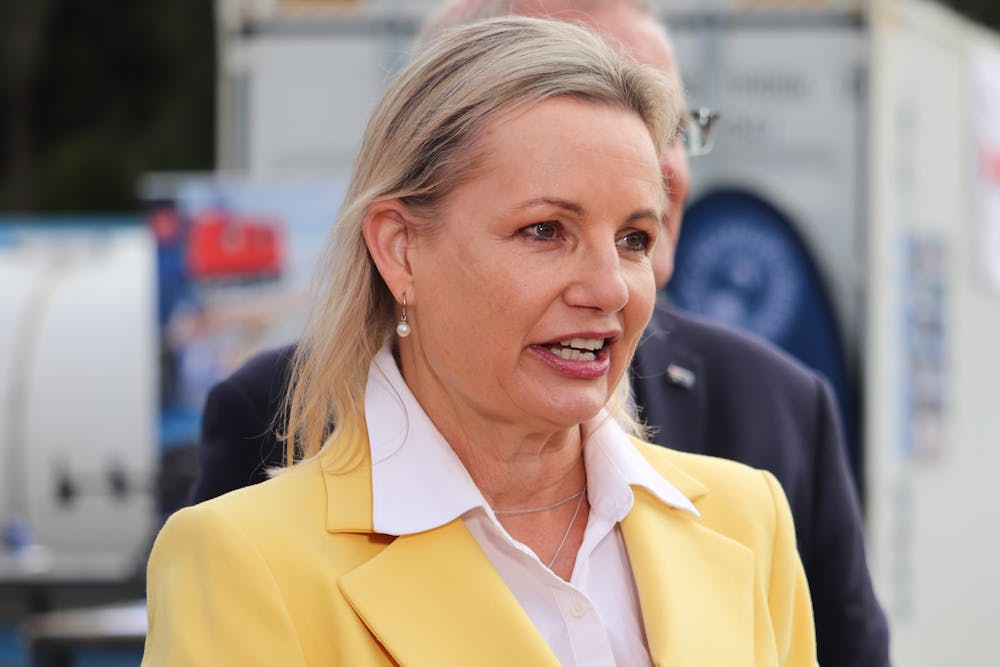
The federal court today unanimously decided Federal Environment Minister Sussan Ley does not have a duty of care to protect young people from the harms of climate change.
The ruling overturns a previous landmark win by eight high school students, who sought to stop Ley approving a coal mine expansion in New South Wales. While the judge did not prevent the mine expansion, he agreed the minister did indeed have a duty of care to children in the face of the climate crisis.
Ley’s successful appeal is disappointing. As legal scholars, we believe the judgment sets back the cause of climate litigation in Australia by two decades, at a time when we urgently need climate action to accelerate.
So why was Ley successful? The federal court’s 282-page judgment offers myriad reasons for why no duty should be imposed on the minister. But what emerges most clearly is the court’s view that it’s not their place to set policies on climate change. Instead, they say, it’s the job of our elected representatives in the federal government.
What did the judges say?
In the original class action case filed in 2020, a single federal court judge decided Ley owed Australian children a common law duty of care when considering and approving the coal mine extension, under Australia’s Environment Protection and Biodiversity Conservation (EPBC) Act.
This required the minister to take reasonable care when exercising her powers to avoid causing Australian children under 18 personal injury or death from carbon dioxide emissions.
Ley appealed this decision in July last year. She also approved the coal mine extension, arguing her decision wouldn’t contribute to global warming because even if the mine was refused, other sources would step in to meet the coal demand.
And today, in a live-streamed proceeding, the full bench of the federal court ruled in her favour: the stated duty should not be imposed on the minister. While the outcome was unanimous, the three judges had separate reasoning.
One judge saw climate change as a matter for government, not the courts, to address, saying the duty would be an issue “involving questions of policy (scientific, economic, social, industrial and political) […] unsuitable for the Judicial branch to resolve”.
Another said there was insufficient “closeness” and “directness” between the minister’s power to approve the coal mine and the effect this would have on the children. But he left open the possibility of a future claim if any of the children in the class action suffered damage.
The third judge had three main reasons. First, the EPBC Act doesn’t create a duty-of-care relationship between the minister and children. Second, establishing a standard of care isn’t feasible as it would result in “incoherence” between the duty and the minister’s functions. Third, it’s not currently foreseeable that approving the coal mine extension would cause the children personal injury, as the law is understood.
The good news: climate science remains undisputed
In the original case, the judge made landmark rulings about the dangers of climate change, marking a significant moment in Australian climate litigation.
He found one million of today’s Australian children are expected to be hospitalised due to heat stress, they’ll experience substantial economic loss, and when they grow up the Great Barrier Reef and most eucalypt forests won’t exist.
According to the judge, this harm was “reasonably foreseeable”. This is important from a legal point of view, as courts have previously considered climate change to be speculative, and a future problem.
 Luca Saunders, 16, Anjali Sharma, 17, Izzy Raj-Seppings, 15, and Ava Princi, 18, were among eight children behind the landmark court case.
AAP Image/Dean Lewins
Luca Saunders, 16, Anjali Sharma, 17, Izzy Raj-Seppings, 15, and Ava Princi, 18, were among eight children behind the landmark court case.
AAP Image/Dean Lewins
As part of her appeal, Sussan Ley argued that these findings, based on presented evidence, were incorrect and went beyond what was submitted to the court. Today, these arguments were unanimously rejected.
The federal court found all the minister’s criticisms on the evidence of climate change were unfounded and all of the primary judge’s findings were appropriate to be made. As Chief Justice Allsop concluded:
[B]y and large, the nature of the risks and the dangers from global warming, including the possible catastrophe that may engulf the world and humanity was not in dispute.
But while this reaffirms acceptance that climate science is unequivocal, it does nothing to prevent mounting climate change harms, most recently made clear by the devastating floods across NSW and Queensland.
Indeed, it only turns this responsibility back to the current federal government, which has policies increasingly at odds with what the science and concerned citizens say is needed.
Bucking the trend
This was a test case in Australian law, as it explored a novel legal argument. Its failure will likely put a dampener on innovative climate litigation in Australia.
Today’s judgment asserts that the courts are limited in what they can do to address climate change. It goes against the trend of successful climate change court rulings overseas, and the widespread mobilisation across community groups, business and local governments for action.
Just last year, for example, we saw a court in The Hague order oil and gas giant Shell to reduce carbon dioxide emissions by 45% by 2030, relative to 2019 levels, and a German court ruling that the government’s climate goals were not strong enough.
Today’s federal court finding that dealing with coal mine emissions is for governments alone seemingly reimposes barriers to climate litigation in Australia, carefully dismantled by the previous two decades of climate change cases.
We’ve seen a number of landmark climate cases in Australia. This includes the Rocky Hill verdict where a judge rejected a new coal mine on climate grounds, and the Bushfire Survivors case where the court found the NSW government had a legal obligation to take meaningful action on climate change.
These brought the glimmer of hope that where the federal government fails to act, the courts will step in. Today’s ruling suggests this is no longer the case.
In the lead up to the Australian federal election, the appeal outcome emphasises the importance of changing government policy if we’re going to get better outcomes on climate change in this country. Climate change certainly will not wait – the fight for a safe climate future continues.
Authors: Jacqueline Peel, Director, Melbourne Climate Futures, The University of Melbourne


















