

Thanks to heavy rain, Australia's environment scores a 7 out of 10 – but the future remains bleak
- Written by Albert Van Dijk, Professor, Water and Landscape Dynamics, Fenner School of Environment & Society, Australian National University
After the devastating floods, it’s hard to imagine only two years earlier many hard-hit communities suffered extreme heat, drought and unprecedented bushfires. Yet our report, released today, shows Australia’s environment has recovered dramatically since then.
Every year we use a supercomputer to analyse vast amounts of measurements from satellites and field stations to give the condition of Australia’s environment a score out of ten. For 2021, we score it 6.9 – four points higher than the year before.
The improvement is largely thanks to two years of plentiful rains that helped Australia’s forests, pastures and farmland recover well.
But as the rains only increased in 2022, inundating many parts of southeast Australia, you may well be wondering: can there be too much rain for our environment? And what might this all mean for the coming bushfire seasons?
First, let’s look back at 2021
We assessed Australia’s environment using 15 key indicators, such as water availability, bushfire, population pressures and vegetation health. Combined, these help determine the overall “environmental condition score”.
On our website, you can also find regional scores for your state or territory, local government area, catchment and electorate. Unusually, scores improved almost everywhere.
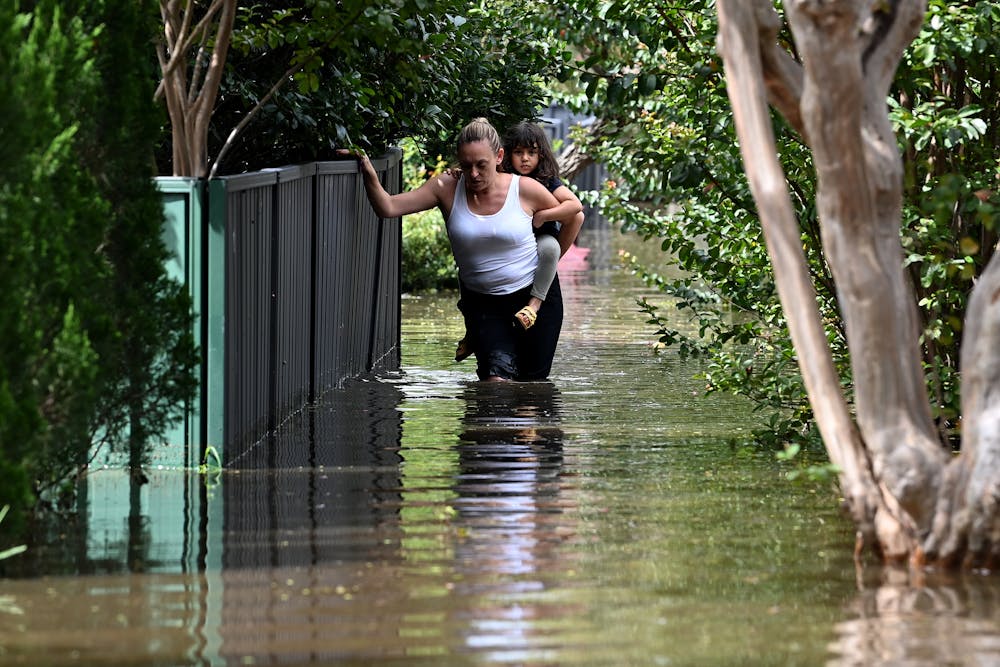
We confirmed that rainfall was near or above average nearly everywhere, thanks to back-to-back La Niña events – a natural climate phenomenon over the Pacific Ocean associated with wetter weather.
What’s more, in the winter and spring of 2021, parts of Australia also felt the effects of a “negative Indian Ocean Dipole” – a little like the Indian Ocean’s version of La Niña that also brings rainier weather.
Read more: A wet winter, a soggy spring: what is the negative Indian Ocean Dipole, and why is it so important?
Here are a few ways all this rain benefited Australia’s environment:
it replenished parched soils that missed rainfall in 2020, and improved growing conditions in both natural and managed landscapes such as farms and plantation forests.
compared to 2020, drought conditions eased across previously drought-ravaged areas of inland northern Australia
river flows across Australia increased by 75% on 2020 figures, and urban water supplies increased for all capital cities
wetlands swelled to their greatest total extent since 2016 (although still 9% below the 20-year average), with no major algal blooms or fish kills
growth conditions in Australia’s cropping, grazing and irrigation lands were well above average and the best since 2000 in all major regions except South Australia and inland Western Australia.
Australia also experienced less population growth and carbon emissions in 2021, mainly as a result of the COVID-19 pandemic, translating to a slower increase of the pressure on our environment.
Dark clouds on the horizon
Unfortunately, some troubling trends did not get better in 2021. Biodiversity continued to decline. Twelve species were declared extinct, although ten of those probably went extinct more than 60 years ago. A more recent extinction was the Christmas Island pipistrelle, a tiny bat last seen in 2009.
Another 34 species were added to Australia’s list of threatened species, eight of which are birds from Kangaroo Island, which suffered extensive and severe bushfires in early 2020.
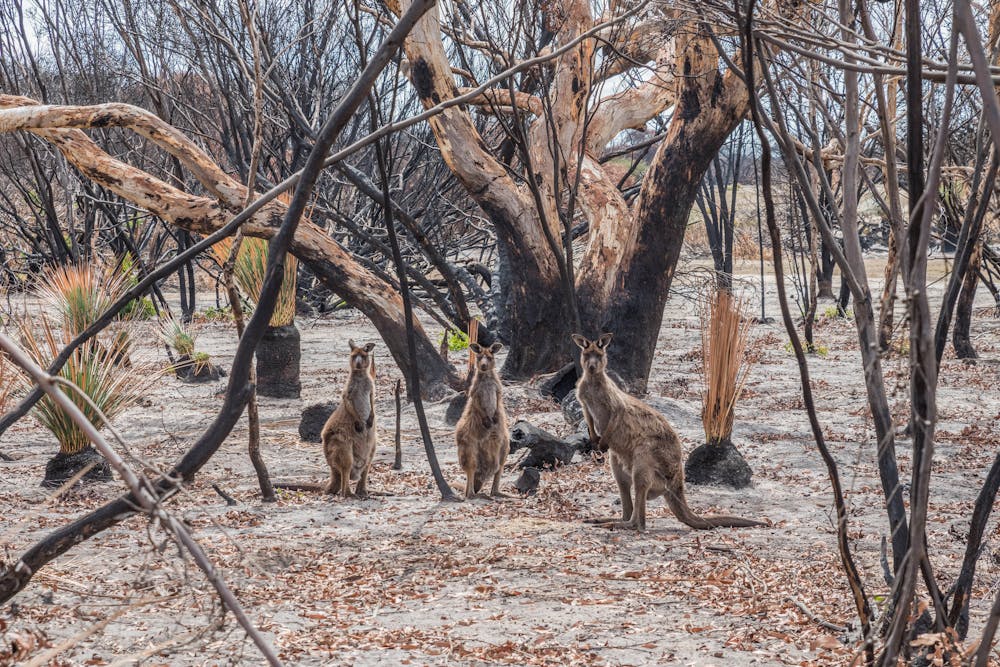 Kangaroo Island suffered extensive damage after the horror bushfire season of 2019-2020.
AAP Image/Supplied by RSPCA SA
Kangaroo Island suffered extensive damage after the horror bushfire season of 2019-2020.
AAP Image/Supplied by RSPCA SA
While the number of threatened species fluctuate with the condition of their habitat, their long-term decline continues unabated. This is largely driven by invasive species such as feral cats and foxes, logging, urban development, river water extraction and an increasingly hot climate.
For example, despite the good rains and increased wetland extent, researchers counted fewer birds in Eastern Australia than in the previous four years.
Read more: 1.7 million foxes, 300 million native animals killed every year: now we know the damage foxes wreak
Favourable conditions in the Great Barrier Reef led to the rapid, but fragile, recovery of hard corals after three bleaching events in five years. However, a recent heatwave in northern Queensland means a fourth coral bleaching event is on the cards for 2022.
And of course, despite the relatively benign weather conditions in 2021, the spectre of climate change on a global level has not lifted.
World economies recovering from the pandemic saw atmospheric carbon dioxide concentration increase by 2.5 parts per million, 6% faster than in 2020 and 11% faster than the average growth rate since 2000.
Because of La Niña, more of the excess heat went into the Pacific Ocean in 2021 than normal, rather than into the atmosphere. So while the atmosphere was 0.14 degrees cooler than in 2021, it was still almost one degree above the 2000-20 average and the sixth-warmest year on record.
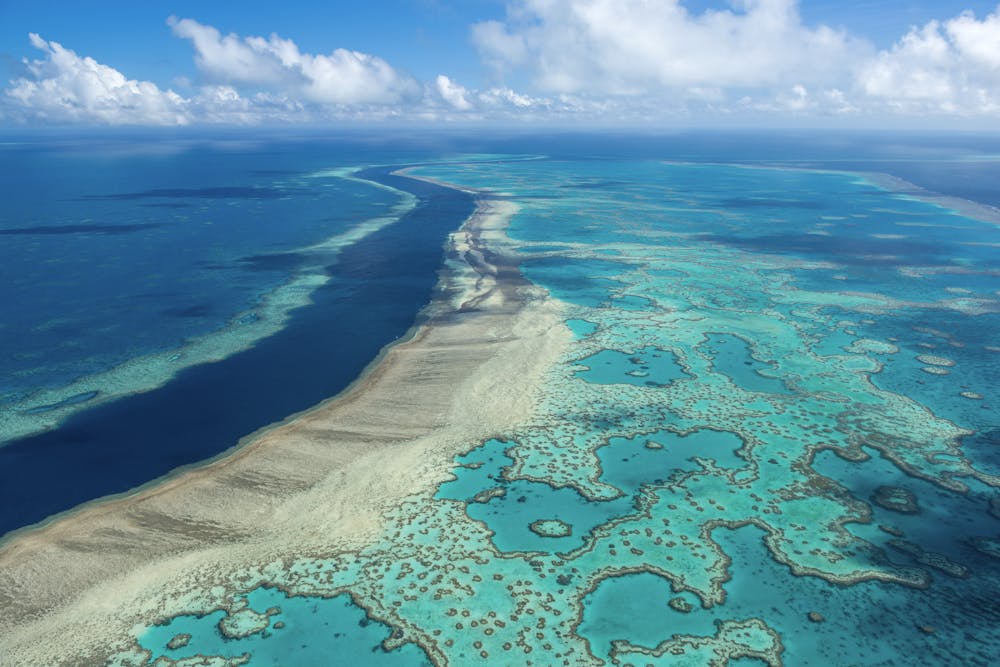 Some hard coral in the Great Barrier Reef recovered in 2021 after suffering three mass bleaching events.
Jumbo Aerial Photography/Great Barrier Reef Marine Park Authority via AP
Some hard coral in the Great Barrier Reef recovered in 2021 after suffering three mass bleaching events.
Jumbo Aerial Photography/Great Barrier Reef Marine Park Authority via AP
Can there ever be too much rain?
Above-average rain already led to major flooding in Queensland and NSW in 2021, even before the more recent deluge. Indeed, the recent, record-breaking rains added more water to soils, catchments, rivers and dams already replenished in 2021.
Does Australia’s environment still benefit from so much rain? Mostly, it can.
Our ecosystems are generally better adapted to wild climate swings, shedding excess water efficiently and recovering quickly from damage.
In normally dry regions, more rain means more vegetation growth and uptake of carbon dioxide from the atmosphere – although much of it will be released again during droughts or fires.
River flooding is a source of life in inland Australia, which may mitigate some of the damage done by the diversion and over-extraction of floodwaters.
Read more: Trees: why they're our greatest allies against floods – but also tragic victims
The consequences of extreme rainfall for invasive plants and animals are poorly understood but probably very diverse. Invasive species less adapted to drought may spread faster.
But the biggest environmental impacts are where natural vegetation was cleared for farming, housing or mining. Unprotected, bare soil soaks up less excess rainfall, and the rain and runoff can loosen up more sediment.
This erosion degrades farmland, cuts away riverbanks and the washed-out sediment and nutrients end up in rivers and the sea, where it can smother marine life and encourages outbreaks of crown-of-thorns starfish that attack coral reefs.
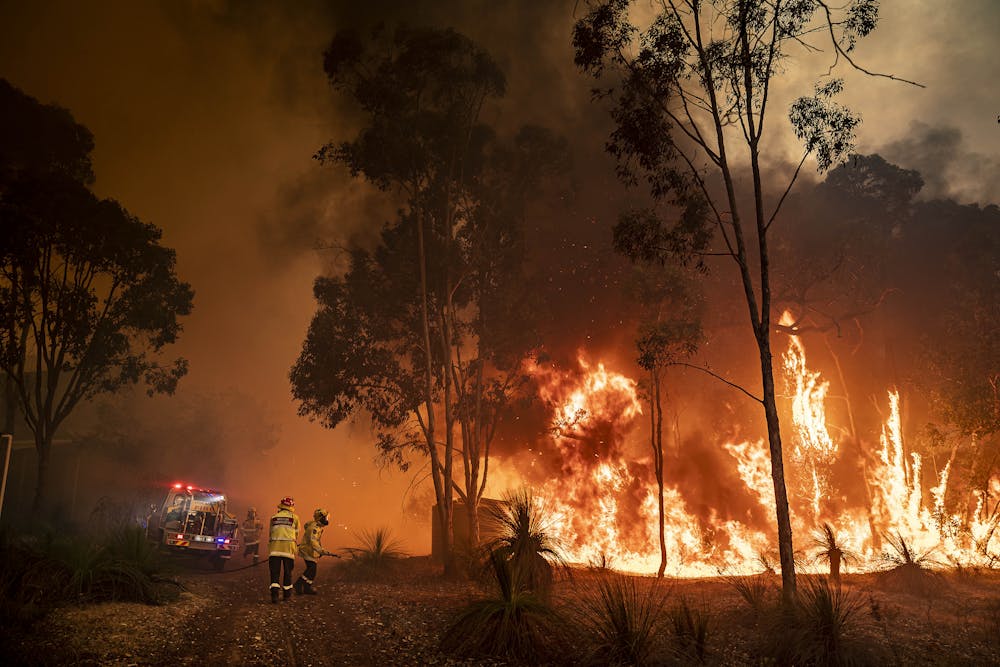 Greater vegetation growth means bushfires have more to burn.
AAP Image/Supplied by DFES, Evan Collis
Greater vegetation growth means bushfires have more to burn.
AAP Image/Supplied by DFES, Evan Collis
What does this mean for bushfires?
The Bureau of Meteorology expects that La Niña conditions reached their peak and rainfall conditions may normalise soon. Some of the excess heat stored in the ocean will be released, causing air temperatures to quickly resume their warming trend.
Combined with the booming growth of vegetation, the extent of bushfires will likely pick up again next fire season: more vegetation means more fuel for fire. And it only takes a few hot and dry weeks for these conditions to increase fire activity.
Unfortunately, the pressures of vegetation destruction, invasive species and climate change will degrade our agriculture and ecosystems for decades to come. Incisive reductions in carbon emissions and more careful ecosystem management can avoid these impacts worsening.
Both are within reach, but require the sort of consensus and resolve shown in response to COVID-19 and Russia’s invasion. Our environmental crisis is no less severe.
Authors: Albert Van Dijk, Professor, Water and Landscape Dynamics, Fenner School of Environment & Society, Australian National University

















