

Google AI


Modern Australian

What does it mean to be 'neutral' over Ukraine – and what responsibilities come with it?

  • Written by: Maartje Abbenhuis, Professor of History, University of Auckland

What does it mean to be 'neutral' over Ukraine – and what responsibilities come with it?

There’s a popular cartoon by Tom Toro that’s been doing the social media rounds since 2012, in which two historians sit in a book-lined library as one complains:

Those who don’t study history are doomed to repeat it. Yet those who do study history are doomed to stand by helplessly while everyone else repeats it.

As a historian, I don’t much subscribe to the histoire se répète (history repeats itself) school of thought. No two moments are ever “the same”. Context changes everything – and the complexities of context are as important to understanding an event as the potential similarities with another moment in time.

I find many of the historical analogies being bandied about over the war in Ukraine banal. There is nothing to be gained from equating Putin with Hitler or likening Russia’s invasion of Ukraine with Germany’s invasion of Poland in 1939.

But what is useful in studying past wars is that they help us understand what aspects of a current crisis might be worth asking critical questions about.

In that sense, Toro’s cartoon is apposite, especially when it comes to interrogating our collective responsibility for the war in Ukraine and its victims. Is watching in horror as the war unfolds all we can do? What responsibilities do we have as non-belligerent “neutrals”?

Neutrals and non-belligerents

I’ve spent much of my academic career studying international systems and great power diplomacy, particularly in time of war. I’ve written several books about neutrality, peacemaking and avoiding war. My most recent (co-authored) title, Global War, Global Catastrophe, integrates the history of neutrals and non-belligerents into the global history of the first world war.
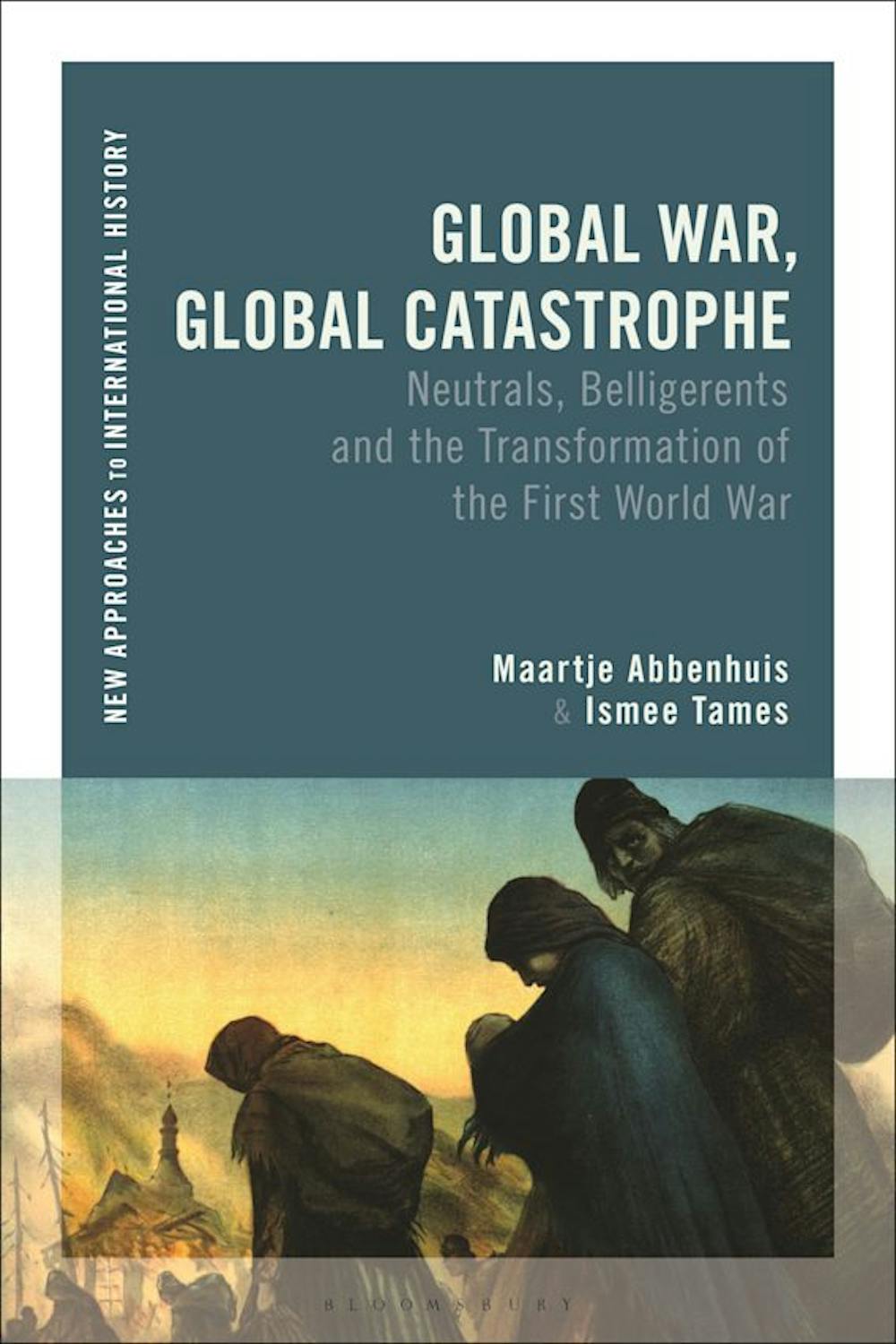
This research highlights the many ways in which governments and communities approach wars in which they’re not actively involved as belligerents. Neutrality is the formal term used for a state that chooses not to go war when other countries do. While we rarely use the word “neutral” today to describe countries that are not fighting a war (preferring to reserve that term for non-aligned countries like Switzerland), in a legal sense everyone who remains non-belligerent in this conflict is neutral according to the laws of war. Read more: On the 3rd anniversary of the Christchurch attack, the Ukraine crisis asks the West to rethink its definitions of terrorism Neutrals and non-belligerents feature in all international conflicts. Even in the age of collective security that evolved after 1918 and through the Cold War, there were always neutrals and non-aligned states. But the world watching the war in Ukraine today is most akin to the 19th-century age of neutrality, when most wars were fought by a small number of states, while the rest opted out as neutrals, including many great powers. Neutrality helped these wars stay localised and limited, preventing them turning into major conflicts involving more of the militarised world. Much like today, there were always more non-belligerents watching a war than belligerents fighting it. Media frame the narrative: CNN correspondent Clarissa Ward reporting from inside a subway station in Kharkiv, Ukraine. AAP Neutrality isn’t passive This history reveals that neutrality was not (and cannot be) a value-neutral concept. Neutral countries and communities are never politically impartial or evenhanded in their response to a military conflict, even if they have legal obligations regarding the warring parties. As such, sanctioning Russia and sending military equipment to Ukraine are not, on the face of it, anti-neutral acts – although they certainly send powerful messages to Russia about the limits of what the rest of the world will allow or endure over Ukraine. Read more: 'I have a need': How Zelenskyy's plea to Congress emphasized shared identity with US As in the past, neutral countries and non-belligerent organisations and communities often take on a range of key responsibilities and actions to help alleviate the suffering of a war or bring it to an early close. Neutral governments are often the mediators and arbitrators of international crises and offer safe spaces for the warring parties to negotiate a solution. They also offer humanitarian support for the victims of war, including front-line medical care and havens for refugees. And since all wars are also information wars, independent media sources play an influential role: unmasking the extreme violence of war, establishing how the watching world understands what the war is about, and determining which belligerent is perceived as being on the side of “right”. Influencing the watchers: Volodymyr Zelenskyy addresses the US Congress by video. AAP Neutrality and ending war Neutrals, then, actively determine what is at stake in a war. Winning the “hearts and minds” of the people watching as non-belligerents is therefore vitally important to the warring parties. At the moment, Ukraine’s president, Volodymyr Zelenskyy, is doing an exceptional job of influencing the watching world’s expectations and framing what the invasion of Ukraine is about. He needs that global support to help set the terms of any peace negotiations with Russia. Historians of warfare almost always fixate on the actions of those actually doing the fighting or falling victim to the violence of a war. Today, too, we seem fixated on understanding Russia and Putin and on explaining why Ukraine is so important. Read more: Ukraine: Putin isn't mad – he's following a long-established great power playbook for conquest But it’s as important to ask questions about the responsibilities and actions of the neutral and non-belligerent world – those of us watching the war unfold in real time – as it is to interrogate those of any warring parties. Just as in the 19th century, neutral parties have a massive role to play in the conduct, outcome and terms of this war. Their assessments will help to determine how we understand the conflict in years to come. Alongside asking serious questions about why Russia invaded Ukraine, we should therefore also train our mirrors on ourselves as non-belligerents. How are we shaping the contours of this conflict? How are we responding to it? Where are our responsibilities to bring its suffering to a successful and speedy close? Authors: Maartje Abbenhuis, Professor of History, University of Auckland

Read more https://theconversation.com/what-does-it-mean-to-be-neutral-over-ukraine-and-what-responsibilities-come-with-it-179457

Understanding a dental implant Melbourne Treatment Plan

A dental implant Melbourne patients may consider is one option for replacing a missing tooth, but suitability depends on oral health, bone support a...

How 3PL Logistics Australia Supports Faster and More Efficient Supply Chains

Why Has 3PL Logistics Become Important for Growing Businesses?  Gone are the days when supply chains were simpler and in minimal quantity. Now, the...

Common Skin Concerns and Treatment Options Available in Melbourne

Skin concerns can develop gradually or become noticeable following changes in age, lifestyle, sun exposure or hormonal factors. Pigmentation, rednes...

Why a Code-Compliant Home Can Still Feel Uncomfortable

When people build or renovate a home, they usually expect that meeting current building requirements will also produce a comfortable place to live. ...

Breach of Contract in Business: What Are Your Options?

Contracts are essential to business relationships. They establish expectations, allocate responsibilities and provide a framework for delivering goods...

How Pest Control Companies Can Rank for the Problems Customers Search First

Introduction SEO for Pest Control needs to start with the customer’s problem. Most people do not search for pest services in a neat or technical wa...

What Are the Benefits of Renovating an Older Home in Sydney?

Sydney has plenty of character homes, from Federation cottages to mid-century brick homes. Renovating rather than rebuilding can preserve what makes t...

Pool and Deck Design: How to Plan the Perfect Outdoor Living Space for Your Sydney Home

For many Australians, the backyard is where life happens. Summer barbecues, weekend swims and long evenings outdoors are all part of the lifestyle, ...

Is Solar Pool Heating Worth It? What Sydney Homeowners Should Know

There's nothing quite like a backyard pool on a hot Sydney day. But once autumn rolls in, many pools sit unused for months because the water is simp...

Planning a Luxury House Move: A Week-by-Week Timeline for Prestige Sydney Homes

Selling or buying a prestige home is a major milestone. Whether it's a waterfront residence in Birchgrove, a grand Federation home in Haberfield or ...

Downsizing or Upgrading Your Caravan? Here's How to Sell It Without the Hassle

Selling a caravan can feel like a major task, especially when you are unsure about its value, paperwork, or how to find a buyer. Whether you are dow...

The Best Overseas Adventure Holidays for Australians Who Love the Outdoors

Australia offers no shortage of incredible outdoor experiences, but sometimes the best way to satisfy your sense of adventure is to head overseas. A...

Cape Town Wine Shuttle: Winelands Tasting & Tours

Embark on an unforgettable journey through the picturesque Cape Winelands, where world-class wines and breathtaking scenery await. Our Cape Town Win...

Metal Fabrication: Choosing Metal Fabrication Melbourne Services for Custom Projects

What Modern Metal Fabrication Involves From individual components to complete structures, metal fabrication brings together processes such as desig...

Why Giant Rats Tail Grass Keeps Coming Back After Spraying

Giant Rats Tail Grass (GRT) is one of the most frustrating pasture weeds for farmers and lifestyle property owners. You spray an infested area, see th...

When Custom Cardboard Boxes Make Sense for Your Business

Custom cardboard boxes can be useful when a standard carton does not fit a product, packing method or presentation requirement particularly well. A ...

Full-Height vs. Pop-Top Caravan: Which Is Better for Family Travel across WA?

A pop-top caravan is an excellent choice for travellers who want the comfort of a caravan without committing to a larger, bulkier setup. With a lowe...

Bottle Label Printing: Key Factors for a Professional Finish

Why the Printing Method Matters When businesses need packaging or printed containers developed for a particular application, the right supplier can m...

















