Modern Australian
The Times

5 must-read books about Russia and Ukraine: our expert picks

  • Written by Mark Edele, Hansen Chair in History, The University of Melbourne
5 must-read books about Russia and Ukraine: our expert picks

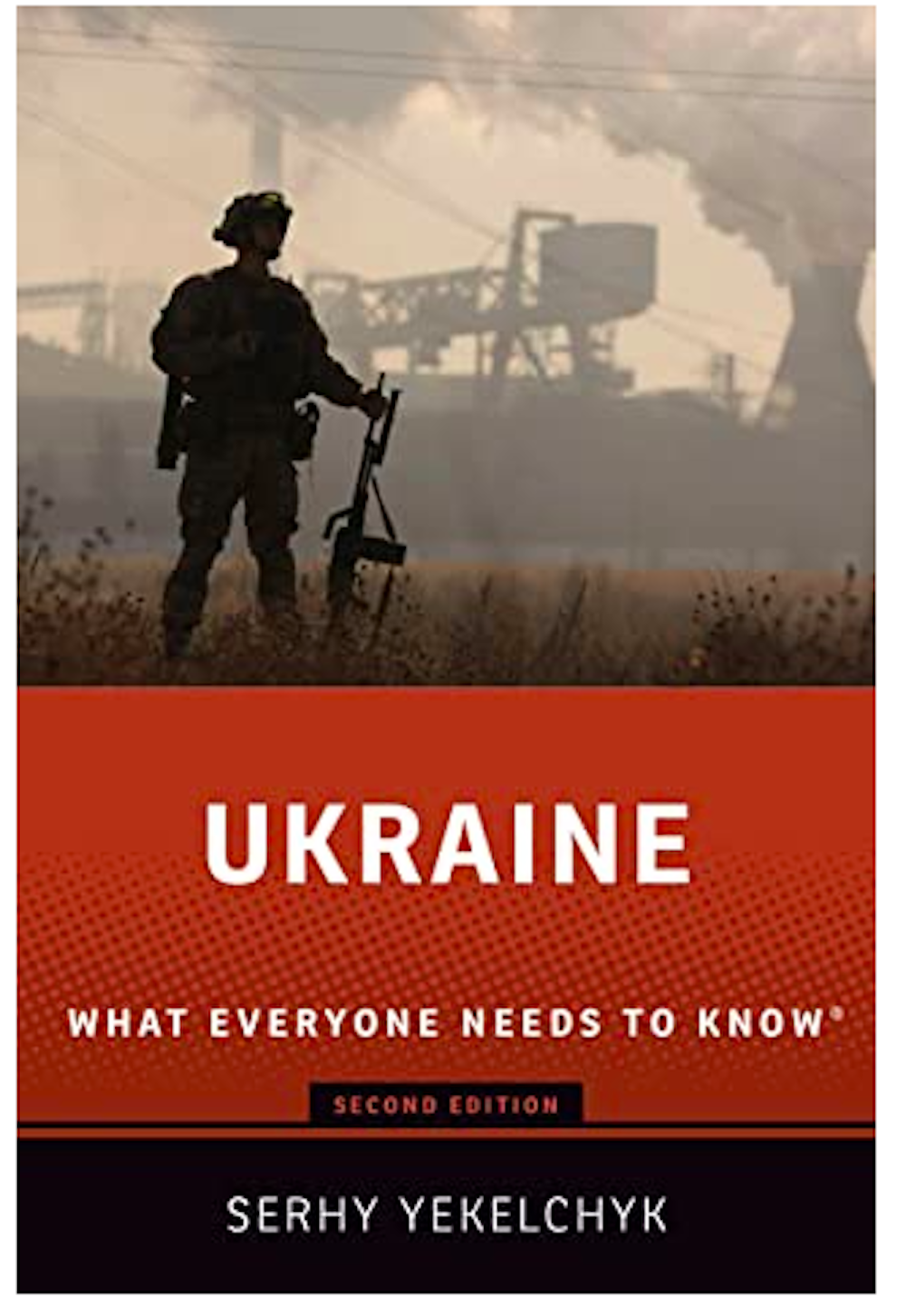
1. Ukraine: What Everyone Needs to Know (second edition) – Serhy Yekelchyk

This slim volume of just over 200 pages is something of a marvel. Written by a world-leading historian of Ukraine, it introduces readers to the history, geography, economy, politics, and contemporary life of the country now suffering from Russia’s invasion. Serhy Yekelchyk precisely defines both the commonalities and differences in the histories of Ukraine and Russia, and he also delves into the entanglements between Ukrainian and United States politics. Yekelchyk asks all the right questions and answers them succinctly and precisely. There is no better book to start reading on the background of the current war. If you have time to read only one book on this topic, this is it. – Mark Edele Read more: Ukraine as a 'borderland': a brief history of Ukraine's place between Europe and Russia 2. The Red Mirror: Putin’s Leadership and Russia’s Insecure Identity by Gulnaz Sharafutdinova Gulnaz Sharafutdinova’s The Red Mirror offers important insight into the nature of the Putin regime and how it has prepared the ground for this war domestically. The book is a rare attempt to take account of the emotional dimensions to Putinism, and how Putin has successfully crafted an image as the country’s defender against humiliation. Sharafutdinova documents the evolution of the Russian state media machine over the past decade, showing how it has systematically promoted a vision of Russian identity grounded in Russian victimhood. State propagandists have cultivated and amplified emotions connected to Russia’s recent history, updating old Soviet tropes and enemy images to foster the notion that Russia is a nation under siege. In much of the recent commentary on Putin’s Russia, we find Russian society reduced to a caricature. By contrast, this is a book that takes account of the diversity of Russian society and avoids resorting to stereotypes about the “Russian soul” or the supposed eternal Russian desire for an “iron hand”. Instead, Sharafutdinova shows how the current state of Russia is a result of political choices made by Vladimir Putin and his government. – Julie Fedor Read more: As the Ukraine war drags on, how secure will Putin's hold on power remain? 3. The Gates of Europe: A History of Ukraine by Serhii Plokhy gates of europe. Serhii Plokhy’s Gates of Europe was first published in 2015, after Russia’s 2014 annexation of Crimea and the beginning of its war on Ukraine, of which the current invasion is a dismaying escalation. Beginning with Herodotus’s account of the lands north of the Black Sea, the Harvard historian’s book acquaints the reader with the historical legacies that have helped shape Ukrainian identity: the large medieval state of Kyivan Rus, the autonomist aspirations of the Ukrainian Cossacks, the 19th-century Ukrainian national movement in the Habsburg and Russian empires, the short period of Ukrainian independence after the first world war, and Ukraine’s eight decades as a republic within the Union of Soviet Socialist Republics (USSR). Plokhy’s narrative enables readers to place Vladimir Putin’s denial of Ukraine’s existence as a nation into the tradition of Russian imperial and Soviet endeavours to erase or, at best, marginalise Ukrainian identity. It also shows the sources of the ideas of Ukraine’s democratic sovereignty and transcultural solidarity that energise the unified, determined and remarkably successful resistance with which the Ukrainian political leadership, the Ukrainian armed forces and the Ukrainian people have confronted Russia’s invasion. – Marko Pavlyshyn Read more: Speaking with: journalist Masha Gessen on Putin's Russia 4. Dr Zhivago by Boris Pasternak A novel written by a poet, it’s famously a love story, set in Russia’s endlessly turbulent history from 1905 to the Great Patriotic War. A book banned for many years in its own country, its author forced to refuse the Nobel Prize, people close to him imprisoned. It’s not a primer for understanding what’s happening in Ukraine today, how decisions with such devastating consequences are made in Moscow. But it tells you about Russia and Russians. Russia’s climate and landscape; Russians’ capacity for the tenderest love and abysmal cruelty. The story is told in prose written by a poet, so you feel these Russian things, in your soul. We feel them, partly because of the talent of the author but mainly because in the end they’re not uniquely Russian, they’re universal. The Russians – and those of us non-Russians who fall for it – are good at thinking that they are exceptional, in their soulfulness, their ability to love and hate, the endless horizons of their landscape. It’s a dangerous thing, to think you’re uniquely special – and if as you read it, you’re swamped by the novel’s overwhelming Russianness, you should keep that in mind. – Stephen Fortescue Read more: Friday essay: Svetlana Alexeviech didn't make it to the Royal Commission 5. The Icon and the Axe: an Interpretative History of Russian Culture by James H. Billington From about the 8th century to the 15th century, Kyivan Rus (Ukraine) occupied the great plain in the south of today’s Russia. Moscow was not historically documented until 1147. The “Rus”, basically Slavs, were invaded by the Varengians (Vikings) who stayed and intermarried; the country consisted of powerful city states united by allegiance to a prince. As James Billington relates in the first chapter of his comprehensive cultural history of Russia, The Icon and The Axe, Prince Vladimir, searching for a religion in 988 AD, converted to Greek Orthodoxy after his emissaries recorded the beauty of Constantinople’s Santa Sophia, whose blue dome and golden frescoes suggested Ukraine’s national colours. Rus/Ukraine subsequently became one of the strongest states in Europe, famous for its fertile black earth and rich folk culture. Billington then describes the decline of Kyivan Rus, when the principalities started fighting each other, and the country was invaded by Mongol hordes under Genghis Kahn. The “Mongol Yoke” lasted until 1480, when it was ousted by an emergent, super-powerful Moscow. – Judith Armstrong Authors: Mark Edele, Hansen Chair in History, The University of Melbourne

Read more https://theconversation.com/5-must-read-books-about-russia-and-ukraine-our-expert-picks-179832

Why Laser Hair Removal Treatments Continue Growing In Popularity

Managing unwanted hair can become time-consuming and frustrating for many people, especially when shaving, waxing, and other temporary methods requi...

Choosing the Right Devices for a Flexible Workplace

For IT leaders managing large fleets, the device layer is where workforce productivity and security policy meet. The shift towards flexible and hybrid...

How Business Advisory Services Help Companies Achieve Sustainable Growth

Every business owner aims to build a profitable and sustainable organisation. While dedication, innovation, and hard work are important, achieving l...

Why Body Contouring Has Become A Popular Cosmetic Treatment

Many people maintain healthy lifestyles through regular exercise and balanced eating habits but still struggle with stubborn areas of fat that are dif...

How to Choose the Right POS Hardware for Your Business in Australia

A lot of Australian business owners spend weeks researching POS software but buy hardware almost as an afterthought. That's a mistake. The wrong har...

Why Material Handling Hose Is Critical for Industrial Efficiency

A high-performance material handling hose is an essential component in industries that transport abrasive, dry, or bulk materials on a daily basis...

How to Choose the Right Lawyer in Melbourne for Your Situation

Choosing legal support can feel difficult, especially when the stakes are personal or business-related. The right lawyer in Melbourne should underst...

Hoteliers Look to Clever Value Adds to Increase Revenue

The Australian hospitality industry is still in recovery mode after a notoriously rough patch in recent years. While there has been a post-COVID tra...

Moving to Queensland? Here’s How to Prep Your Car for the Big Move North

There’s no sign of the northern migration slowing down, with thousands of southerners fleeing from chaotic lifestyles and cooler climates for a brig...

Diesel Shortage to Impact Trades and Contractors

Strait of Hormuz blockage affecting all major parts of trades and construction Trades and construction across residential, commercial and industria...

Why Holiday Home Owners Turn to Rental Management Agents

The Allure — and the Reality — of Renting Out Your Property Owning a holiday home is a dream for many Australians. Whether it's a beachside sha...

Why Finding Reliable Doctors In Bundoora Is Important For Long-Term Health

Access to quality healthcare plays an important role in maintaining overall wellbeing and managing health concerns early. Trusted Doctors in Bundoor...

Understanding the Different Types of Car Services: Minor vs Major

When it comes to car maintenance, one of the most important things every vehicle owner should understand is the difference between a minor and a maj...

How Superannuation and TPD Insurance Work Together

Superannuation is an essential part of financial planning in Australia. It is designed to provide individuals with income during retirement, helping...

Tiny Towns funding granted for Mt Hotham and Mt Buller upgrades

Alpine Resorts Victoria (ARV) has welcomed funding support from the Victorian Government’s  Tiny Towns Fund, with both Mt Hotham and Mt Buller se...

Locksmith Services: Why Professional Security Solutions Matter More Than Ever

Security is a critical concern for homeowners, businesses, and vehicle owners alike. Whether it involves protecting a property, replacing damaged lo...

Why Tooth Fillings Are Important For Protecting Damaged Teeth

Cavities and minor tooth damage are common dental problems that can worsen if left untreated. Professional tooth fillings help restore damaged teeth, ...

The Connection Between Visibility and Driver Confidence

Operating a vehicle safely requires an immediate, uncompromised stream of visual information from the surrounding road environment. A driver's decis...