

cooking slippery, slimy and oozy historical recipes made me uncomfortably conscious of my own anatomy
- Written by: Jacqueline Newling, Honorary Associate, History, University of Sydney
In this series, academics explain the ways they are recreating historical practices, and how this impacts their research today.
Old recipes and cookery books are increasingly being recognised as archival records, documenting more than just the food that was eaten in the past. They help us track consistencies and changes in our tastes and traditions, and in the techniques and technologies we employ or rely on to prepare a dish or meal.
Whether hand written or commercially produced, the fact that the recipes were recorded indicates the author felt the resulting foods were worth eating.
When you flick through old Australian recipe books, you will find some of the dishes are familiar, if not the same (“fricasees” and “ragouts” we now know as casseroles), while others, such as flummery and blancmange are echoed in today’s more sophisticated bavarois and pannecotta.
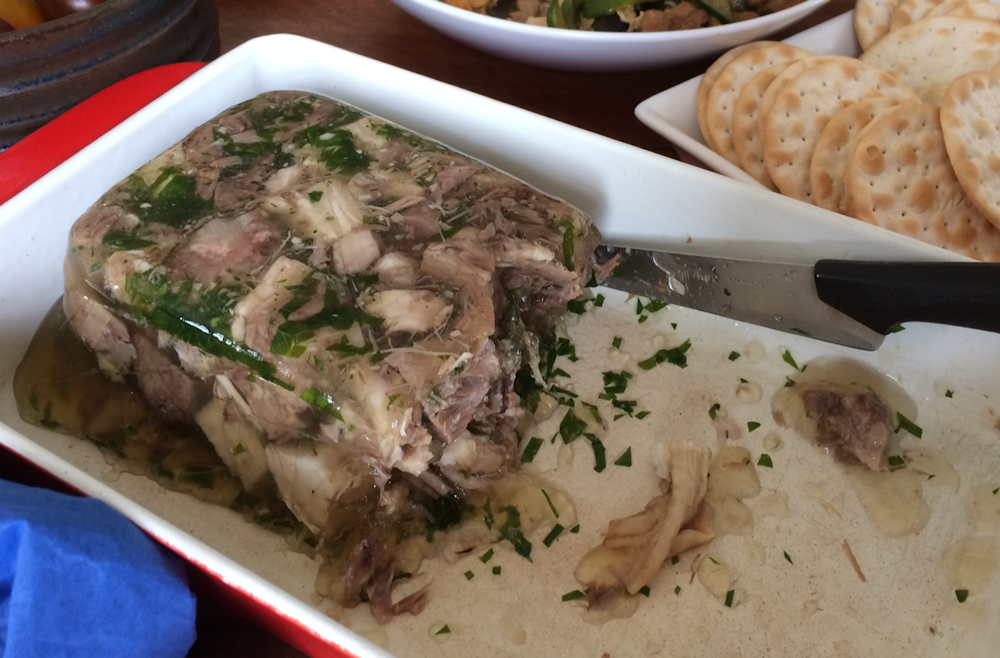
Other dishes which were once common in old cookbooks are curious or even peculiar to the contemporary cook, especially those made with meat cuts that some Australians might balk at: mock turtle soup (made with a calf’s head), brawn (made from a pigs’ head), calves’ feet jelly and boiled tongues being standouts.
As a historian with a Le Cordon Bleu Master’s degree in gastronomy, (which I describe as the study of food and food cultures), I am an intrigued by foods such as these. They are still popular in many other cultures’ cuisines, but have lost their place in Australia’s everyday culinary repertoire.
Why have they disappeared from our menus, and what does their absence from our kitchens, dining tables – and cookbooks – say about contemporary food choices?
Sensory and visceral
I take a very hands-on approach to researching our food heritage. My gastronomy degree is an academic qualification – I am not a formally trained cook, let alone chef. I have an Anglo-Celtic background that has not exposed me to the majority of “lost” dishes mentioned above in the normal course of life.
In order to understand them – and, importantly, the processes involved in making them – reading recipes is not enough. To write or speak about them with any authority, I need to experience them myself.
I do not profess to be exactly recreating the past or replicating the techniques and resulting dishes. Technological and food safety standards have changed the ingredients and necessary equipment to cook with them, but my experimental and explorative “forensic” exercises have been enlightening and instructive.
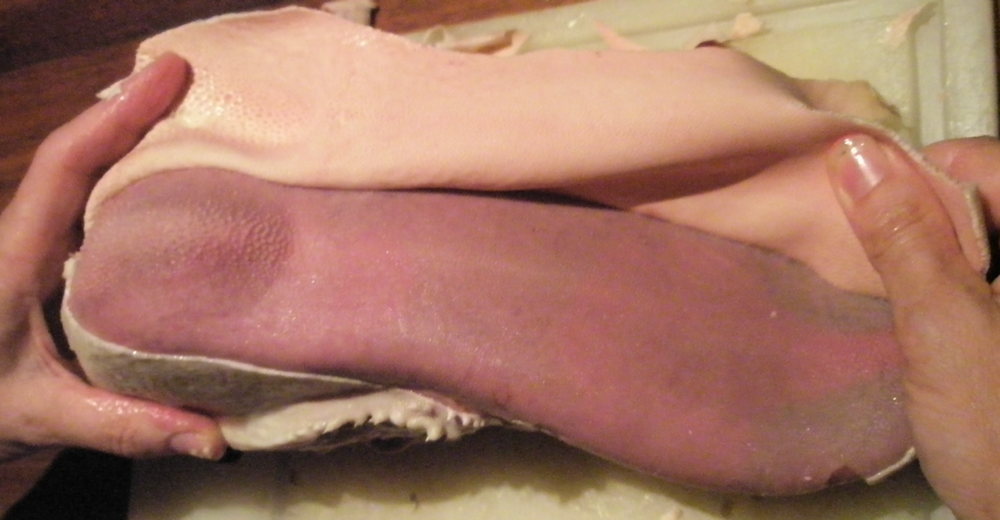 Ox tongue is surprisingly dense and heavy.
Jacqui Newling, Author provided
Ox tongue is surprisingly dense and heavy.
Jacqui Newling, Author provided
They have provided me with a far more intimate connection with these dishes and appreciation of the time, skills and effort required to create them – even with modern cooking facilities – than words on a page could ever conjure.
The sensory and, at times, visceral nature of making these dishes has been particularly educational, but often challenging and discomforting.
I recognise now the vague, nondescript but distinctive smell that is emitted when reconstituting jelly crystals as that which emanates from boiling calves’ feet: the fruity flavours and colouring a thin veil for the true origins of animal-derived gelatine.
Just the thought of handling an ungainly, surprisingly large, dense and heavy ox-tongue, trimming away the unsightly connecting ligaments and peeling its thin but leathery skin from the organ makes me uncomfortably conscious of my own tongue’s anatomy.
Cooking whole animal heads – their eyes staring back at me (accusingly? beseechingly?) as the pot bubbled away on the stove – was quite disarming.
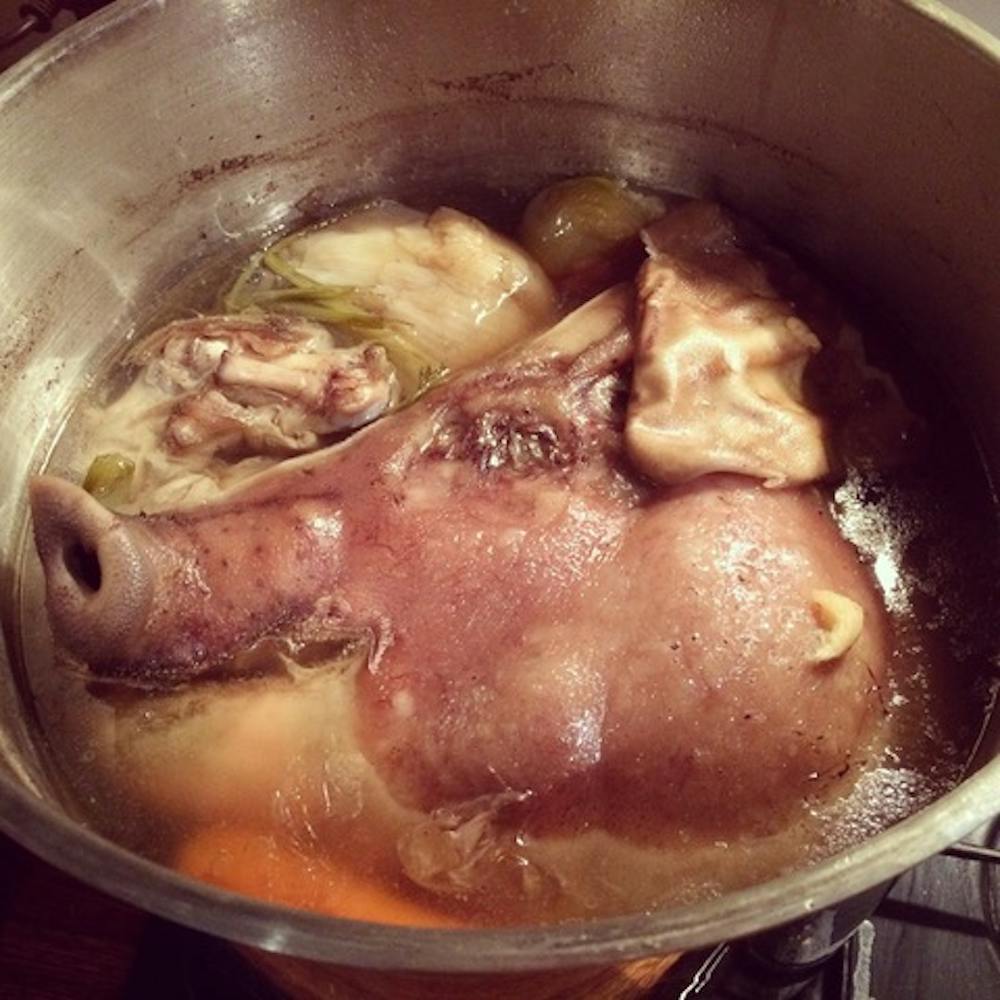 Watching whole animal heads on the boil is a disconcerting experience.
Jacqui Newling, Author provided
Watching whole animal heads on the boil is a disconcerting experience.
Jacqui Newling, Author provided
Dismembering the pig’s face to retrieve the edible parts for brawn (cheeks, jowls, palate, tongue and snout) is a sticky, slippery and messy job.
While these experiential and embodied forms of self-education have elicited feelings of repugnance, to me they are tangible ways of connecting the past and the present, sharing experiences with cooks who also made these dishes or followed these recipes.
Slippery, slimy and oozy
Emotional responses are of course individual, and imbued with cultural and personal meaning. My feelings of distaste or revolt may not have been experienced by cooks and diners who welcomed these dishes onto their tables.
With the gradual disappearance of local butchers’ shops working with whole animals, our meat, poultry and fish is often sold in plastic packaging, often deboned or filleted with skin removed, trimmed of fat and sinew, ready-portioned, perhaps marinated and ready to cook without further handling.
Moisture sachets and packaging that help absorb fluids and odours make us less tolerant of the natural realities of animal parts that are messy, bloody, sinewy, gristly, viscous, gelatinous, slippery, slimy and oozy.
While convenient and time-saving for consumers, these preparations distance and disconnect consumers from the source animal. We are losing practical skills, but also the sensory connections and emotional sensibilities that come with working with them.
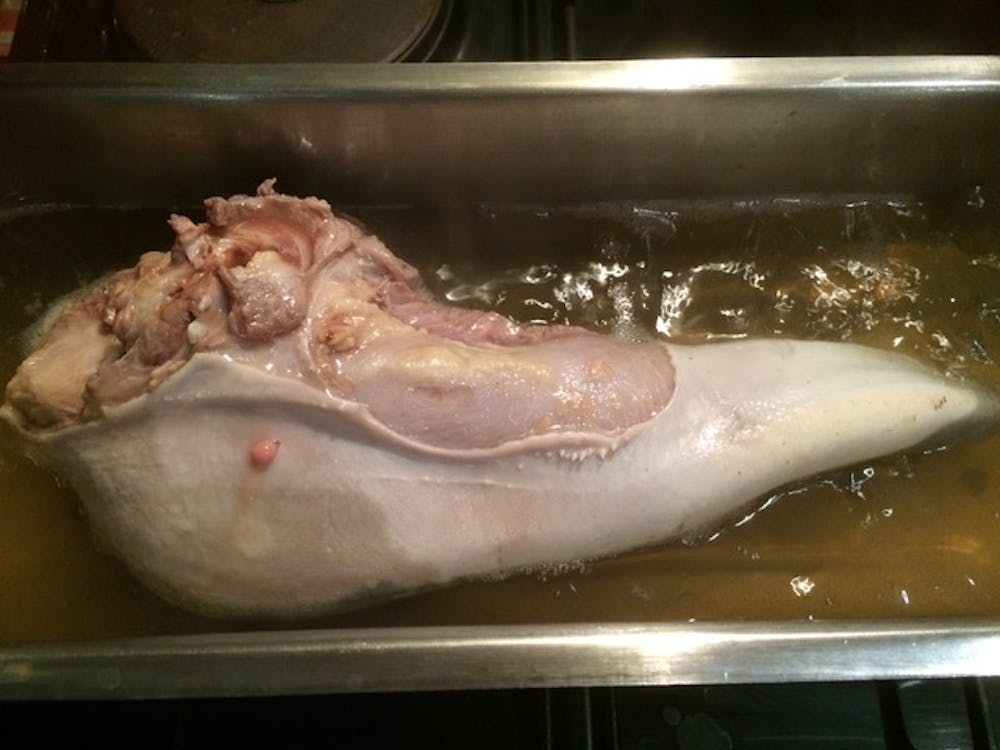 Cooking like this means there is no disconnection between the food we eat and the animals they come from.
Jacqui Newling, Author provided
Cooking like this means there is no disconnection between the food we eat and the animals they come from.
Jacqui Newling, Author provided
Many meat eaters who are comfortable with conventional flesh-meats recoil at cuts that are reminders of the once-living animal, finding heads, tongues, feet and tails revolting, perhaps horrifying, even barbaric.
Conversely, nose-to-tail dining, which makes use of every edible part of an animal is lauded as a respectful and responsible acknowledgement of the environmental impacts of meat production and a way of honouring the life taken from an animal bred for consumption.
If we consider the adage that food should not simply be good to eat but good to think about – morally and ethically – is resisting or rejecting these foods prejudice or a mark of refined taste? Were past generations crude and uncouth in their tastes and dining habits, or do they in fact hold the higher moral ground, coming face-to-face with the reality of their food sources?
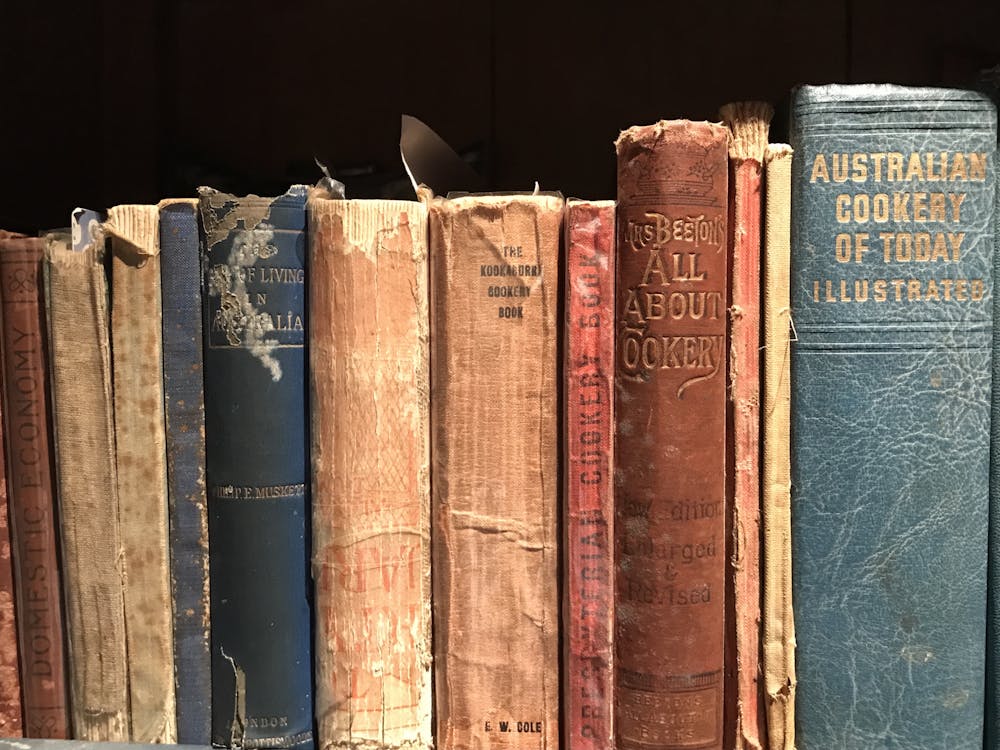 Much can be learnt from these old cookbooks.
Jacqui Newling, Author provided
Much can be learnt from these old cookbooks.
Jacqui Newling, Author provided
A recipe to try: mock turtle soup
Get a calf’s head as fresh as possible, split it and take out the brains, wash and clean it well and lay it to steep in cold water for an hour. Then put into a stewpan with enough water to cover it, and two or three pints over; set it on the fire to boil, let it simmer 1½ hours; take out the head, and when cold enough cut [the meat] into pieces, from 1 inch square, and peel the tongue and cut it into pieces, only smaller, and put these into a pan till the next day, covered with a little of the liquor.
Then put all the bones of the head, and about 4 lbs of shin beef into the liquor in the stewpan. To this liquor when boiling, must be added the rind of a lemon, 1 turnip, and a little mace and allspice, and a bunch of sweet herbs with white peppers and salt to taste. Let these boil slowly for 5 hours and then strain.
Warm up the next day with the pieces of meat, egg balls and two or three glasses of white wine (sherry preferred).
— Mrs. Arthur Hardy’s recipe. The Kookaburra Cookery Book, The Lady Victoria Buxton Girls’ Club, Adelaide, South Australia. 1912.
Authors: Jacqueline Newling, Honorary Associate, History, University of Sydney


















