

We're two physios who ran away with the circus. Here's what we learned
- Written by: Charlotte Ganderton, Physiotherapy lecturer, Swinburne University of Technology

Circus fuses extreme athletic performance, diverse artists and stunning spectacles with a truly global appeal.
Circus is exciting, although sometimes unpredictable. At any moment during rehearsal, performance or travel, injuries can occur.
The task of looking after the health of circus performers is unique. And we’ve been privileged to do that, as physiotherapists treating and helping coordinate artists’ medical care.
We’ve done this in well over 100 cities through 30 countries across North and South America, Europe, Australasia, Asia and the Middle East. While we’ve mainly toured with professional circuses, we’ve also advised junior artists and circus training facilities.
This is what it’s like to work behind the scenes of some of the greatest shows on Earth.
A diverse crew
Circuses and their performers are diverse. Disciplines include ground acrobatics (for instance, tumbling, hand balancing, contortion); aerial acrobatics (trapeze, silks, straps); manipulation (juggling); character (clowning); and music. Rehearsals and performances may feature fire, ice, water, heights or a range of props and equipment.
You could compare the cast of a large show to an Olympic squad, with a variety of ages, body shapes, sizes and injury risk.
At the elite level, performers may come from a range of different countries, languages and cultural backgrounds. This can add potential challenges such as differing belief systems and attitudes about injury cause and management, training and performance.

A diverse set of injuries
While headline-grabbing falls and catastrophic injuries do occur, they are fortunately rare. Most injuries are chronic (long-term) injuries and less-serious acute ones.
The most commonly reported circus injuries are to the spine and ankle. We also see sprains, strains, and sore lower backs and shoulders.
You might be familiar with many of these injuries. However, circus performers have unique skills, and sometimes require extreme ranges of movement, coordination and strength. They need their bodies to function in ways you or I don’t. This influences how we work with performers to get them back on their feet (or hands).
Read more: Hot pack or cold pack: which one to reach for when you're injured or in pain
Circus injury rates are 7.37-9.27 per 1,000 artist exposures (the number of training/performance hours, or number of training sessions/shows). Acrobatic injuries are the most common.
However, the limited research we have on circus injuries suggests circus is safer then many other sports. That includes having lower injury rates than contact football (rugby, American football and Australian rules), and gymnastics.
In professional circus, injuries tend to be minor, requiring seven or fewer treatment sessions and resulting in one or no missed shows.
 Injuries, such as sore backs, are common, and not always reported.
Shutterstock
Injuries, such as sore backs, are common, and not always reported.
Shutterstock
However, injuries are likely under-reported. Common definitions of injury rely on artists missing training or shows, or seeking formal medical care. Some injuries don’t meet these criteria.
Our research looked at performers’ self-reported lower-limb problems, regardless of whether they missed work or saw a health-care practitioner. We asked them about injuries and/or symptoms such as pain, ache, stiffness, clicking/catching, swelling and instability.
In any given week, we found more than 50% of performers reported problems. In an 18-week period, 86% of performers reported having had at least one week with work-related lower limb problems.
A diverse range of issues
Some performers also face barriers to recovering from their injuries. One study found financial constraints and a lack of health-care support were issues.
For instance, full-time artists may have access to travelling medical staff with experience working with circus performers. These artists may also have paid injury leave and comprehensive health insurance.
However, artists performing on short-term contracts or doing gig-based work may need to source their own medical care and are more likely to suffer financial loss if they miss performances.
Other researchers have also reported how aspects of circus culture influence how we manage circus injuries. In one study, performers said they didn’t always trust health-care practitioners’ knowledge of work demands. This includes circus skill requirements, and training or show schedules.
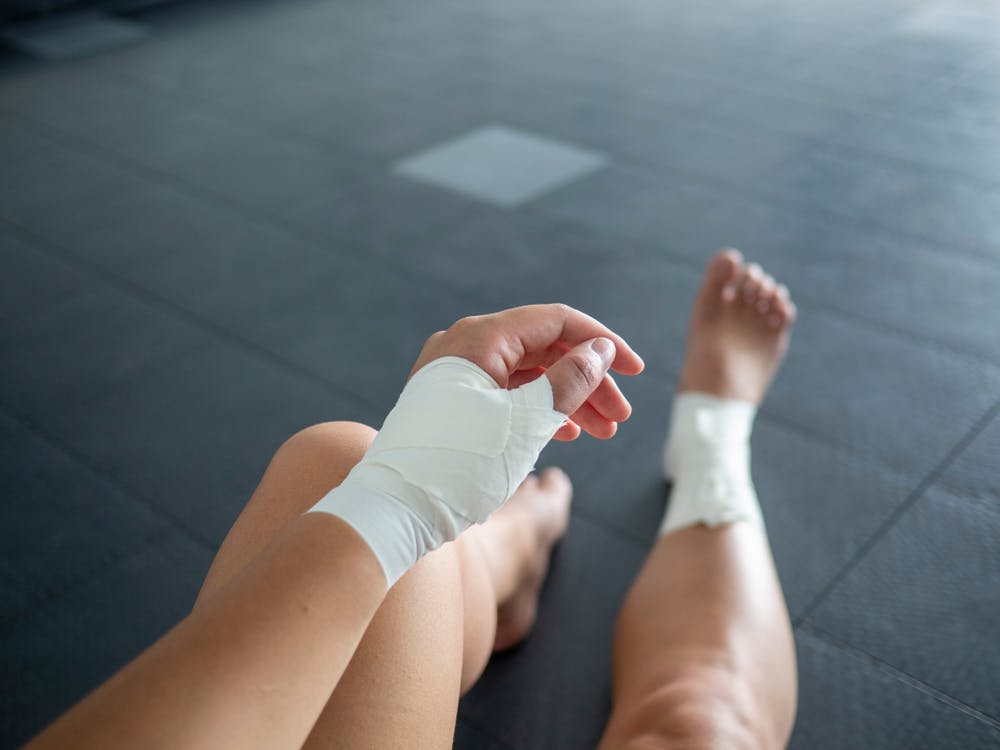 To tape or not? Some performers may prefer colleagues’ and coaches’ advice.
Shutterstock
To tape or not? Some performers may prefer colleagues’ and coaches’ advice.
Shutterstock
Some performers may prioritise advice from colleagues and coaches over medical recommendations. This may be partly because circus is a historic art form where, in many disciplines, training methods have been passed down through generations of performers.
For health-care practitioners, this knowledge can be valuable. So clinicians need to work with artists to come to a shared understanding of how to manage injuries.
Acknowledging the unique nature of circus training and performance, as well as the lack of evidence base to guide medical decision-making in the field, can also help build rapport and ensure a collaborative approach to managing injuries.
Read more: Are clowns scary? Ha ha aaaargh
Preventing injuries is the goal
Circus performers are generally adept at managing their bodies, using strength, flexibility and conditioning training to try to prevent injuries and improve their acts.
We have worked with performers to promote self-management, using techniques from more established fields such as sports and dance medicine.
For instance, we looked at adding self-directed endurance exercises to a performing, touring show. This was welcomed by many performers.
Read more: Health Check: do ice baths after sport help recovery or improve results?
A lot goes on behind the scenes
For the shows to go on, much behind-the-scenes work is needed from the artists and dedicated support staff.
For those involved in the care of circus artists, this provides not only a uniquely challenging and fascinating workspace, but an amazing view of some of the greatest shows on Earth.
Authors: Charlotte Ganderton, Physiotherapy lecturer, Swinburne University of Technology


















