

New research shows planting trees and shrubs brings woodland birds back to farms, from superb fairy wrens to spotted pardalotes
- Written by: Andrew Bennett, Professor of Ecology, La Trobe University
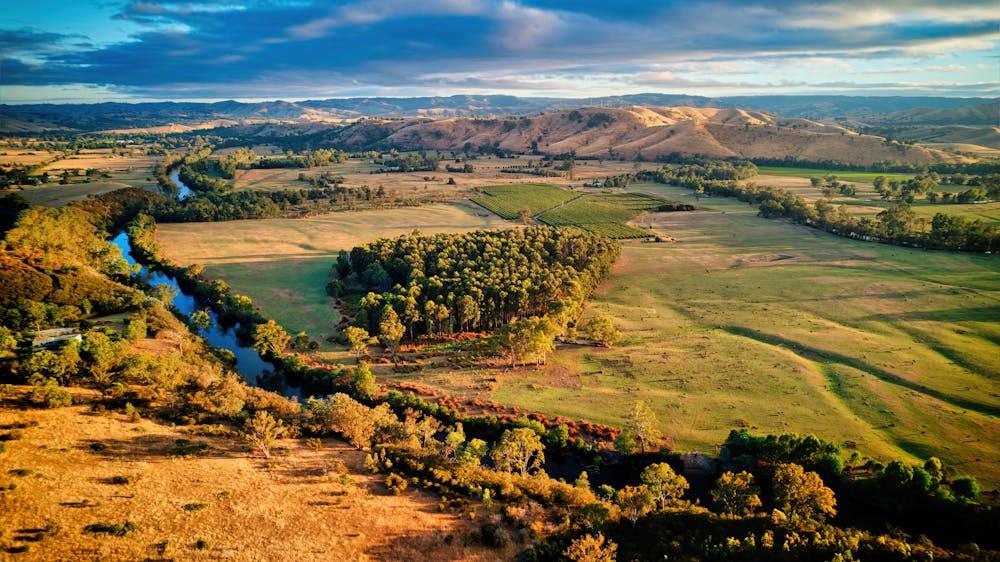
Rural landscapes are changing in southern Australia. Thanks to landholders, community volunteers and Landcare groups, farms are increasingly home to corridors of trees and shrubs along creeks, and paddocks bordered by trees.
Our research, published today, shows these efforts to revegetate farmland has made an important difference for woodland birds.
We surveyed and compared bird communities in farm landscapes with differing amounts of tree cover. We found when the amount of revegetation in open farmland increased, the number of woodland bird species did, too. For example, an increase in revegetation from 1% to 10% of the landscape doubled the number of woodland bird species.
This is important, because populations of woodland birds have been steeply declining in southern Australia, with species such as the southern whiteface, brown treecreeper and white-browed babbler now of conservation concern. The collective efforts of landholders can help reverse these declines by attracting species back into otherwise-cleared farmland.
Restoring habitat for woodland birds
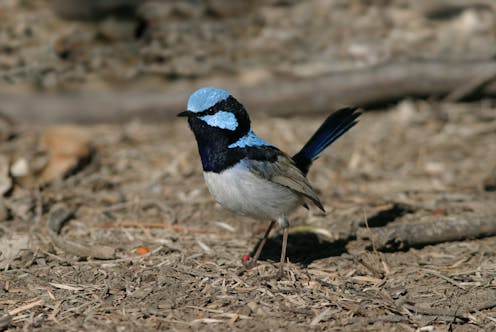
Look closely among native vegetation on farmland and you’ll find an array of birdlife, such as flame robins and superb fairy-wrens foraging for insects on the ground, and striated pardalotes and yellow thornbills feeding in canopy foliage.
Yet extensive habitat destruction, replaced by vast areas of intensive farmland, have caused the number of once-abundant woodland birds to decline greatly. Indeed, in many rural districts, such as in western and northern Victoria, more than 90% of native wooded vegetation has been cleared.
To help address this issue, the Morrison government last year announced an additional A$32.1 million for biodiversity stewardship on agricultural land.
A key activity under the stewardship scheme is revegetation. Our research clarifies how revegetation can help in the recovery of woodland birds.
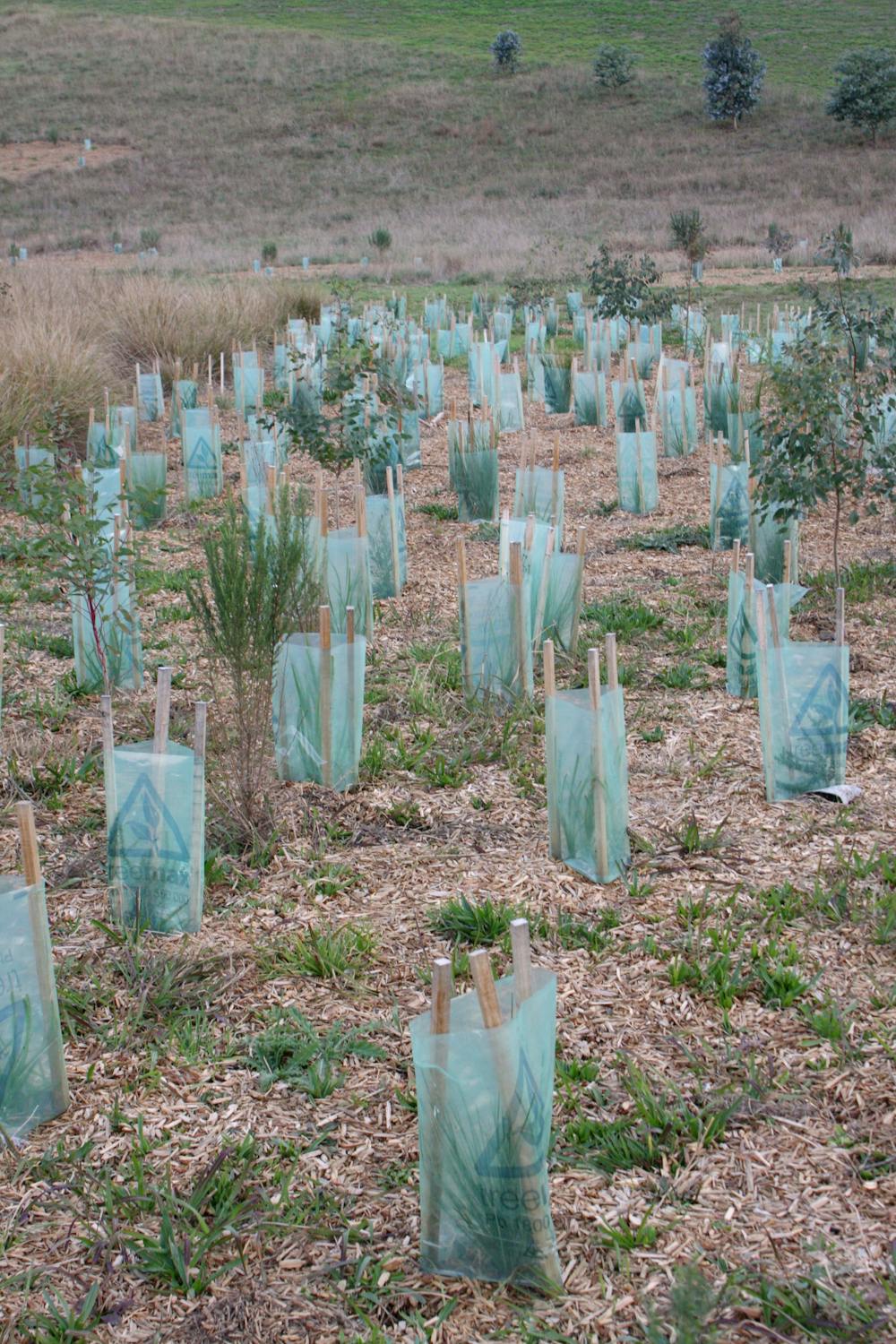 Revegetating farms can help boost the number of bird species present.
Rohan Clarke, Author provided
Revegetating farms can help boost the number of bird species present.
Rohan Clarke, Author provided
How does revegetation benefit birds?
Most research on the value of revegetation looks at individual “patches”. Our approach differed, as we sampled entire landscapes. Each landscape was 8 square kilometres in size, spanning one to three farms in south-western Victoria.
We identified three groups of landscapes, each having 1-18% tree cover. In one group, the tree cover was from revegetation. A second group comprised remnant native vegetation (natural vegetation that remains after the land was cleared). And a third had a mix of both revegetation and remnants.
We investigated important questions such as:
does the number of woodland species increase if more of the landscape is revegetated?
does revegetation attract new species back into the landscape, or simply provide more habitat for common species already present?
is the bird community in revegetated landscapes similar to that in remnant landscapes?
Read more: Birdbath, food or water? How to attract your favourite birds to your garden
In answer to the first two questions, we found the number of bird species in a landscape did increase with increasing wooded cover.
For example, in landscapes with only 1% revegetation cover, most birds were open-country species such as galah, red-rumped parrot and willie wagtail, with only 11 woodland species on average. On the other hand, landscapes with 15% revegetation cover had 25 woodland species, on average, as part of the bird community.
 New Holland honeyeater.
Rohan Clarke, Author provided
New Holland honeyeater.
Rohan Clarke, Author provided
In response to the third question, we found that revegetated landscapes and those with remnant native vegetation don’t offer the same benefits. For a given amount of wooded vegetation, revegetated landscapes had fewer species in total and supported different types of woodland species.
For example, revegetation favours birds that forage in shrubby areas, such as the New Holland honeyeater and brown thornbill.
In contrast, those that depend on older trees were less likely to be found in revegetated landscapes. This includes the white-throated treecreeper and varied sitella which forage on tree trunks and large branches, and the spotted pardalote and white-naped honeyeater that feed within canopy foliage.
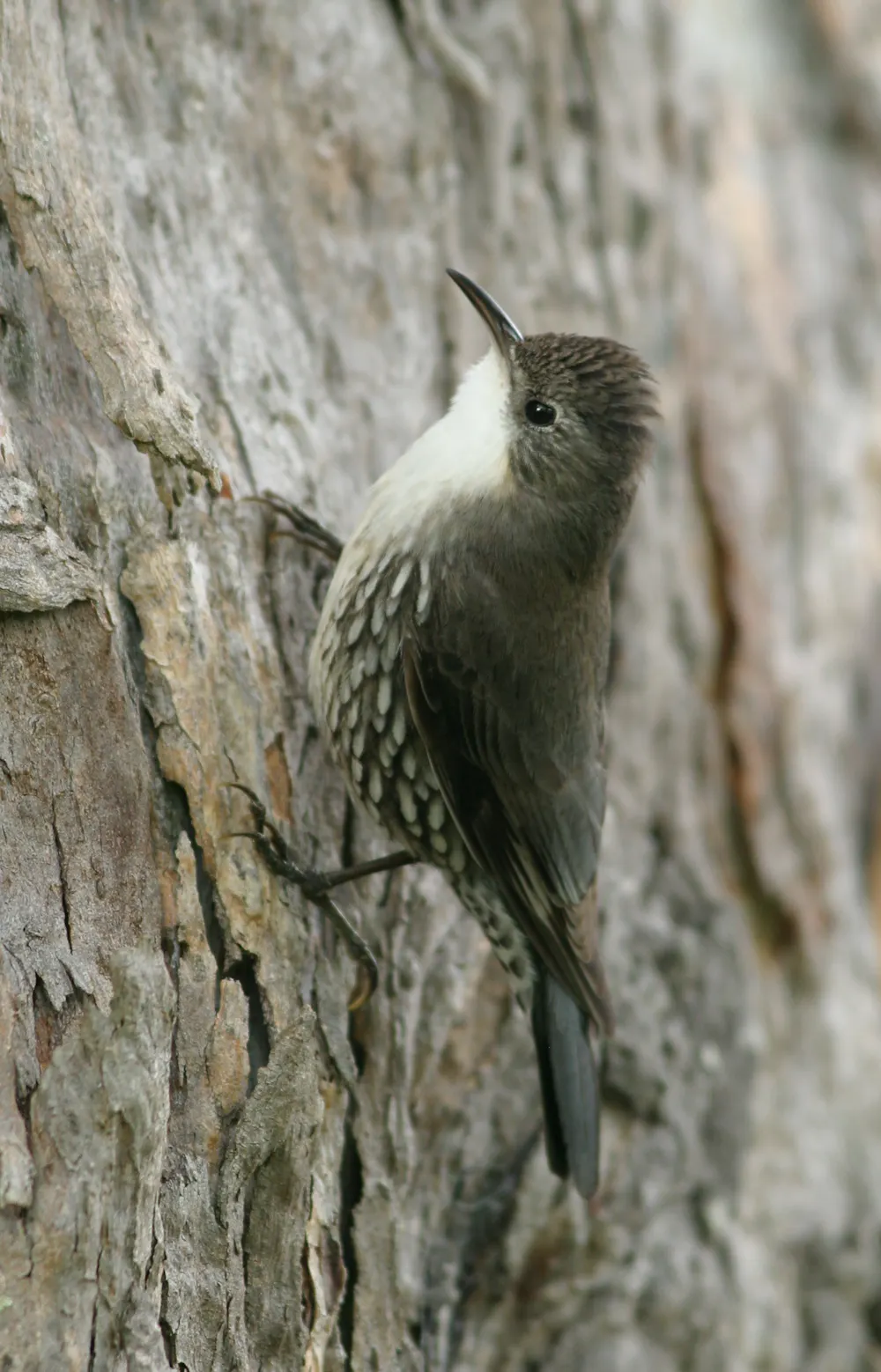 White throated treecreeper.
Rohan Clarke, Author provided
White throated treecreeper.
Rohan Clarke, Author provided
Where will revegetation be most effective?
Our research shows revegetation has greatest value when it’s interspersed among remnant vegetation.
These mixed landscapes have similar numbers and types of woodland birds to the remnant landscapes, and provide complementary resources for feeding, nesting and refuge.
We also found individual patches of revegetation have the greatest value for birds when they include a diverse range of trees and shrubs, are close to or connected with native vegetation, and are older (meaning the plants have had longer to grow).
Another valuable feature for birds is scattered trees. These veteran trees act as stepping stones that help birds move, and provide foraging and nesting habitat for species such as the brown treecreeper, laughing kookaburra and eastern rosella.
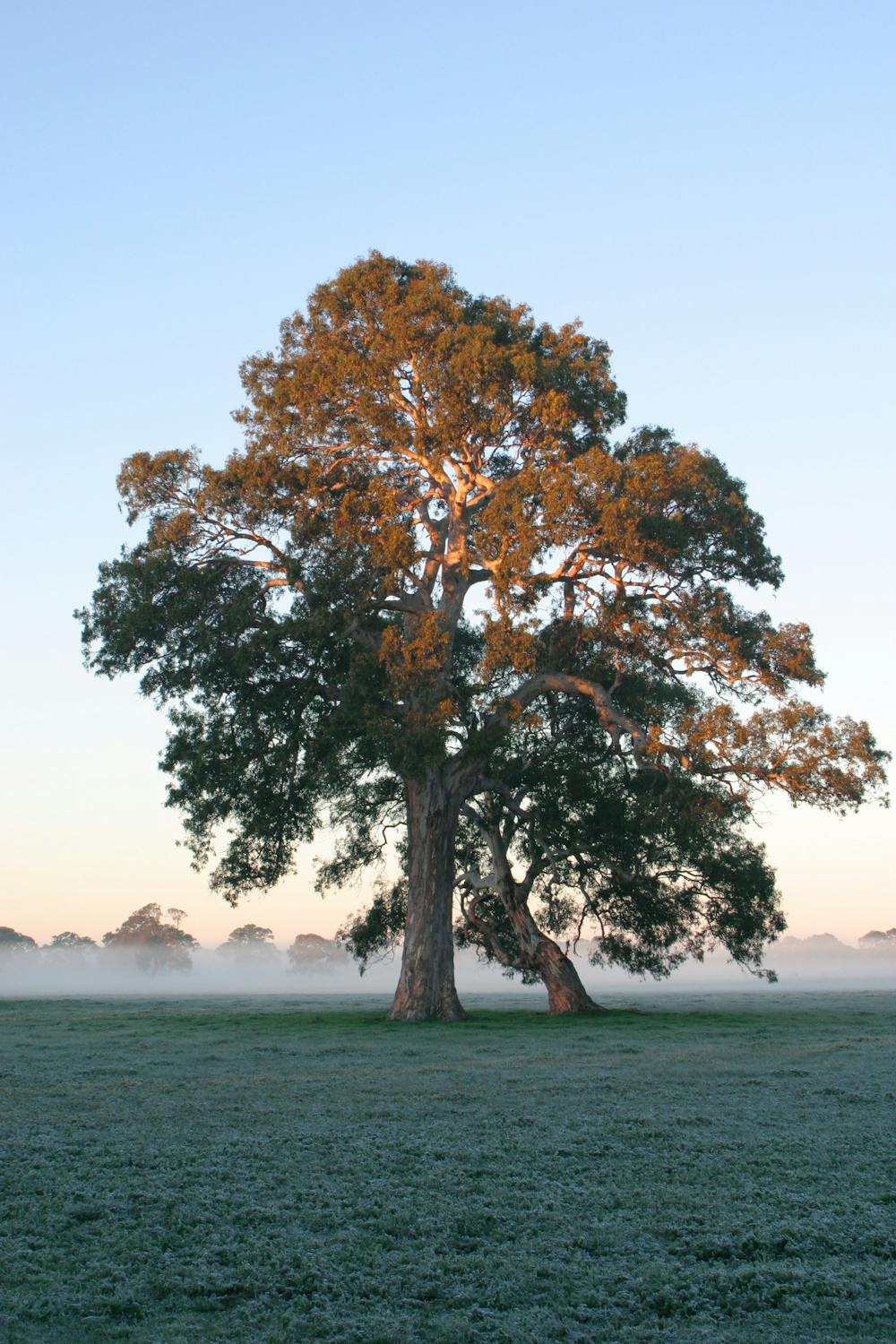 Scattered trees act as stepping stones between habitats for birds.
Rohan Clark, Author provided
Scattered trees act as stepping stones between habitats for birds.
Rohan Clark, Author provided
Working together
These results are encouraging, but there’s a long way to go to restore farmland environments. At least 11 of the 60 woodland species recorded in the study weren’t detected in revegetated landscapes, such as sacred kingfisher and black-chinned honeyeater. Others, such as jacky winter and eastern yellow robin were rare.
Increasing wooded vegetation to cover at least 10-30% of farmland is an important long-term goal to ensure sufficient habitat to sustain healthy populations of many species.
Of course, it’s not just for woodland birds – revegetating farms has a number of benefits. Planting along creeks helps stabilise stream banks and improve aquatic environments, trees store more carbon as they grow and age, and tree lines (shelterbelts) and shade benefit livestock and farm production.
In this United Nations Decade of Ecosystem Restoration, the actions we take now will benefit the lives of future generations.
Authors: Andrew Bennett, Professor of Ecology, La Trobe University


















