

On top of drastic emissions cuts, IPCC finds large-scale CO₂ removal from air will be "essential" to meeting targets
- Written by: Sam Wenger, PhD Student, University of Sydney

Large-scale deployment of carbon dioxide removal (CDR) methods is now “unavoidable” if the world is to reach net-zero greenhouse gas emissions, according to this week’s report by the Intergovernmental Panel on Climate Change (IPCC).
The report, released on Monday, finds that in addition to rapid and deep reductions in greenhouse emissions, CO₂ removal is “an essential element of scenarios that limit warming to 1.5℃ or likely below 2℃ by 2100”.
CDR refers to a suite of activities that lower the concentration of CO₂ in the atmosphere. This is done by removing CO₂ molecules and storing the carbon in plants, trees, soil, geological reservoirs, ocean reservoirs or products derived from CO₂.
As the IPCC notes, each mechanism is complex, and has advantages and pitfalls. Much work is needed to ensure CDR projects are rolled out responsibly.
How does CDR work?
CDR is distinct from “carbon capture”, which involves catching CO₂ at the source, such as a coal-fired power plant or steel mill, before it reaches the atmosphere.
There are several ways to remove CO₂ from the air. They include:
terrestrial solutions, such as planting trees and adopting regenerative soil practices, such as low or no-till agriculture and cover cropping, which limit soil disturbances that can oxidise soil carbon and release CO₂.
geochemical approaches that store CO₂ as a solid mineral carbonate in rocks. In a process known as “enhanced mineral weathering”, rocks such as limestone and olivine can be finely ground to increase their surface area and enhance a naturally occurring process whereby minerals rich in calcium and magnesium react with CO₂ to form a stable mineral carbonate.
chemical solutions such as direct air capture that use engineered filters to remove CO₂ molecules from air. The captured CO₂ can then be injected deep underground into saline aquifers and basaltic rock formations for durable sequestration.
ocean-based solutions, such as enhanced alkalinity. This involves directly adding alkaline materials to the environment, or electrochemically processing seawater. But these methods need to be further researched before being deployed.
Where is it being used right now?
To date, US-based company Charm Industrial has delivered 5,000 tonnes of CDR, which is the the largest volume thus far. This is equivalent to the emissions produced by about 1,000 cars in a year.
There are also several plans for larger-scale direct air capture facilities. In September, 2021, Climeworks opened a facility in Iceland with a 4,000 tonne per annum capacity for CO₂ removal. And in the US, the Biden Administration has allocated US$3.5 billion to build four separate direct air capture hubs, each with the capacity to remove at least one million tonnes of CO₂ per year.
However, a previous IPCC report estimated that to limit global warming to 1.5℃, between 100 billion and one trillion tonnes of CO₂ must be removed from the atmosphere this century. So while these projects represent a massive scale-up, they are still a drop in the ocean compared with what is required.
In Australia, Southern Green Gas and Corporate Carbon are developing one of the country’s first direct air capture projects. This is being done in conjunction with University of Sydney researchers, ourselves included.
In this system, fans push atmospheric air over finely tuned filters made from molecular adsorbents, which can remove CO₂ molecules from the air. The captured CO₂ can then be injected deep underground, where it can remain for thousands of years.
Opportunities
It is important to stress CDR is not a replacement for emissions reductions. However, it can supplement these efforts. The IPCC has outlined three ways this might be done.
In the short term, CDR could help reduce net CO₂ emissions. This is crucial if we are to limit warming below critical temperature thresholds.
In the medium term, it could help balance out emissions from sectors such as agriculture, aviation, shipping and industrial manufacturing, where straightforward zero-emission alternatives don’t yet exist.
In the long term, CDR could potentially remove large amounts of historical emissions, stabilising atmospheric CO₂ and eventually bringing it back down to pre-industrial levels.
Read more: The Earth needs multiple methods for removing CO2 from the air to avert worst of climate change
The IPCC’s latest report has estimated the technological readiness levels, costs, scale-up potential, risk and impacts, co-benefits and trade-offs for 12 different forms of CDR. This provides an updated perspective on several forms of CDR that were lesser explored in previous reports.
It estimates each tonne of CO₂ retrieved through direct air capture will cost US$84–386, and that there is the feasible potential to remove between 5 billion and 40 billion tonnes annually.
Concerns and challenges
Each CDR method is complex and unique, and no solution is perfect. As deployment grows, a number of concerns must be addressed.
First, the IPCC notes scaling up CDR must not detract from efforts to dramatically reduce emissions. They write that “CDR cannot serve as a substitute for deep emissions reductions but can fulfil multiple complementary roles”.
If not done properly, CDR projects could potentially compete with agriculture for land or introduce non-native plants and trees. As the IPCC notes, care must be taken to ensure the technology does not negatively affect biodiversity, land-use or food security.
The IPCC also notes some CDR methods are energy-intensive, or could consume renewable energy needed to decarbonise other activities.
It expressed concern CDR might also exacerbate water scarcity and make Earth reflect less sunlight, such as in cases of large-scale reforestation.
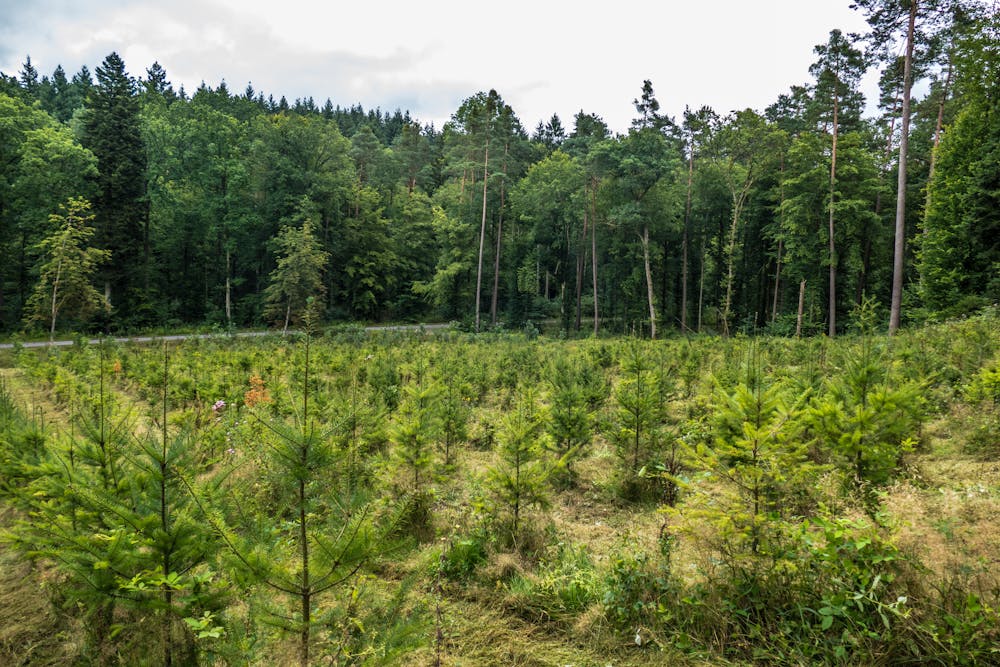
Read more: Solar panels in Sahara could boost renewable energy but damage the global climate – here's why
Given the portfolio of required solutions, each form of CDR might work best in different locations. So being thoughtful about placement can ensure crops and trees are planted where they won’t dramatically alter the Earth’s reflectivity, or use too much water.
Direct air capture systems can be placed in remote locations that have easy access to off-grid renewable energy, and where they won’t compete with agriculture or forests.
Finally, deploying long-duration CDR solutions can be quite expensive – far more so than short-duration solutions such as planting trees and altering soil. This has hampered CDR’s commercial viability thus far.
But costs are likely to decline, as they have for many other technologies including solar, wind and lithium-ion batteries. The trajectory at which CDR costs decline will vary between the technologies.
Future efforts
Looking forward, the IPCC recommends accelerated research, development and demonstration, and targeted incentives to increase the scale of CDR projects. It also emphasises the need for improved measurement, reporting and verification methods for carbon storage.
More work is needed to ensure CDR projects are deployed responsibly. CDR deployment must involve communities, policymakers, scientists and entrepreneurs to ensure it’s done in an environmentally, ethically and socially responsible way.
Authors: Sam Wenger, PhD Student, University of Sydney


















