

Tiwi Islands offshore gas fight shows public banks are under real pressure over fossil fuel funding
- Written by: Christian Downie, Associate Professor, Australian National University

Not so long ago, it was easy for public banks to fund new fossil fuel projects. But now, as the world faces a worsening climate crisis, the tide may be turning.
Case in point: after Traditional owners filed an injunction over a Santos gas development near the Tiwi islands, South Korea’s export credit agency announced it would reconsider its financial support.
“Environmental and legal risks” is one reason given by the Export-Import Bank of Korea (Kexim) for the delay in deciding on a loan of up to US$330 million for the project. The move could threaten its financial viability.
Public financial institutions are under renewed pressure to change lending practices after the world’s leading climate scientists strongly warned against any new fossil fuel infrastructure. In our region, public banks in China, Japan, and South Korea now face unprecedented scrutiny for their role in financing the climate crisis.
Not only that, but the Tiwi injunction has again shone a spotlight on the role played by export credit agencies like Kexim in pumping funds into new coal, gas and oil projects.

What are export credit agencies and why do they matter?
The Kexim loan was intended to go to the Korean energy group SK E&S, which had planned to export gas from the project to Asia. Without funding, there may be no project.
That’s why Kexim’s move is so important. While export credit agencies are not the only funders of oil, gas and coal infrastructure, and not the largest either, they have been instrumental in developing many of the world’s most carbon intensive sectors.
Read more: Green lending: world's biggest banks' latest initiative at COP26 is a step backwards
How? By locking in fossil fuel energy systems, leveraging private finance by reducing risk premiums, and shaping international standards which influence private bank policies. In short, they have played a key role in enabling fossil fuel expansion.
For decades, these state supported agencies have gone under the radar. No longer. Scrutiny is increasing of their work borrowing from national treasuries or public capital markets to finance export-oriented fossil fuel projects.
That’s not to criticise all the work these agencies do. They’ve proven invaluable for nations like South Korea as they industrialised. By providing direct loans, insurance and guarantees to foreign buyers, they have helped improve the competitiveness of their exports.
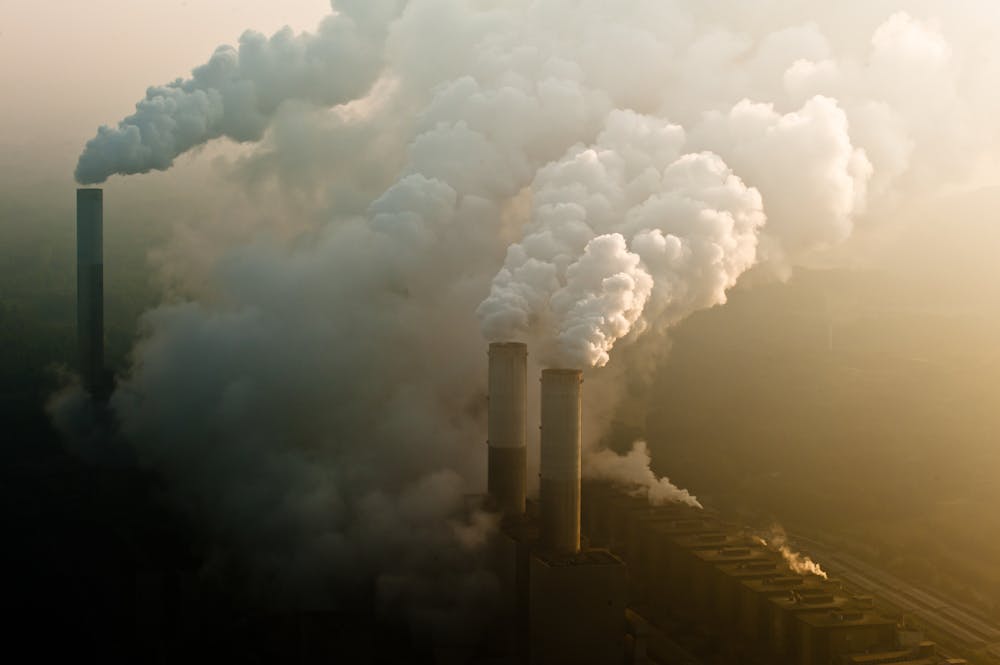 Many public and development banks have been funding fossil fuel projects locally and overseas.
Shutterstock
Many public and development banks have been funding fossil fuel projects locally and overseas.
Shutterstock
Ending lending: why export credit agencies must fund clean alternatives
If the world is to achieve the rapid energy transition necessary to avoid the worst effects of climate change, we will need a revolution in global finance. We have to drain funding from fossil fuels and pump it into clean energy.
Until recently, efforts to cut international public funding for fossil fuel projects have focused on multilateral development banks like the World Bank and the Asian Development Bank. In response, both have slowly started to shift their financing away from fossil fuels.
While that’s a positive step, bilateral funding bodies like export credit agencies are still stuck at square one. Research estimates these public banks are now financing fossil fuel projects more than the multilateral development banks. Between 2013 and 2015, for instance, these agencies financed oil and gas to the tune of US$32 billion a year. The worst offenders were Japan, Korea and the United States.
Australia’s equivalent – Export Finance Australia – is hardly blameless. Between 2009 and 2020, our agency loaned an estimated A$1.5 billion to new coal, oil and gas projects, dwarfing the funding it gave to renewable projects.
The pressure is mounting
As governments belatedly swing into action, it is likely we will see an end to the historical support given by these banks to highly polluting sectors. In turn, this will hinder corporate efforts to mobilise public and private finance alike.
That’s not to say there won’t be holdouts. At the Glasgow UN climate conference in late 2021, developed countries including the United States, Canada and the United Kingdom committed to ending public funding for “unabated fossil fuel energy”. Australia, Japan and South Korea were not among the signatories.
Read more: Why banning financing for fossil fuel projects in Africa isn't a climate solution
The Glasgow announcement came only a month after the OECD announced it would end export credit support for coal-fired power plants built without the ability to capture and store carbon dioxide.
 Renewable financing through Australia’s export credit agency has been limited.
Shutterstock
Renewable financing through Australia’s export credit agency has been limited.
Shutterstock
While important, these steps are nowhere near enough. To date, only the Canadian export credit agency has committed to aligning funding with the goal of net zero by 2050. That means the lending policies of almost all of these agencies remain glaringly inconsistent with Paris Agreement goals and renewed warnings from climate scientists.
In a year when unprecedented floodwaters have taken lives and livelihoods up and down Australia’s east coast, it is time for governments to revise the mandates of their export credit agencies. They can be a force for good by helping to leverage billions of dollars into clean energy projects, rather than fossil fuel ones.
Without government action, it will be left to local communities like the traditional owners in the Northern Territory and environmental organisations to fight uphill battles against these taxpayer funded banks.
Authors: Christian Downie, Associate Professor, Australian National University


















