

Here's what the major parties need to do about higher education this election
- Written by: Gavin Moodie, Adjunct professor, RMIT University
In the lead-up to the federal election, neither of the major parties has given higher education much thought or attention.
While the Coalition focuses on the military and Labor on aged care, universities continue to sweat it out after a decade of at best being ignored, and at worst being wilfully undermined by the current government.
Higher education might not be on many voters’ radars now, but as the number of 18-year-olds is projected to increase, if university funding and places do not increase, this could quickly become an issue if parents find their children can’t fulfil their dream of going to university.
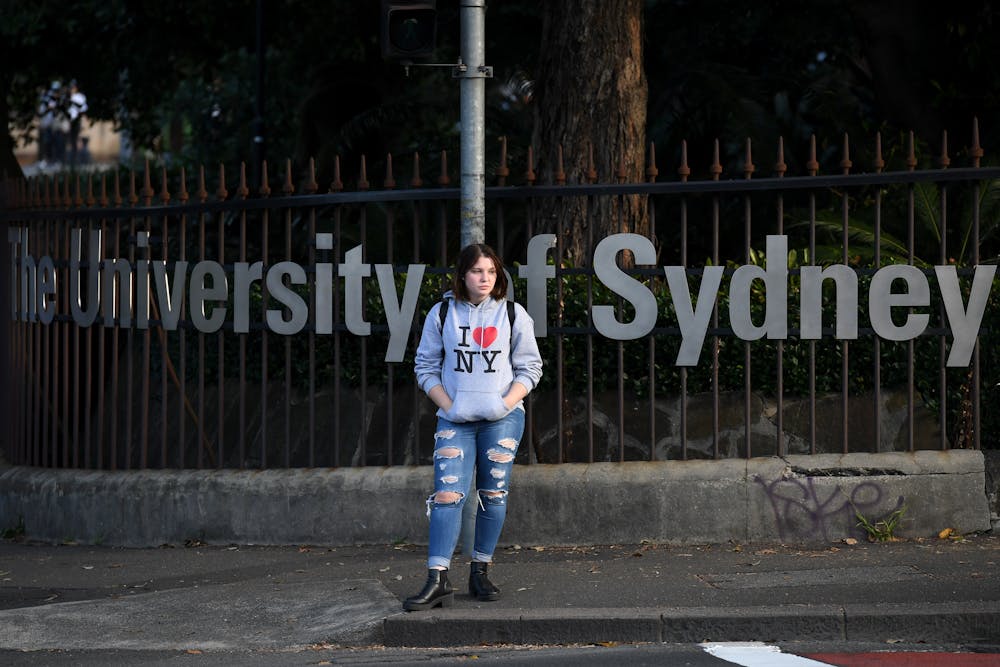
A decade of cuts and worse
Universities have been shunned by the Coalition government since it was elected almost a decade ago in 2013. While the Coalition’s first budget in May 2014 established the Medical Research Future Fund of A$20 billion and increased some other research grants, it cut operating grants and grants to the Australian Research Council and CSIRO.
The budget also unsuccessfully proposed to remove caps on student fees, and introduce fees for research higher degrees.
Read more: More expensive, more elite: higher education in five years
The Coalition cut operating grants again in 2017 and university research funding again in 2018, and successive education ministers secretly vetoed Australian Research Council grants in the humanities before the federal election in 2018 and again last year.
During the pandemic the government changed JobKeeper’s rules three times to exclude public universities from support, but left private higher education providers eligible.
The government made some modest concessions, by allowing universities to retain their student funding for 2020 even if they under-enrolled, offering increased funding for micro credentials, increasing research program funding in 2021 by $1 billion, and funding new places mainly for 2021. But overall the government’s actions appeared at best unsupportive.
Read more: The 2021-22 budget has added salt to universities' COVID wounds
The Coalition legislated its signature higher education policy Job-Ready Graduates in late 2020.
Job-Ready Graduates cut higher education funding again, but also made substantial other changes. This included lowering the fees for courses the government deemed more likely to lead to work such as teaching and nursing, and increasing them for law, commerce and the humanities.
Read more: New analysis shows Morrison government funding won't cover any extra uni student places for years
And as an eloquent closing statement of the Coalition’s political and policy priorities, its big-spending pre-election budget offered nothing new for education.
Read more: A cost-of-living budget: cuts, spends, and everything you need to know at a glance
What has the Coalition done and what should it do?
The Coalition has rightly been concerned about the long-term substantial under-representation in higher education of people from regional and remote areas. It has increased places at regional campuses, introduced regional university centres, and compensated regional universities for the cut in funding in 2017.
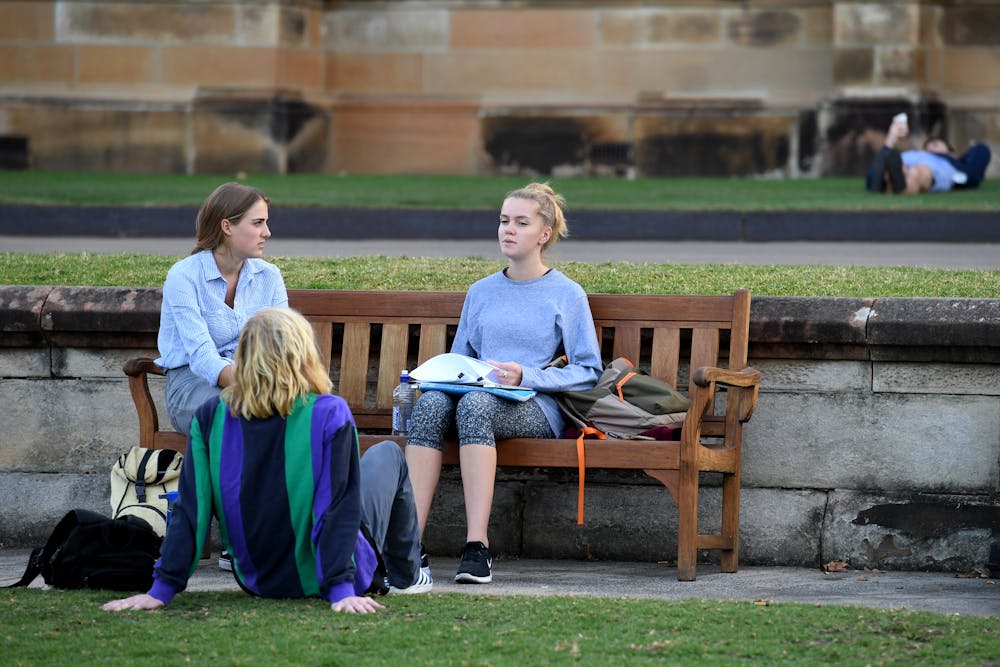 Regional and remote students are under represented at university.
Paul Miller/AAP
Regional and remote students are under represented at university.
Paul Miller/AAP
Yet depending on the method used to identify regional and remote students, remote students still have less than half the participation rate of other students, and regional students have 76-80% of the participation rate of other students.
The Coalition government removed the cap on places for Indigenous students from regional and remote areas. It should extend that policy for all Indigenous students, all remote students, and even all regional students.
There were only 10,000 remote students in 2020, which is half the number of Indigenous students, so there is little risk of a budget blowout from removing enrolment caps for them. There were around 200,000 regional students in 2020, so removing the enrolment cap for them would be more expensive. But they are only 20% of all domestic students, so even if regional students increased their enrolment substantially, their impact on the budget would still be relatively modest.
What has Labor promised and what should it do?
Labor has promised 465,000 free TAFE places (including 45,000 new places), and up to 20,000 extra university places for universities offering more places in areas it identifies as national priority and skills shortages (clean energy, advanced manufacturing, health and education) and more places for under-represented student groups. However, 20,000 places may not be enough, and more could be added.
Read more: Albanese offers more university places and free TAFE spots
Job-Ready Graduates has several design flaws, even accepting the Coalition’s premise that it should favour the jobs it predicts for the future, which is at least questionable on evidentiary and normative grounds.
Read more: Can government actually predict the jobs of the future?
The starkest anomaly is that fees for students in the humanities are $14,630 per year, 28% more than fees for medical students.
This is bad policy for at least three reasons.
The more than doubling of humanities fees by Job-Ready Graduates signals a devaluing of fields which are intrinsically valuable, and are instrumentally valuable in understanding society and culture’s handling of health measures and of developments abroad, whose importance has become more obvious in the last three years.
Secondly, humanities students now pay 93% of the funding for their programs, far more than the 29% medical students contribute to their programs’ funding. Third, humanities graduates earn far less than medical graduates and thus have far less capacity to repay their loans.
The simplest way for Labor to fix this would be to put society and culture in the same funding category as English, which the Coalition bizarrely split from the rest of society and culture. That would cut humanities fees to the lowest rate and it would increase total funding for society and culture by 10% to the same rate for English, education, mathematics and statistics.
While tertiary education might not seem like a vote winner now, if universities are left to flounder, higher education may become out of reach for more young people. Voters will surely start to pay attention then.
Read more of The Conversation’s analysis of Job-Ready Graduates
Authors: Gavin Moodie, Adjunct professor, RMIT University


















