

what is the 'better off overall test', and should you be worried about it?
- Written by: David Peetz, Professor Emeritus, Griffith Business School, Griffith University
The Coalition and Labor have been arguing over the “better off overall test”, known as the BOOT. What is it, why are they arguing, and who is right?
The BOOT is a provision in industrial relations law that requires any new enterprise agreement to leave workers better off, compared with the basic award conditions.
It was introduced by the Rudd Labor government in 2009, after the Howard government had abolished its predecessor – the “no disadvantage test” – enacted by the Keating Labor government soon after the advent of enterprise bargaining in 1992.
The BOOT is supported by unions, who see it as protection against wage cuts. It is opposed by employers, who see it as reducing flexibility, increasing costs and leading to “absurd outcomes”.
What is the argument about?
In 2020 the Morrison government introduced into the Parliament an “omnibus” bill that, among other things, tried to override the BOOT for a specific group and for a specific time.
The amendment was targeted at workers employed by companies that could claim they were affected by COVID-19.
It would have allowed those companies to negotiate enterprise agreements without having to worry about the BOOT. These agreements had to be made within two years of the bill’s passage, but the agreements themselves could last much longer.
Read more: Chance for genuine industrial relations reform thrown under the omnibus
It provoked so much opposition – including from Pauline Hanson – that then industrial relations minister Christian Porter withdrew the provisions in February 2021 before the the bill reached the Senate.
In the end most of the rest of the bill was withdrawn while being considered by the Senate. (It had also contained provisions affecting pay rates for part-time employees, lengthening greenfields agreements and penalising wage theft.) Only changes to the treatment of casuals were passed.
Return of the omnibus bill
A week ago (on April 16) Prime Minister Scott Morrison stated “absolutely” his intention to reintroduce the omnibus bill.
This immediately raised the prospect of the BOOT being undermined again, which the Labor Party seized on.
Shadow industrial relations minister Tony Burke said Morrison had “made clear” the omnibus bill was returning and this meant “every loading, every shift penalty, every overtime rate can be cut”.
In response, Morrison then said there would be “no major changes” to the BOOT.
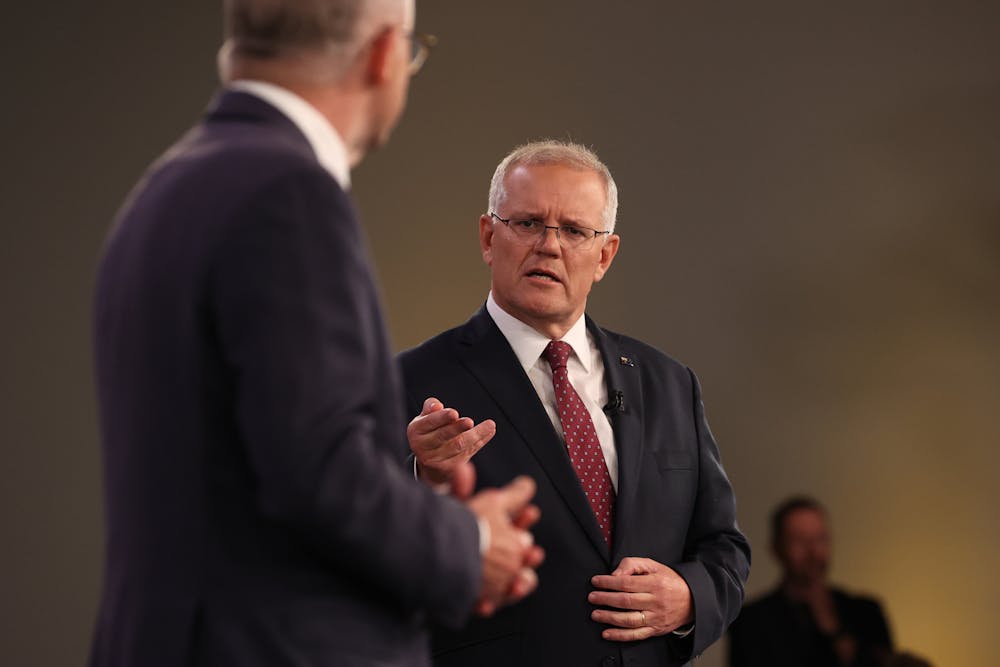
After further quizzing over what “no major changes” would permit, he said during the Sky News debate with Opposition Leader Anthony Albanese:
We said we’d only go forward with the measures that aren’t the emergency pandemic measures.
Those measures could lead to lower pay for part-time workers or poorer prospects for workers on greenfield sites, but would not directly affect the BOOT.
Can we find the truth of the matter?
In different circumstances Morrison’s latest comments might have been considered the end of the matter. A literal interpretation of his words is that the BOOT will not change, even if his previous comments implied otherwise.
But it’s not simple to be confident.
Parties make claims before an election they often feel they will not be held to afterwards, especially if they are re-elected after modifying previous election promises.
The most radical changes to industrial relations were introduced after the 2004 election, which returned the Howard government for its fourth and last term.
As part of its sweeping “WorkChoices” changes, the Howard government abolished the BOOT’s predecessor and protections against unfair dismissal for workers in medium and small enterprises, along with many other “reforms”. Some of those changes are still with us.
Yet these reforms were not mentioned before that election. Howard later justified this by saying voters should have been aware because his government’s intentions had “been very well known for a long period of time”.
They were, he said in 2005, “an article of faith” for the Coalition.
WorkChoices is widely considered a decisive factor in the Howard government’s defeat in 2007.
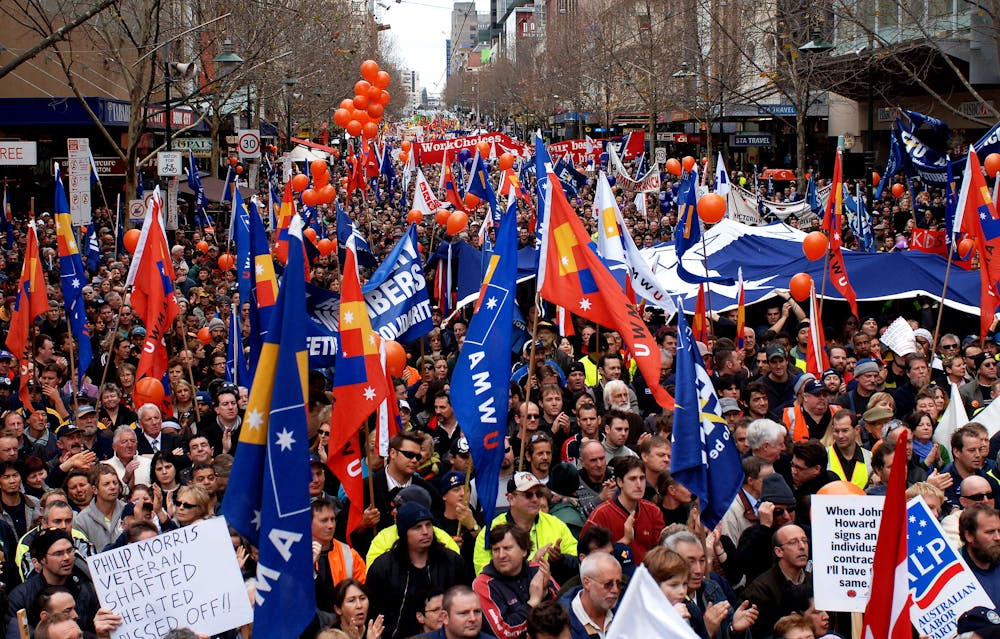 Thousands of workers rally against the Howard government’s Workchoices legislation in Melbourne in June 2006.
Julian Smith/AAP
Thousands of workers rally against the Howard government’s Workchoices legislation in Melbourne in June 2006.
Julian Smith/AAP
Is the BOOT safe or not?
Labor has stated it plans to retain the BOOT – an unsurprising position given it introduced it.
But it’s harder to know the Coalition’s intent, given its past actions and track record of campaigning against wage increases and supporting legislation to reduce workers’ bargaining power.
After the Coalition won power in 2013, the employment minister Eric Abetz warned of a wages explosion. Nine years of historically low wages growth followed, culminating in a period of real wage decline.
That said, even if the Morrison government is returned it would likely face a Senate hostile to the omnibus bill. Whatever gets introduced would depend on what they thought they could get away with.
In the unlikely circumstances it wins well enough to have the numbers in the Senate (as it did in 2004), its ambitions will be far greater and the omnibus bill irrelevant.
Either way, it is impossible to know what a re-elected Morrison government would do with the BOOT. All we can know is what has happened in the past.
Authors: David Peetz, Professor Emeritus, Griffith Business School, Griffith University


















