

Julian Barnes' new novel explores big questions
- Written by: Janna Thompson, Professor of Philosophy, La Trobe University
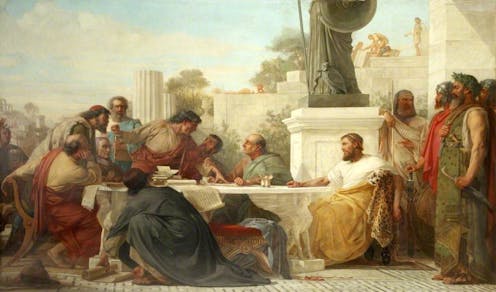
No standard or rule can settle the question of what something means, says the philosopher Wittgenstein. To apply a standard or a rule correctly you have to interpret it, and that interpretation requires an interpretation, and so on.
“Wittgenstein’s paradox” is supposed to make us wonder whether we can rightly interpret what others say or do. It questions whether we can truly understand the motivations and point of view of another person. And if you can’t understand people who play an important role in your life, then how can you know yourself?
Review: Elizabeth Finch – Julian Barnes (Jonathan Cape).

 Julian Barnes.
Urszula Soltys/Penguin Books Australia
Readers will respond in their own way to this challenge. Some will be encouraged to reflect on their relationships with others; some will read the book as a puzzle with no satisfactory resolution; others will interpret it as an account of an obsession that takes over a person’s life.
But Barnes’ novel is not a philosophical treatise. His narrator is not motivated merely by curiosity. The novel is fundamentally a love story. Neil loves the self-contained, enigmatic Elizabeth. As an unrequited lover, he wants to understand her and make himself worthy of her, though he never overcomes the fear that she will always find him disappointing.
Read more:
Where to start reading philosophy?
What is this deep love that Neil has for Elizabeth Finch? Defining and understanding that love is difficult.
Even Elizabeth’s appearance before her class encouraged speculation. She dressed conservatively, Neil remembers. Her clothes were old-fashioned, on the verge of being antique or vintage, but at the same time she managed to be stylish. She revealed nothing about her life, but there was something racy about her.
During drinks after class, her students speculated and sometimes fantasised about Elizabeth’s history and private life. Her presentation, “enriched by decades of smoking”, was calm and dispassionate, but she did not hesitate to express her opinions about the calamitous turnings she thought history had taken. She was pessimistic about human affairs, but refused to be labelled a cynic.
Neil describes her as a “romantic pessismist”, and later as a “romantic Stoic”. She demanded rigorous engagement from her students, but was never dismissive when they struggled to express their ideas. Elizabeth Finch, says Neil, was a finished article and her uniqueness could not be captured by the clumsy imaginings of her students.
Writing a life
So how can Neil express his love in a way that makes him worthy? After Elizabeth’s death, he is informed that she has given him sole charge of her books and papers. He first thinks of writing a biography that will capture and explain her uniqueness.
But her papers and books give him no insights into her life and character, or her past relationships. Her brother tells him of an encounter he once witnessed between Elizabeth and a man in a double-breasted overcoat. He saw them farewelling each other on a station platform, pressing together, palm against palm, and then parting without a backward glance.
Was she having an affair? Meeting the love of her life? Or did their interaction mean “nothing”, as she later told her brother? Neil’s attempt to find the man in the double-breasted overcoat, using the telephone numbers Elizabeth Finch has written down in a notebook, comes to nothing.
Read more:
Friday essay: Can you keep a secret? Family memoirs break taboos – and trust
What his former classmates tell him about their interactions are hard to reconcile with his own impressions. How do biographers do it? he wonders: make a life, a coherent life, out of circumstantial, contradictory or missing evidence? Is a narrative of a life even possible?
Neil gives up the idea of writing an account of Elizabeth’s life and embarks instead on a project of researching and writing about the man she called a “tragic loser”: Julian the Apostate, a Roman emperor of the 4th century. Julian tried to suppress the rise of Christianity, with its “punitive, control-freak God”, and return the Empire to paganism and its tolerance for a plurality of gods and religious expressions.
Julian Barnes.
Urszula Soltys/Penguin Books Australia
Readers will respond in their own way to this challenge. Some will be encouraged to reflect on their relationships with others; some will read the book as a puzzle with no satisfactory resolution; others will interpret it as an account of an obsession that takes over a person’s life.
But Barnes’ novel is not a philosophical treatise. His narrator is not motivated merely by curiosity. The novel is fundamentally a love story. Neil loves the self-contained, enigmatic Elizabeth. As an unrequited lover, he wants to understand her and make himself worthy of her, though he never overcomes the fear that she will always find him disappointing.
Read more:
Where to start reading philosophy?
What is this deep love that Neil has for Elizabeth Finch? Defining and understanding that love is difficult.
Even Elizabeth’s appearance before her class encouraged speculation. She dressed conservatively, Neil remembers. Her clothes were old-fashioned, on the verge of being antique or vintage, but at the same time she managed to be stylish. She revealed nothing about her life, but there was something racy about her.
During drinks after class, her students speculated and sometimes fantasised about Elizabeth’s history and private life. Her presentation, “enriched by decades of smoking”, was calm and dispassionate, but she did not hesitate to express her opinions about the calamitous turnings she thought history had taken. She was pessimistic about human affairs, but refused to be labelled a cynic.
Neil describes her as a “romantic pessismist”, and later as a “romantic Stoic”. She demanded rigorous engagement from her students, but was never dismissive when they struggled to express their ideas. Elizabeth Finch, says Neil, was a finished article and her uniqueness could not be captured by the clumsy imaginings of her students.
Writing a life
So how can Neil express his love in a way that makes him worthy? After Elizabeth’s death, he is informed that she has given him sole charge of her books and papers. He first thinks of writing a biography that will capture and explain her uniqueness.
But her papers and books give him no insights into her life and character, or her past relationships. Her brother tells him of an encounter he once witnessed between Elizabeth and a man in a double-breasted overcoat. He saw them farewelling each other on a station platform, pressing together, palm against palm, and then parting without a backward glance.
Was she having an affair? Meeting the love of her life? Or did their interaction mean “nothing”, as she later told her brother? Neil’s attempt to find the man in the double-breasted overcoat, using the telephone numbers Elizabeth Finch has written down in a notebook, comes to nothing.
Read more:
Friday essay: Can you keep a secret? Family memoirs break taboos – and trust
What his former classmates tell him about their interactions are hard to reconcile with his own impressions. How do biographers do it? he wonders: make a life, a coherent life, out of circumstantial, contradictory or missing evidence? Is a narrative of a life even possible?
Neil gives up the idea of writing an account of Elizabeth’s life and embarks instead on a project of researching and writing about the man she called a “tragic loser”: Julian the Apostate, a Roman emperor of the 4th century. Julian tried to suppress the rise of Christianity, with its “punitive, control-freak God”, and return the Empire to paganism and its tolerance for a plurality of gods and religious expressions.
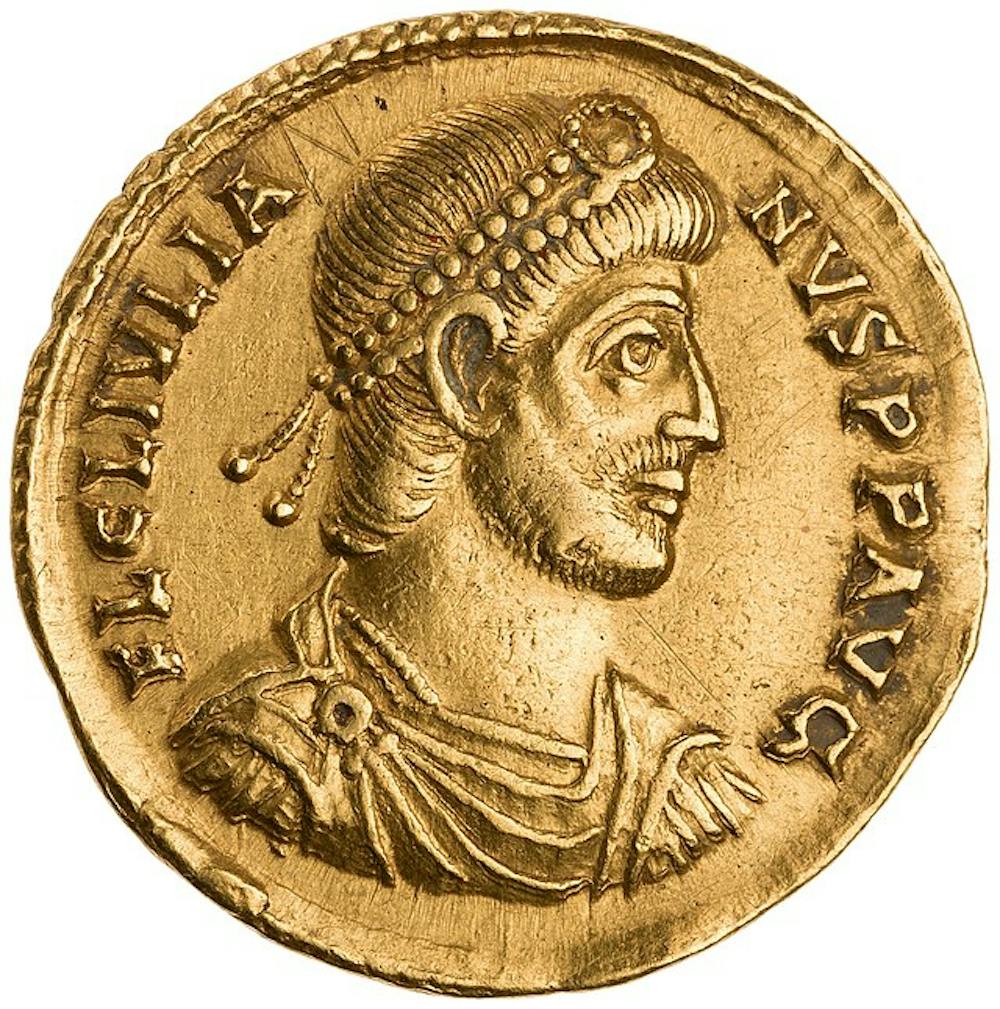 An ancient Roman coin featuring the image of Julian the Apostate.
Wikimedia commons
Perhaps, Neil supposes, he will be continuing work that EF (as he refers to her) was unable to complete. At least he will be proving wrong his son, who called him “the king of unfinished projects”.
Neil’s account of the Julian the Apostate’s life and influence, occupying almost a third of Barnes’ book, does prove that his son was wrong. But Neil soon comes to doubt its value as a way of honouring EF.
Read more:
A bitter culture war in the fourth century shows we may not be as divided as we think
He finds that questions of meaning are no more easy to answer about Julian the Apostate then they are about the life of EF.
Was he a virtuous, tolerant man as he was presented by his admirers, or a superstitious poser who encouraged his men to slaughter and rob the inhabitants of the lands he passed through? Was he the devil incarnate, as Christians for centuries believed, or did he heroically stand for ideals that emerged again during the Enlightenment – as some 18th-century philosophers claimed?
Was his failure and early death a historical turning point or irrelevant to the subsequent course of events? And why should Neil believe that by writing about Julian the Apostate, he is continuing the work of EF?
He relegates his manuscript to a desk drawer, leaving its fate in the hands of others. Elizabeth Finch remains enigmatic, her intentions unknown.
But does this matter? Anna, one of Neil’s former classmates, reminds him of EF’s warning about “monisms”: monotheism, monoculture, monopoly, monogamy. “Nothing good begins in this way,” she had said.
The assumption that there is only one right way of understanding and making judgements about a person, Anna suggests, is as bad as believing that there can be only one true religion or one way of understanding a nation’s history.
But what is real, true and undeniable, Neil realises, is his love for EF and how it has affected him. “Love is all there is,” EF once told her class, adding that reflecting on experiences of love is the best way for people to understand themselves.
Why care about the interpretations and impressions of others? Neil concludes: “Because, you see, the meaning she had for me it made her more mine.”
Authors: Janna Thompson, Professor of Philosophy, La Trobe University
An ancient Roman coin featuring the image of Julian the Apostate.
Wikimedia commons
Perhaps, Neil supposes, he will be continuing work that EF (as he refers to her) was unable to complete. At least he will be proving wrong his son, who called him “the king of unfinished projects”.
Neil’s account of the Julian the Apostate’s life and influence, occupying almost a third of Barnes’ book, does prove that his son was wrong. But Neil soon comes to doubt its value as a way of honouring EF.
Read more:
A bitter culture war in the fourth century shows we may not be as divided as we think
He finds that questions of meaning are no more easy to answer about Julian the Apostate then they are about the life of EF.
Was he a virtuous, tolerant man as he was presented by his admirers, or a superstitious poser who encouraged his men to slaughter and rob the inhabitants of the lands he passed through? Was he the devil incarnate, as Christians for centuries believed, or did he heroically stand for ideals that emerged again during the Enlightenment – as some 18th-century philosophers claimed?
Was his failure and early death a historical turning point or irrelevant to the subsequent course of events? And why should Neil believe that by writing about Julian the Apostate, he is continuing the work of EF?
He relegates his manuscript to a desk drawer, leaving its fate in the hands of others. Elizabeth Finch remains enigmatic, her intentions unknown.
But does this matter? Anna, one of Neil’s former classmates, reminds him of EF’s warning about “monisms”: monotheism, monoculture, monopoly, monogamy. “Nothing good begins in this way,” she had said.
The assumption that there is only one right way of understanding and making judgements about a person, Anna suggests, is as bad as believing that there can be only one true religion or one way of understanding a nation’s history.
But what is real, true and undeniable, Neil realises, is his love for EF and how it has affected him. “Love is all there is,” EF once told her class, adding that reflecting on experiences of love is the best way for people to understand themselves.
Why care about the interpretations and impressions of others? Neil concludes: “Because, you see, the meaning she had for me it made her more mine.”
Authors: Janna Thompson, Professor of Philosophy, La Trobe University 

















