

Attending school every day counts – but kids in out-of-home care are missing out
- Written by: Kitty Te Riele, Deputy Director (Research), University of Tasmania
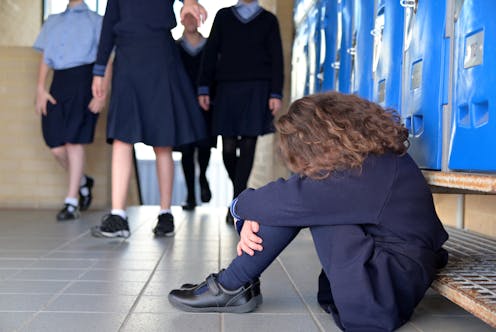
Consistent school attendance is important in any child’s education but for many children in out-of-home care, going to school every day is no easy thing.
There are three main types of out-of-home care in Australia: relative (or kinship) care, foster care, and residential care (small group homes). Children and young people who are unable to live safely at home, due to risk of abuse or neglect, are removed and placed in care by their state and territory child protection services.
In June 2020, there were 35,717 school-aged children (age 5-17) in care in Australia; 40% (14,444) of these were Indigenous children.
Research shows regular school attendance is crucial to educational achievement.
Unfortunately, children in out of home care face myriad challenges when it comes to attending school every day.
Read more: Low attendance in Year 7 may mean you're less likely to finish school
What is education like for children in care?
Evidence shows that too often these students in care end up having negative experiences in school, and worse academic outcomes than their peers.
For example:
- 82% of students in care in Year 3 meet the national minimum standard in NAPLAN-Reading, compared to 95% nationally. By Year 9, it drops to 69% (versus 93%)
- 81% of students in care in Year 3 meet the national minimum standard in NAPLAN-Numeracy, compared to 96% nationally. By Year 9, it drops to 61% (versus 93%)
- 57% of young care leavers (aged 18-25) completed Year 12 or equivalent, compared to the national average of 85%.

What are the issues and inequitable outcomes?
These young people are dealing with the impact of trauma and placement instability. But schools often lack expertise to support them.
Imagine what it’s like to attend five or more primary schools. Imagine having to get used to new teachers again and again. Dealing with new approaches to learning, new rules, and new classmates. Having to constantly catch up on what has been missed. Being thought of as the kid who is “behind”.
Aboriginal and Torres Strait Islander children in care also risk being disconnected from their culture and kin.
COVID-19 created and exacerbated problems. School closures have made school more difficult. COVID-19 uncertainty may have increased placement instability, schooling mobility, and economic and social stressors.
Quality education is essential for well-being and development. Improving education outcomes for students in care is of profound benefit to them. But it also benefits Australian society – now and for future generations.
 Absence from school flows on to negative effects like leaving school early, poor academic achievement, and social isolation.
Shutterstock
Absence from school flows on to negative effects like leaving school early, poor academic achievement, and social isolation.
Shutterstock
Attendance is fundamental
Regular attendance is crucial to educational achievement.
Absence from school flows on to negative effects like leaving school early, poor academic achievement, and social isolation. Even short absences – including absences that are officially allowed, such as illness – can make it more difficult for children to keep up.
The effects are cumulative. Each further absence makes things harder for the student.
The experiences that make school harder for children and young people in care (such as trauma and frequently moving to new care placements and schools) also lead to lower attendance. The statistics tell an alarming story:
The average number of days absent per term is double for students in care with a substantiated concern to the state child protection authority: seven days versus 3.4 days for students not in care. A substantiated concern means a report about safety of a child/young person has been investigated by a caseworker, and they have been found to be at significant risk of harm.
Suspensions also mean students miss out on school. South Australian data suggest the proportion of students in care who were suspended is almost four times higher: 23% versus 6% across all students.
The best available data about absences and suspensions are from South Australia, but there is no reason to believe it is much different in other jurisdictions.
They show attendance is fundamental to improving outcomes for children in care. somethign funny here with the link
Aboriginal and Torres Strait Islander children and young people in care are doubly disadvantaged. For example, in a review of 1,000 cases in Victoria, 30.5% of had been suspended in secondary school. In primary school, the proportion was 11.4%.
What can be done?
Behind these figures sits a complex challenge.
It’s not the fault of these young people. They did not choose to go into care, or that their lives would be characterised by disruption and trauma.
Nor should we blame schools and teachers.
Frequent absences of children in care is a systems problem that goes beyond the responsibility of individual schools.
We’ve known about these problems for a long time. But several policy commitments now provide hope.
The 2019 Alice Springs (Mparntwe) Education Declaration names “learners in out-of-home care” as a group needing targeted support.
The 2020 National Agreement on Closing the Gap highlights school attendance as a key driver for ensuring Aboriginal and Torres Strait Islander students “achieve their full learning potential”.
The federal government’s National Standards for Out-of-Home Care require state and territory governments to work to enhance life chances for children in care, including through appropriate education.
And the relatively new Safe and Supported: the National Framework for Protecting Australia’s Children 2021–2031 recognises access to education as a “fundamental right”.
These commitments create a powerful opportunity to give children and young people in care a fair go at their education - to set them up for learning, and for life.
But this will need collaboration across education and child protection systems to ensure these children attend school. Every day counts.
Authors: Kitty Te Riele, Deputy Director (Research), University of Tasmania


















