

Climate change hits low-income earners harder – and poor housing in hotter cities is a disastrous combination
- Written by: Stephen Healy, Senior Research Fellow, Institute for Culture and Society, Western Sydney University
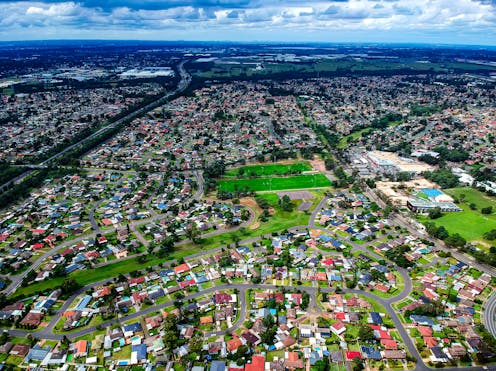
Cost of living is a major focus in this election campaign, and yet political leaders have been unacceptably silent on the disproportionate impact of climate change on Australians with low incomes. This is particularly true for Western Sydney, home to around 2.5 million people.
Over the last half century, the balance of Sydney’s social housing has been pushed to the west, where it can be up to 10℃ hotter than the breeze-cooled coast. Meanwhile, rapid housing development reduces existing tree canopy daily, further intensifying heat.
This situation locks in cycles of disadvantage for decades and generations to come. Even if we limit global warming to 1.5℃ this century, Western Sydney will still experience fewer than 17 days of 35℃ per year by 2090.
Australia needs a more holistic, forward-thinking approach to the design of hot cities, one that’s up to the task of changing with the climate.
Living with urban heat now
Low-income communities are more likely to live in poorly constructed, heat-affected rental accommodation and least able to afford air conditioning. What’s more, those living in community housing may be restricted from installing air conditioning units.
Our research from 2016 found residents expend a lot of mental and physical energy during summer just to keep their homes bearable, while worrying about how much cooling might be costing.
Read more: We still live here: public housing tenants fight for their place in the city
After interviewing vulnerable groups of people in Western Sydney – such as elderly citizens, disability carers and young mothers in social housing – we found people turn to lessons from their parents to find relief from heat.
This includes soaking sheets in water, directing fans to blow air over them and create cool pockets in the house, confine themselves to cooler rooms, and cover west-facing windows with blankets or aluminium foil.

This summer’s La Niña weather pattern may have spared Western Sydney from scorching daytime highs, but residents had to contend with hotter and more humid nights. Wet conditions and cloud cover inhibit the capacity of poorly designed houses to shed the heat, leading to sleeplessness.
Many Western Sydneysiders work from home, too. Community organisation Better Renting recently produced a report detailing the impact of poor housing on worker productivity during the pandemic. It found those working from home without the means or capacity to improve their environments said they were stressed, couldn’t focus, and needed to finish work early during summer.
Air-conditioning can provide relief and is critical for some residents, such as some people living with a disability who depend on cool homes and cars for survival. But air-conditioning displaces the indoor heat to the outside, contributing to a more hostile outdoor environment.
So while air-conditioning offers a short-term solution, it does nothing to address long-term disadvantage.
‘Solutions’ don’t go far enough
Social disadvantage underscores the limitations of well-meaning technical solutions, such as the New South Wales government’s program to plant five million trees by 2030, or City of Sydney’s project of committing to renewable-powered air conditioning.
These solutions don’t go anywhere near far enough to address the fundamental short-sightedness in how we design and plan our cities.
For example, young trees need far more care to reach maturity through extreme weather, unlike older trees, of which many have been cut down to make way for development. And solar-powered air conditioning will not undo the compounding impacts of urban heat, which research shows make us sedentary, passive and lonely and insecure because it keeps us indoors and isolated from each other.
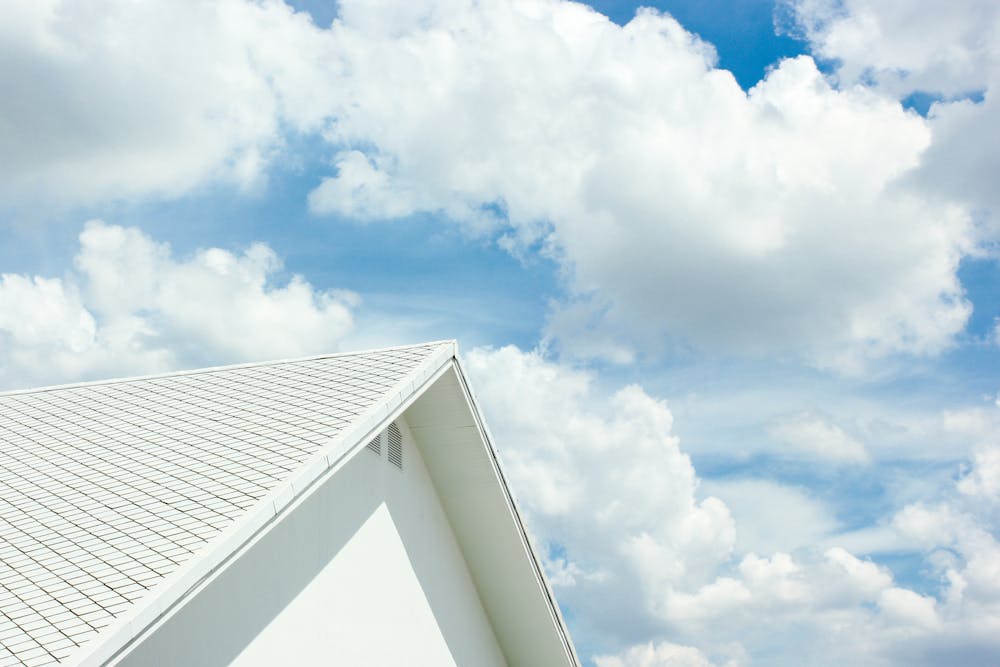 Installing light-coloured roof tiles are a low hanging fruit for keeping homes cool.
Shutterstock
Installing light-coloured roof tiles are a low hanging fruit for keeping homes cool.
Shutterstock
Indeed, Western Sydney’s current trajectory of urban growth will see urban heat and its impacts worsen, particularly as the state government resists mandating lighter-coloured roof tiles as a perceived impediment to development. Lighter-coloured roof tiles are better at reflecting rather than absorbing heat, and are a low-hanging fruit for cooling homes.
This trajectory will subject future generations of Western Sydney residents to a city that may become ultimately uninhabitable for months at a time. These predictions may seem dire, but we cannot afford to ignore them.
One stark prospect is that even newer and more expensive homes being built in Western Sydney’s growth areas may become stranded assets in a future, when 50℃ summer days are a norm and the area is subject to regular flooding.
So what do we do?
Researchers and policy makers are turning their attention to making Australian cities more “climate-ready”.
While catastrophic for communities, the recent floods, fires and other disasters carry valuable lessons about design failures and community-led solutions that have ultimately kept people safe.
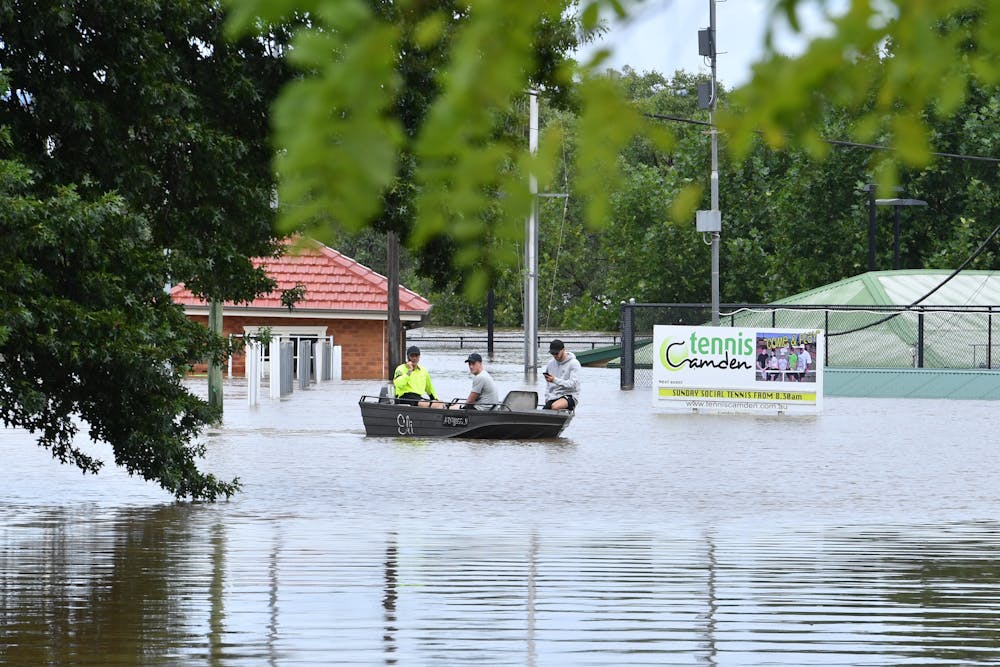 Floodwaters inundated south and southwestern Sydney suburbs in early March.
AAP Image/Dean Lewins
Floodwaters inundated south and southwestern Sydney suburbs in early March.
AAP Image/Dean Lewins
We’ve learnt “climate-readiness” cannot be done in a piecemeal way or achieved in the background of everyday life, like set-and-forget technologies. Instead, it means noticing how the natural and built environments interact, and the social practices that contribute to cooler, more liveable futures.
This might include enrolling communities in the care of young trees around their homes, maintaining breeze ways or shade through neighbourhoods, outdoor cooking during summer to reduce heat inside, or shifting the rhythms of social life to cooler night time hours.
This is encompassed in a process called “transition design”, which takes holistic, long-term view of urban planning to forge a sustainable future. This means starting with what residents want and know works – whether its creating cool pockets in the home or reaching out to neighbours when heat is on its way.
Read more: How new design patterns can enable cities and their residents to change with climate change
Planners, designers and policymakers should practically link these social solutions to designs that make these more accessible, manageable, engaging and safe.
Parts of everyday life will look very different in future as we grapple with managing energy and adapting homes to changing climates. But we must also recognise and hold on to what’s important, including reclaiming what we’ve lost to rampant development.
Long-term residents of Western Sydney may recall a more liveable city, with shaded pedestrian links between homes and shops, seating and facilities in parks and better access to public transport.
These basic amenities are a commonwealth that allow us to remain at home in an increasingly less hospitable world.
Authors: Stephen Healy, Senior Research Fellow, Institute for Culture and Society, Western Sydney University


















