

The arts helped us through the pandemic – NZ's budget should radically rethink how and why they're funded
- Written by: Mark Harvey, Senior Lecturer in Creative Arts, University of Auckland
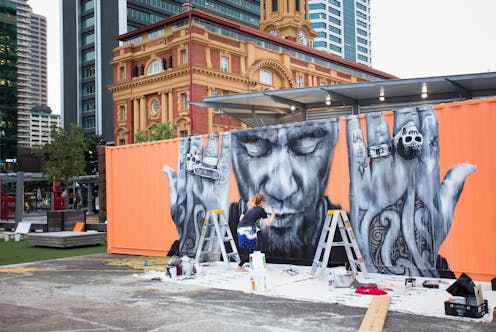
The past two years have made it impossible to ignore the problem in Aotearoa New Zealand’s arts sector. The pandemic has been brutal, with venues shut, festivals cancelled and audiences staying home.
At the same time, art in all its forms – books, music, TV, film, even the visual and performing arts – helped people through lockdowns and uncertainty. We were reminded how vital art is for our well-being, sense of belonging, education and aspirations for a better world.
The government acknowledged this with emergency relief packages in 2020 and earlier this year. Yet the basic model for arts funding hasn’t changed and still doesn’t deliver equitable, sustainable income for artists or arts organisations. Nor is it delivering equitable and sustainable access to the arts for all people.
The evidence has been stark. People working in the creative arts earn just NZ$35,800 a year on average, with only $15,000 of that coming from their creative practice. It’s hard to be hopeful about support for up-and-coming artists when the funding system and wider arts economy is geared towards an elite few.
The existing funding model has also been questioned for the amount that ultimately reaches artists themselves, and what this means for audiences and everyone involved the sector.
The pandemic brought this all to a head, with arts sector advocates calling for more than a temporary lifeline, and nothing less a long-term vision and strategy for a sustainable, diverse, equitable future for the sector.
Rather than ask what the arts should receive in next week’s budget, we propose instead a complete revamp of Aotearoa New Zealand’s arts policy and funding systems.
New world, old models
As we emerge (tentatively) from a world-changing experience, now is the perfect moment to listen to those calls for action. The government has already indicated an understanding of the multiple ways in which the arts are important to society, beyond just the economic.
And while the pandemic placed immense financial pressure on those working in the arts, it also showed how the sector could be funded at an unprecedented level that acknowledges the vital relationship between the arts, society and well-being.
Read more: Australia should have a universal basic income for artists. Here's what that could look like
According to a 2021 survey by Creative New Zealand, most New Zealanders support public funding of the arts. But despite the many social and political changes since the country adopted the British arts council model in 1963, the essential funding rationale has barely changed from its colonial origins.
Specifically, and in spite of the official rhetoric, the government’s arts policy initiatives still rely on a calculus, embedded in policy over the past 40 years, that measures the primary value of art based on its direct or indirect contribution to the economy and GDP.
How about we set 2023 – the 60th anniversary of the Arts Council – as the year we come up with a completely new system?
10 ways forward
Change needs to start with the state genuinely listening to artists, others involved with the sector, and the wider population, about the role and function of the arts beyond purely economic measures. That should include Māori views of art as integral to, and integrated with, all aspects of life and society.
Genuinely listening implies an open-ended process, not one where there is already a plan waiting in the wings to be implemented regardless. Such a process could draw on marae-based decision making and consensus-based democracy models, with the process guided by Te Tiriti o Waitangi.
Read more: Even if next week’s budget avoids the issue, it’s time New Zealand seriously considered a wealth tax
But we can also look overseas for inspiration with alternative ways of resourcing the arts. Research we’re involved with has thrown up ten tangible ways New Zealand’s support for the arts could be improved:
a liveable universal wage, benefit or income for artists
a social insurance or welfare scheme for artists, including pensions
tax exemptions and credits
liveable pay standards and fair minimum fee scales aligned with expertise
long-term funding schemes, grants of five years and longer available for all artists
royalties for all arts disciplines
housing support for artists
subsidised arts studios, venues and offices
participatory grant systems where artists and communities decide on funding allocation
arts funding in all levels of education, including fully subsidised tertiary education
Transformative change
Revamping government policies and structures will ideally involve a more holistic recognition of the multiple ways the arts benefit society. For example, the Treasury’s Living Standards Framework considers individual and collective well-being and wealth beyond the merely financial.
Similarly, we might listen to the late Manuka Henare’s proposal for a Māori economic model that placed mana, well-being and self-determination at its centre. Or the Māori adaptation of so-called “doughnut economics”, based on fairness, sustainability and social well-being.
Applying these kinds of values to arts policies and funding would help avoid tokenism and the risk of sliding back towards the economic status quo.
In 2017, the government promised it would be transformative, although the catchphrase was quietly dropped. It’s time to revive that transformative ideal and begin the change that would make a difference, for and through the arts, for generations to come.
Authors: Mark Harvey, Senior Lecturer in Creative Arts, University of Auckland


















