

Can sniffer dogs really detect COVID almost as well as a PCR test? Turns out they can
- Written by: Hassan Vally, Associate Professor, Epidemiology, Deakin University
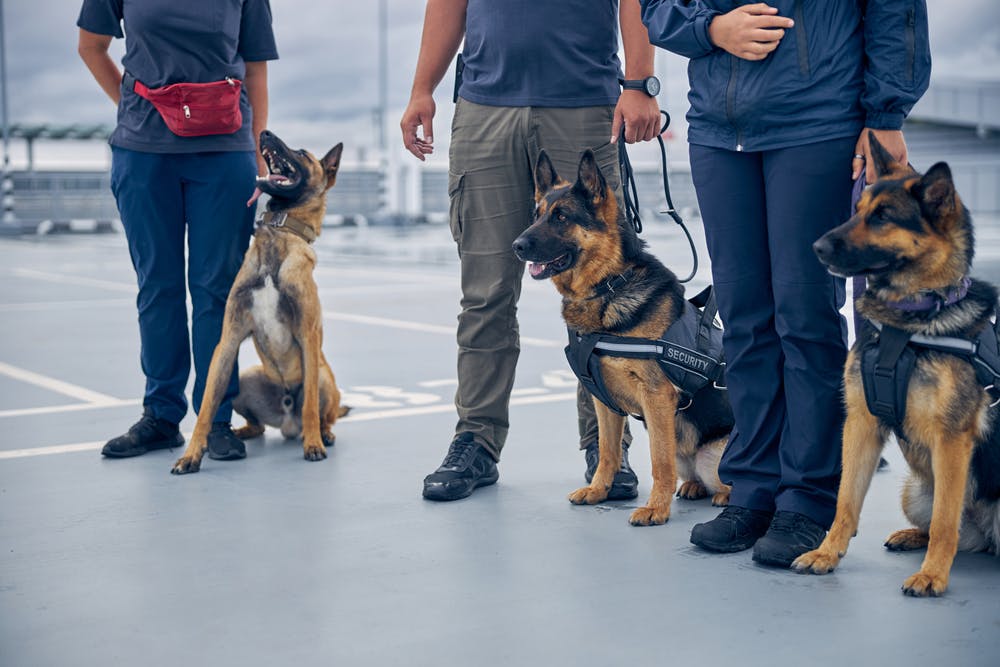
Dogs have an exceptional sense of smell. We take advantage of this ability in many ways, including by training them to find illicit drugs, dangerous goods and even people.
In recent years, a dog’s sense of smell has also been used in the medical field. These remarkable animals can be trained to sniff out cancer, diabetes, and extraordinarily, epileptic seizures before they occur.
Early in the pandemic the possibility of using dogs to sniff out COVID was explored in a few countries. And although the results of these early trials surpassed most people’s expectations, many questions remained. These included how well these findings would stand up to more rigorous scientific scrutiny and how well dogs would perform outside the artificial environment of the research laboratory.
Read more: Yes, dogs can sniff out COVID. But not after dinner, when they need a nap
In the past week we have moved closer to answering these questions, with an article published in BMJ Global Health, which found dogs could detect COVID almost as well as PCR tests, in some circumstances.
What did the researchers test?
This article reported the results of two studies. In both studies, four dogs were tested to see how well they detected COVID from skin swabs taken from people with or without COVID (according to the gold-standard test, PCR).
These dogs didn’t just come off the streets; they had already had a significant amount of training in sniffing out drugs, dangerous goods or cancer.
The first study
In the first study, the researchers looked at whether the dogs could identify COVID in the skin swabs of 420 volunteers, 114 of whom had tested positive to COVID by PCR.
The study was rigorous, with various precautions against the results being compromised. This included an elaborate study protocol that involved a number of separate assistants and a dog handler. None of them knew whether the sample was from someone with COVID, so they could not influence the outcome, intentionally or unintentionally.
The dogs detected COVID with a sensitivity of 92% (which refers to their ability to correctly identify those with infection) and a specificity of 91% (their ability to correctly identify those without infection).
Although there was some variation between dogs, they all performed exceptionally well. There are no significant disclaimers here, this was a great result.
The second study
The second study was important as its goal was to see how well the dogs could do in the messiness of the real world. This real-life trial involved the dogs sniffing 303 incoming passengers at Helsinki-Vantaa International Airport in Finland. Each passenger also took a PCR test.
The dogs matched the PCR results in 296 out of 303 (98%) of the samples and they correctly identified the swabs as negative in 296 out of 300 (99%) samples.
The important consideration in interpreting this result is this happened during airport screening, a situation where you wouldn’t expect many people to test positive.
 Sometimes tired doggies just need a bit of a lie down.
Shutterstock
Sometimes tired doggies just need a bit of a lie down.
Shutterstock
In this type of low-prevalence environment, you want dogs to be able to screen passengers with a high “negative predictive value”. That is, you want the dogs to be able to identify people who are not carrying the virus to differentiate them from those who may be carrying it. Then you would carry out confirmatory PCR testing on that last group.
In an environment where the prevalence of COVID is around 1%, such as an airport, the researchers estimated the “negative predictive value” for dogs screening for COVID to be 99.9%. That is, the dogs would be expected to correctly exclude 99.9% of passengers as having COVID. This is another fantastic result.
Read more: Want to cut your chance of catching COVID on a plane? Wear a mask and avoid business class
Low tech and instant
In a world where we rely on expensive technological solutions, there is something reassuring about finding a low-tech option for screening COVID.
Importantly, however, the study highlights dogs are quick to train for this task and are ideal for screening in high-throughput settings, such as airports, given how accurate they are and the fact they give instant results.
Although nothing should surprise us about our closest friend, another incredible outcome from this study was the suggestion the dogs may have been able to distinguish between the variants of SARS-CoV-2, the virus that causes COVID.
While other possible explanations cannot be excluded, the performance of the dogs seemed to drop with the emergence of the Alpha variant. This was attributed to the dogs being able to identify a difference between this variant and the wild-type virus on which they were originally trained.
These studies confirm nothing could be further from the truth when we say you can’t teach an old dog new tricks.
Authors: Hassan Vally, Associate Professor, Epidemiology, Deakin University


















