

Labor has a huge health agenda ahead of it. What policies should we expect?
- Written by: Stephen Duckett, Honorary Enterprise Professor, School of Population and Global Health, and Department of General Practice, The University of Melbourne
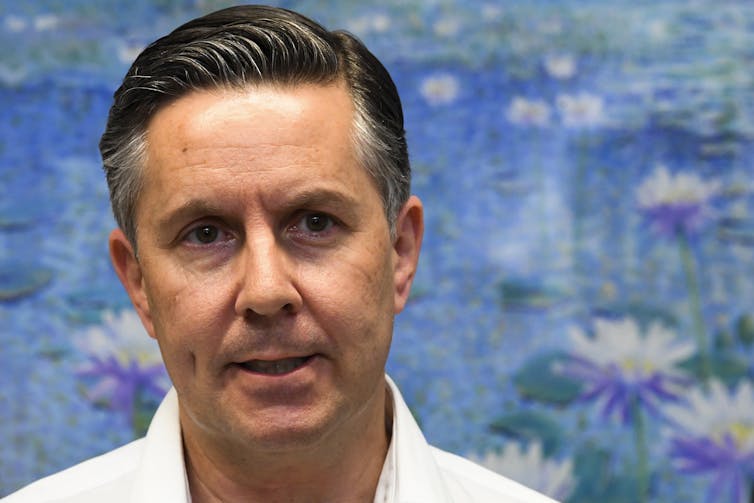
Labor’s win in Saturday’s election heralds real change in health policy. Although Labor had a small-target strategy, with limited big spending commitments, its victory represents a value shift to a party committed to equity and Medicare, and, potentially, a style shift to a hands-on, equity-oriented health minister.
Labor’s shadow health minister, Mark Butler, is expected to be the new health minister, subject to a reshuffle caused by two Labor shadow ministers losing their seats.
Butler is very different from his predecessor. He was Australia’s first minister for mental health and ageing in the Gillard government. He also held the equity-focused ministries of housing, homelessness, and social inclusion. He has written a book about ageing in Australia, published by Melbourne University Press.
The new minister faces two urgent policy priorities: primary care and COVID.
Fixing primary care
Outgoing health minister Greg Hunt released an unfunded strategy paper on budget night. It aimed to improve primary care – a person’s first point of contact with the health system, usually their GP or practice nurses. The paper had languished on his desk for months and was the result of years of consultation and consensus-building.
One of the largest and most important Labor commitments during the campaign was almost A$1 billion over four years for primary care reform, about A$250 million in a full year.
The funding commitment is cast broadly, promising to improve patient access to GP-led multidisciplinary team care, including nursing and allied health and after-hours care; greater patient affordability; and better management of complex and chronic conditions.
Presumably, a key way this will be effected will be through voluntary patient enrolment. A patient would enrol with a practice, and the practice would get an annual payment for that enrolment. This was promised for people over 70 in the 2019–20 budget but not delivered.
This new policy is a welcome start for reform in primary care and signals the importance that a Labor government attaches to the sector.
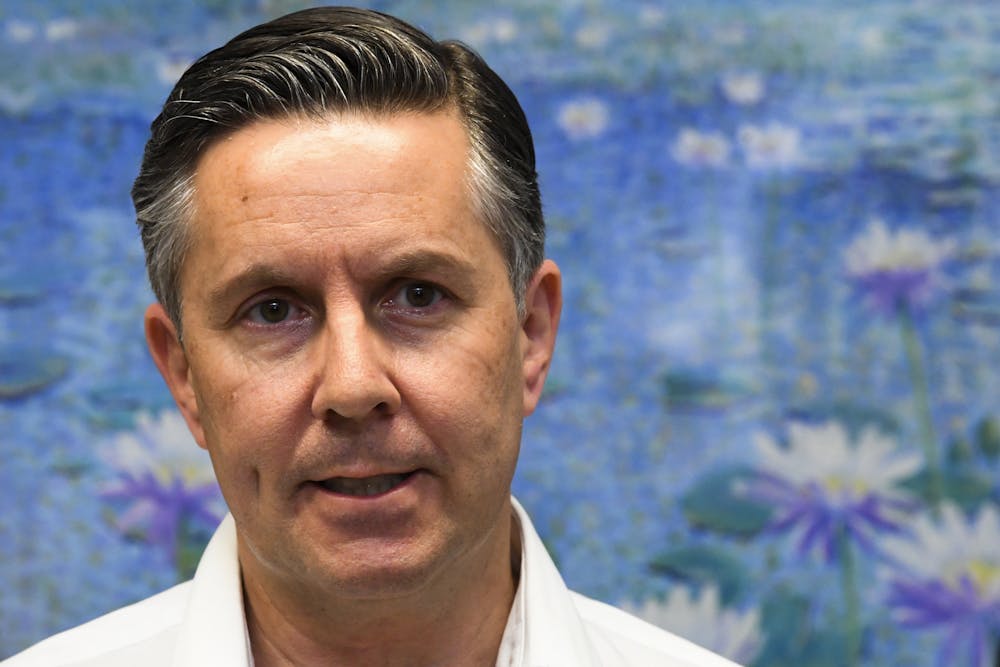
The Strengthening Medicare Fund was only sketched out in broad terms before the election, and provides insight into the new ministerial style. The details of the policy will be thrashed out in a taskforce which will include key stakeholders. Most importantly, the taskforce will be chaired by the minister – no hiding behind consultants; he or she will hold the hose.
Read more: Labor's health package won't 'strengthen' Medicare unless it includes these 3 things
Reducing COVID deaths
Another crucial early challenge for the minister will be addressing the continuing COVID pandemic.
COVID deaths continue: three times as many people have died this year than in the previous two. The coalition delegitimised any form of action, including mask wearing and vaccine mandates, as part of its undermining of state public health measures, especially action by Labor states.
The prevalence of third dose vaccinations, necessary for adequate protection from Omicron, sits at about two-thirds of the over-16 population, much lower in the under-16s, meaning that many in the population are not protected.
Public hospitals are bursting at the seams, with staff overwhelmed. This needs urgent attention, and the Coalition strategy of ignoring it and saying it was someone else’s problem, must be dumped. Labor vowed to “step up the national strategy” late in the election campaign.
Read more: Reducing COVID transmission by 20% could save 2,000 Australian lives this year
Aged care support
Hopefully Labor’s shadow aged care minister, Clare O’Neil, will continue in this role post-election. She proved more than a match for her hapless opponent, Richard Colbeck.
 Clare O'Neil was shadow minister for aged care and connected with those in the sector.
AAP Image/Lukas Coch
Clare O'Neil was shadow minister for aged care and connected with those in the sector.
AAP Image/Lukas Coch
Labor made big commitments in aged care, creating a significant point of difference with the Coalition, despite the Coalition’s investments in the 2021–22 budget.
In addition to the Coalition commitments, Labor promised 24/7 registered nurse coverage in residential aged care facilities, and to support a wage rise for aged care workers. The latter is particularly important because without a wages uplift, the staff shortages in the sector will continue.
Read more: Labor's plans for aged care are targeted but fall short of what's needed
A new approach
Labor won’t engage in climate denialism or use climate policy as a political wedge.
Recognising and addressing climate change is an important issue for the health sector and, of course, the community more broadly as the teal surge and the Greens’ wins demonstrated.
Labor has committed to establishing a centre for prevention and disease control, which should provide a framework for addressing social and economic determinants of health.
Potentially as important in terms of policy style are Labor’s public service policies. The “consultocracy” which thrived under the Liberals will be shown the door, replaced by public servants doing the job the public service has always been available to do.
Read more: First Nations people in the NT receive just 16% of the Medicare funding of an average Australian
Obviously, a new Labor government will not be able to be meet all the community’s pent-up aspirations in a single term.
Nevertheless, it is disappointing Labor did not commit to phasing in universal dental care – the crucial missing piece of Australia’s universal health coverage.
Butler and his colleagues have a huge agenda on their plates. Starting with primary care is a good first focus, as without those foundations in place, the whole system cannot work well.
Authors: Stephen Duckett, Honorary Enterprise Professor, School of Population and Global Health, and Department of General Practice, The University of Melbourne




















