

Modern Australian
The Times

how Mary Shelley's sci-fi classic offers lessons for us today about the dangers of playing God

  • Written by Jamie Q Roberts, Lecturer in Politics and International Relations, University of Sydney
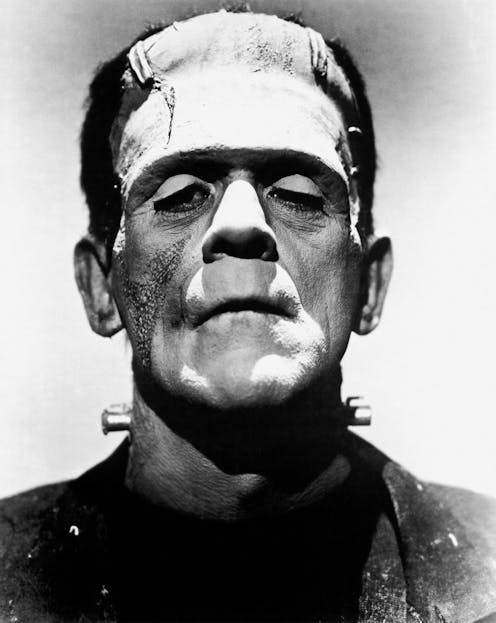
how Mary Shelley's sci-fi classic offers lessons for us today about the dangers of playing God

In our Guide to the Classics series, experts explain key works of literature.

Frankenstein, or, The Modern Prometheus, is an 1818 novel by Mary Wollstonecraft Shelley. Set in the late 18th century, it follows scientist Victor Frankenstein’s creation of life and the terrible events that are precipitated by his abandonment of his creation. It is a Gothic novel in that it combines supernatural elements with horror, death and an exploration of the darker aspects of the psyche.

It also provides a complex critique of Christianity. But most significantly, as one of the first works of science-fiction, it explores the dangers of humans pursuing new technologies and becoming God-like.

The celebrity story

Shelley’s Frankenstein is at the heart of what might be the greatest celebrity story of all time. Shelley was born in 1797. Her mother, Mary Wollstonecraft, author of the landmark A Vindication of the Rights of Women (1792), was, according to that book’s introduction, “the first major feminist”.

Shelley’s father was William Godwin, political philosopher and founder of “philosophical anarchism” – he was anti-government in the moment that the great democracies of France and the United States were being born. When she was 16, Shelley eloped with radical poet Percy Shelley, whose Ozymandias (1818) is still regularly quoted (“Look on my Works, ye Mighty, and despair!”).

A pretty woman sitting between two men, looking anxious.
Douglas Walton Percy Shelley Elsa Lanchester Mary Shelley and Gavin Gordon Lord Byron in the film The Bride of Frankenstein.

Their relationship seems to epitomise the Romantic era itself. It was crossed with outside love interests, illegitimate children, suicides, debt, wondering and wandering. And it ultimately came to an early end in 1822 when Percy Shelley drowned, his small boat lost in a storm off the Italian coast. The Shelleys also had a close association with the poet Lord Byron, and it is this association that brings us to Frankenstein.

In 1816 the Shelleys visited Switzerland, staying on the shores of Lake Geneva, where they were Byron’s neighbours. As Mary Shelley tells it, they had all been reading ghost stories, including Coleridge’s Christabel (Coleridge had visited her father at the family house when Shelley was young), when Byron suggested that they each write a ghost story. Thus 18-year-old Shelley began to write Frankenstein.

The myth of the monster

The popular imagination has taken Frankenstein and run with it. The monster “Frankenstein”, originally “Frankenstein’s monster”, is as integral to Western culture as the characters and tropes from Lewis Carroll’s Alice’s Adventures in Wonderland.

But while reasonable continuity remains between Carroll’s Alice and its subsequent reimaginings, much has been changed and lost in the translation from Shelley’s novel into the many versions that are rooted in the popular imagination.

There have been many varied adaptations, from Edward Scissorhands to The Rocky Horror Picture Show (see here for a top 20 list of Frankenstein films). But despite the variety, it’s hard not to think of the “monster” as a zombie-like implacable menace, as we see in the trailer to the 1931 movie, or a lumbering fool, as seen in the Herman Munster incarnation. Further, when we add the prefix “franken” it’s usually with disdain; consider “frankenfoods”, which refers to genetically modified foods, or “frankenhouses”, which describes contemporary architectural monstrosities or bad renovations.

However, in Shelley’s novel, Frankenstein’s creation is far from being two-dimensional or contemptible. To use the motto of the Tyrell corporation, which, in the 1982 movie Bladerunner, creates synthetic life, the creature strikes us as being “more human than human”. Indeed, despite their dissimilarities, the replicant Roy Batty in Bladerunner reproduces Frankenstein’s creature’s intense humanity.

Roy Batty as a replicant in Blade Runner, delivering his famous tears in rain speech.

Some key elements in the plot

The story of Victor Frankenstein is nested within the story of scientist-explorer Robert Walton. For both men, the quest for knowledge is mingled with fanatical ambition. The novel begins towards the end of the story, with Walton, who is trying to sail to the North Pole, rescuing Frankenstein from sea ice. Frankenstein is being led northwards by his creation towards a final confrontation.

The central moment in the novel is when Frankenstein brings his creation to life, only to be immediately repulsed by it:

I had worked hard for nearly two years, for the sole purpose of infusing life into an inanimate body. For this I had deprived myself of rest and health. I had desired it with an ardour that far exceeded moderation but now that I had finished, the beauty of the dream vanished, and breathless horror and disgust filled my heart.

Victor Frankenstein, like others in the novel, is appalled by the appearance of his creation. He flees the creature and it vanishes. After a hiatus of two years, the creature begins to murder people close to Frankenstein. And when Frankenstein reneges on his promise to create a female partner for his creature, it murders his closest friend and then, on Frankenstein’s wedding night, his wife.

More human than human

The real interest of the novel lies not in the murders or the pursuit, but in the creature’s accounts of what drove him to murder. After the creature murders Frankenstein’s little brother, William, Frankenstein seeks solace in the Alps – in sublime nature. There, the creature comes upon Frankenstein and eloquently and poignantly relates his story.


New York Public Library, CC BY We learn that the creature spent a year secretly living in an outhouse attached to a hut occupied by the recently impoverished De Lacey family. As he became self-aware, the creature reflected that, “To be a great and virtuous man appeared the highest honour that can befall a sensitive being.” But when he eventually attempted to reveal himself to the family to gain their companionship, he was brutally driven from them. The creature was filled with rage. He says, “I could … have glutted myself with their shrieks and misery.” More human than human. After Victor Frankenstein dies aboard Walton’s ship, Walton has a final encounter with the creature, as it looms over Frankenstein’s body. To the corpse, the creature says: “Oh Frankenstein! Generous and self-devoted being! What does it avail that I now ask thee to pardon me? I, who irretrievably destroyed thee by destroying all thou lovedst.” The creature goes on to make several grand and tragic pronouncements to Walton. “My heart was fashioned to be susceptible of love and sympathy; and when wrenched by misery to vice and hatred, it did not endure the violence of the change, without torture such as you cannot even imagine.” And shortly after, about the murder of Frankenstein’s wife, the creature says: “I knew that I was preparing for myself a deadly torture; but I was the slave, not the master, of an impulse, which I detested, yet could not disobey.” These remarks encourage us to ponder some of the weightiest questions we can ask about the human condition: What is it that drives humans to commit horrible acts? Are human hearts, like the creature’s, fashioned for ‘love and sympathy’, and when such things are withheld or taken from us, do we attempt to salve the wound by hurting others? And if so, what is the psychological mechanism that makes this occur? And what is the relationship between free will and horrible acts? We cannot help but think that the creature remains innocent – that he is the slave, not the master. But then what about the rest of us? The rule of law generally blames individuals for their crimes – and perhaps this is necessary for a society to function. Yet I suspect the rule of law misses something vital. Epictetus, the stoic philosopher, considered such questions millennia ago. He asked: What grounds do we have for being angry with anyone? We use labels like ‘thief’ and ‘robber’… but what do these words mean? They merely signify that people are confused about what is good and what is bad. Unintended consequences Victor Frankenstein creates life only to abandon it. An unsympathetic interpretation of Christianity might see something similar in God’s relationship with humanity. Yet the novel itself does not easily support this reading; like much great art, its strength lies in its ambivalence and complexity. At one point, the creature says to Frankenstein: “Remember, that I am thy creature; I ought to be thy Adam, but I am rather the fallen angel, whom thou drivest from joy for no misdeed.” These and other remarks complicate any simplistic interpretation.
In fact, the ambivalence of the novel’s religious critique supports its primary concern: the problem of technology allowing humans to become God-like. The subtitle of Frankenstein is “The Modern Prometheus”. In the Greek myth, Prometheus steals fire – a technology – from the gods and gives it to humanity, for which he is punished. In this myth and many other stories, technology and knowledge are double-edged. Adam and Eve eat the apple of knowledge in the Garden of Eden and are ejected from paradise. In 2001: A Space Odyssey, humanity is born when the first tool is used – a tool that augments humanity’s ability to be violent. The novel’s subtitle is referring to Kant’s 1755 essay, “The Modern Prometheus”. In this, Kant observes that: There is such a thing as right taste in natural science, which knows how to distinguish the wild extravagances of unbridled curiosity from cautious judgements of reasonable credibility. From the Prometheus of recent times Mr. Franklin, who wanted to disarm the thunder, down to the man who wants to extinguish the fire in the workshop of Vulcanus, all these endeavors result in the humiliating reminder that Man never can be anything more than a man. Victor Frankenstein, who suffered from an unbridled curiosity, says something similar: A human being in perfection ought always to preserve a calm and peaceful mind … If the study to which you apply yourself has a tendency to weaken your affections, and to destroy your taste for those simple pleasures in which no alloy can possibly mix, then that study is certainly unlawful, that is to say, not befitting the human mind. And also: “Learn from me … how dangerous is the acquirement of knowledge and how much happier that man is who believes his native town to be the world, than he who aspires to become greater than his nature will allow.” In sum: be careful what knowledge you pursue, and how you pursue it. Beware playing God. Alas, history reveals the quixotic nature of Shelley and Kant’s warnings. There always seems to be a scientist somewhere whose dubious ambitions are given free rein. And beyond this, there is always the problem of the unintended consequences of our discoveries. Since Shelley’s time, we have created numerous things that we fear or loathe such as the atomic bomb, cigarettes and other drugs, chemicals such as DDT, and so on. And as our powers in the realms of genetics and artificial intelligence grow, we may yet create something that loathes us. It all reminds me of sociobiologist Edward O. Wilson’s relatively recent (2009) remark that, “The real problem of humanity is the following: we have Paleolithic emotions, medieval institutions, and god-like technology.” Authors: Jamie Q Roberts, Lecturer in Politics and International Relations, University of Sydney

Read more https://theconversation.com/frankenstein-how-mary-shelleys-sci-fi-classic-offers-lessons-for-us-today-about-the-dangers-of-playing-god-175520

What Every Homeowner Should Know About Roof and Drainage Maintenance

A home's roof and drainage system work together every day to protect the property from water damage. While many homeowners focus on visible areas such...

From Plans to Priced Quote: The Estimating Workflow Most Builders Skip

For a small one-off job, an experienced builder can size up the materials in their head. The problem is that most jobs are not small one-off jobs, and...

Organisational Experts Share Their Tips for Achieving a Clutter-Free Kitchen

They say the kitchen is the heart of a house which means a clutter-free kitchen not only makes your home in general look nicer, it also makes cookin...

10 Creative Ways AI Image Extenders Are Transforming Digital Content Creation in 2026

Introduction Artificial intelligence continues to reshape the digital landscape, and one of the most exciting innovations in 2026 is the rise of AI i...

What to Do When You're Arrested in Victoria

Most people have thought about this in the abstract. A knock at the door, a hand on the shoulder, a car pulled over on the Hume. In the abstract, th...

Common Financial Disputes During Separation

Separation hits on many levels, not just emotionally. When a partnership ends, untangling the financial side — assets, debts, and everything built t...

Why Posting More Content is Killing Your Brand

More content. More often. More platforms.Most brands have been running this playbook for three years. Most brands have nothing to show for it.Not be...

Garden Clean-Up vs. Regular Maintenance: Which Do You Really Need?

Most people ring a gardener and ask for a "tidy up." What they mean by that, and what the garden actually needs, are often two completely different ...

Solar Panel Maintenance Tips for Melbourne Homes

Three years in and the panels are still on the roof. The inverter is still blinking. The electricity bills are still lower than they used to be, rou...

Cost Effective Kitchen Renovations – From the Ground Up

Even in times of uncertainty, it seems renovations continue to be on the to-do list for many Australian property owners. As a result, demand on materi...

Why Bathroom Product Selection Matters More Than Most Homeowners Realise

Most homeowners think wrong when it comes to a bathroom renovation. They think hard about the layout. Spend hours choosing tiles. Agonise over pain...

How An Asbestos Removalist Ensures Safe And Compliant Property Environments in Melbourne

Maintaining a safe environment within residential and commercial properties requires careful management of hazardous materials, which is why engaging ...

Why Protein Bars Are A Convenient Option For Daily Nutrition And Energy

Maintaining balanced nutrition throughout the day can be challenging, especially for individuals with busy schedules, which is why protein bars hav...

Property Settlements After Separation: Key Considerations

Dividing assets after a separation is one of the more complex and emotionally charged aspects of the process. Understanding how property settlements...

Why Dust Control Matters During Bathroom Demolition

People usually expect bathroom demolition to be noisy.  No one thinks of dust — but it turns up everywhere. Inside cupboards. On couches. Along...

Why Roller Shutters And Outdoor Blinds Are Popular For Modern Properties

Many homeowners and businesses now install roller shutters to improve security, privacy, insulation, and weather protection across residential and ...

Slushie Machine Hire for Events: What to Check Before Booking

There's a moment at every great event when guests stop what they're doing and just enjoy something. A slushie machine is often that moment. It draws p...

Why AS/NZS Certified Sunglasses Are Essential for Australian Kids

Australia has some of the highest UV radiation levels in the world. That's not a warning label exaggeration; it's a measurable, documented fact that s...















