

Modern Australian
Men's Weekly

.

Plagiarism, John Hughes’ The Dogs and the ethical responsibilities of the novelist

  • Written by Alyson Miller, Senior Lecturer in Literary Studies and Professional and Creative Writing, Deakin University

Plagiarism, John Hughes’ The Dogs and the ethical responsibilities of the novelist

John Hughes’s novel The Dogs has been withdrawn from the longlist for the Miles Franklin Prize after an investigation by The Guardian identified numerous instances of plagiarism. Hughes’s lifting of passages from other books has sparked furious debate and literary detective work – mostly on Twitter – prompting questions about the nature of influences, literary pastiche and the attribution of sources in novels.

Hughes acknowledged he had unintentionally borrowed from the 2017 English translation of Nobel prize laureate Svetlana Alexievich’s The Unwomanly Face of War, after The Guardian applied document comparison software to both books, finding 58 similarities and some identical sentences.

Further investigations by academic Emmett Stinson and writer and critic Shannon Burns exposed the apparent copying of passages from books such as Anna Karenina, All Quiet on the Western Front, and The Great Gatsby.

This week, meanwhile, poet Lachlan Brown has posted a series of Google documents identifying similarities between phrases and passages in The Dogs and those in Eric Newby’s Love and War in the Apennines, W.B. Sebald’s The Emigrants, Amos Oz’s Judas, and Loren Eiseley’s The Invisible Island.

Australian National University academic Millicent Weber has also added to the growing list, highlighting similarities between phrases used by Hughes and phrases in work by five other writers including Saul Bellow and Nadezhda Mandel’shtam.

In response to the accusations of plagiarism, Hughes released two statements. In the first, he explained he had inadvertently incorporated passages typed up from Alexievich’s book into transcripts from his grandparent’s stories of surviving the second world war, which appear fictionalised in The Dogs. Hughes apologised to Alexievich and her translators “for using their words without acknowledgement”.
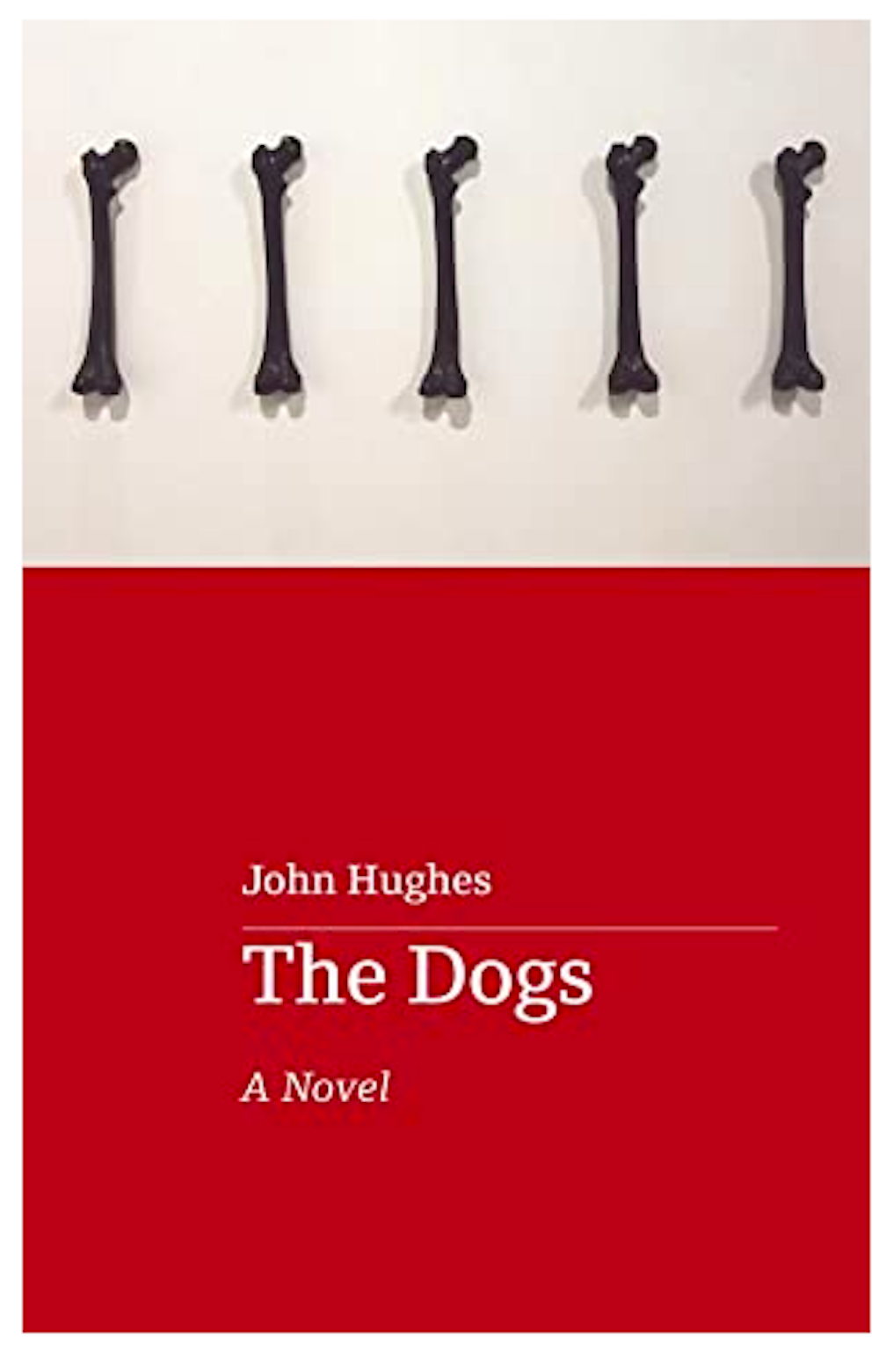

goodreads Last Thursday, however, after further revelations, Hughes released a second, longer statement, explaining why he was not a plagiarist. Rather than a mea culpa, he drew on arguments first proffered by the Romantic poets of the late 18th century about the impossibility of originality, and the importance of drawing on other writers’ work as part of the creative process. “It is a rare writer who doesn’t use the work of other writers in their own work”, Hughes said. He went on to cite modernist poet T.S. Eliot, who wrote in his 1920 essay collection, The Sacred Wood: Immature poets imitate; mature poets steal; bad poets deface what they take, and good poets make it into something better, or at least something different. The Dogs is a novel, in part, says Hughes, about secondhand stories: fragmented, contradictory memories of war. It is a complex, multi-generational work, narrated by the protagonist, Michael Shamanov, a scriptwriter, and centring on his relationship with his elderly mother, Anna, who is slowly dying in a nursing home. Shifting between past and present, it traces the family’s traumatic history, exploring the tension between the need to remember and the desire to forget. The controversy around this novel, which was previously shortlisted for the New South Wales and the Victorian Premiers’ Literary Awards, echoes recent Australian plagiarism scandals, raising difficult questions about publishing and creative processes. But this one, to say the least, is especially messy. Cento defence In his statement of defence (published before this latest material was posted on Twitter), Hughes contended he is “no thief”. He had “wanted the appropriated passages” – which, aside from those taken from Alexievich, he did not name – “to be seen and recognised as in a collage”. This is a common line of argument in plagiarism scandals, frequently understood as the “cento defence”. A cento is a poem comprised entirely of lines written by other poets, an ancient form of collage dating back to Homer and Virgil The success of this form is predicated on two key factors: the transformation of the “stolen” works into something new, interesting or valuable, and an explicit acknowledgement of the processes at work. But if, as Hughes claims, The Dogs takes “ventriloquism as its theme”, intra-textually signalling to the reader that experimental games such as pastiche are at play, why did this not form part of the contextual discussions about the novel? (Indeed Hughes’s publisher, Terri-ann White, said on Friday she felt “affronted” on learning, from his second statement, that he wanted the appropriated passages to be recognised as in a collage.) Hughes is right: there is a legitimate tradition of bricolage and pastiche as artistic forms; but in doing so, even T.S. Eliot used extensive citations. Terri-ann White, went on to say: I have published many writers who use collage and bricolage and other approaches to weaving in other voices and materials to their own work. All of them have acknowledged their sources within the book, usually in a listing of precisely where these borrowings come from. I should have pushed John Hughes harder on his lack of the standard mode of book acknowledgements where any credits to other writers (with permissions or otherwise) […] are held. I regret that now, as you might expect. To have provided a note in this book with attribution would have been the only way to treat it. The freedoms of fiction do not absolve the author of the need to reference when lifting passages of work from others. Read more: What makes a good literary hoax? A political point, for starters Conflicting statements Australia has a long history of literary scandals. One recent plagiarism case involved Newcastle poet Andrew Slattery, whose prize-winning poem Ransom, published in 2013, was discovered to be comprised of the work of 50 other poets, such as Charles Simic and Robert Bly. Slattery used the “cento defence”, claiming this poem was part of a “cynical experiment.” He acknowledged, however, that it should “have included footnotes”. In 2020, however, when poet Judith Beveridge was revealed by poetry sleuth Ira Lightman to have used phrases borrowed from other poets in a number of her poems, including Incense, At Dusk, and Making Perfume, her confession and swift apology ensured there was comparatively little outrage. Interestingly, in his book of autobiographical essays The Idea of Home, Hughes describes an early (but abandoned) doctoral research project on Samuel Taylor Coleridge. An English poet and literary critic, Coleridge – one of the founders of the English Romantic movement – was one of literature’s most notorious plagiarists. John Hughes. Upswell Publishing Hughes’s case is made particularly messy and unusual by the conflicting statements offered by the author: not only is The Dogs ostensibly an example of pastiche, as noted, but apparently also the result of untidy note-keeping, and an unintended side effect of how “influence […] plays such a crucial role in the creative process”. As it continues to play out on Twitter, with yet more source texts being discovered, the scandal has focused attention on the responsibilities of the author, the complexities of writing fiction, and the ethics of creative practice. Authors: Alyson Miller, Senior Lecturer in Literary Studies and Professional and Creative Writing, Deakin University

Read more https://theconversation.com/plagiarism-john-hughes-the-dogs-and-the-ethical-responsibilities-of-the-novelist-185386

Considering Cryolipolysis Fat Freezing? Here’s What You Need to Know

Body confidence can shift over time, and sometimes even good diet and training can still leave a stubborn area of fat that won’t budge. If you’r...

From Local Tradie to Digital Leader: The Strategy Behind Auto Gate Guys Sydney’s Growth

For many small trade businesses, digital marketing still feels like a buzzword, not a necessity. They rely on word-of-mouth referrals, repeat clients...

Electric Automation System: Smarter Control for Modern Electrical Infrastructure

Modern buildings and industrial facilities are increasingly dependent on intelligent control and efficiency. An electric automation system brings t...

The Damp Truth: Why Your Overflowing Gutters Are an Open Invitation for Termites

When it comes to protecting your home, most people think about visible threats — storm damage, cracked tiles, break-ins. But one of the most destruc...

Is Your Inventory a Sitting Duck? 2 Critical Upgrades to Protect Your Business Assets and Your Bottom Line

Imagine this: you finish a long day on the job, lock up your tools, materials, and work vehicle in the garage, and head home. But overnight, someone b...

Electrician in Melbourne: Reliable Electrical Solutions for Homes and Businesses

Finding a dependable electrician Melbourne is essential when safety, efficiency, and long-term performance matter. Electrical systems form the back...

Rims and Tyres for Sale in Sydney: Performance, Safety, and Style Combined

Finding the right rims and tyres for sale Sydney is about far more than appearance. Tyres and rims directly influence how a vehicle handles, brakes...

Why Access to Doctors in Bundoora Is Essential for Ongoing Community Health

Reliable access to healthcare plays a vital role in maintaining physical wellbeing and peace of mind. Having trusted doctors in Bundoora available ...

Pendant Lights: Elevating Interior Spaces With Style and Purpose

Well-chosen pendant lights have the power to transform interiors by combining focused illumination with strong visual impact. More than just a ligh...

What Sets Professional Family Lawyers in Sydney Apart from General Lawyers?

Choosing the right legal support can make a noticeable difference when dealing with family-related matters. This article will explore what separates...

Balancing Teen Academic Expectations and Wellbeing

For many teenagers, school years are shaped by increasing expectations. Academic performance, future pathways, and comparison with peers can create pr...

Why Ceiling Fans Remain One of the Most Effective Solutions for Year-Round Comfort

Creating a comfortable indoor environment without relying heavily on energy-intensive systems is a priority for many households. Installing ceiling ...

Why an Industrial Air Compressor Is Vital for Modern Manufacturing

In many industrial environments, compressed air is as essential as electricity or water. An industrial air compressor provides the power needed to ...

Why Commercial Carpet Cleaning Services Matter for Professional Spaces

Clean carpets play a major role in shaping how a commercial space looks, feels, and functions. Commercial carpet cleaning services are essential fo...

5 Things to Consider Before Choosing a Commercial Painter

Choosing the right painter for a commercial business can be challenging. Regardless of the type and the size of the property, all commercial project...

Why Medical Fitout Melbourne Practices Rely on for Modern Healthcare Spaces

A well-planned medical fitout Melbourne is essential for creating healthcare environments that support patient care, clinical efficiency, and regula...

Luxury Builders Melbourne Crafting Homes Defined by Design and Detail

Building a premium home is about far more than size or appearance. It is about precision, craftsmanship, and a deep understanding of how refined spa...

Electric Sliding Door Solutions for Modern Living and Commercial Spaces

The way people move through spaces has changed dramatically over the years, and the electric sliding door has become a defining feature of that evol...
















