

We helped track 77 species for up to 60 years to try to reveal the secrets of long life. And some don't seem to age at all
- Written by: Mike Gardner, Flinders University
Ever wondered about the secret to a long life? Perhaps understanding the lifespans of other animals with backbones (or “vertebrates”) might help us unlock this mystery.
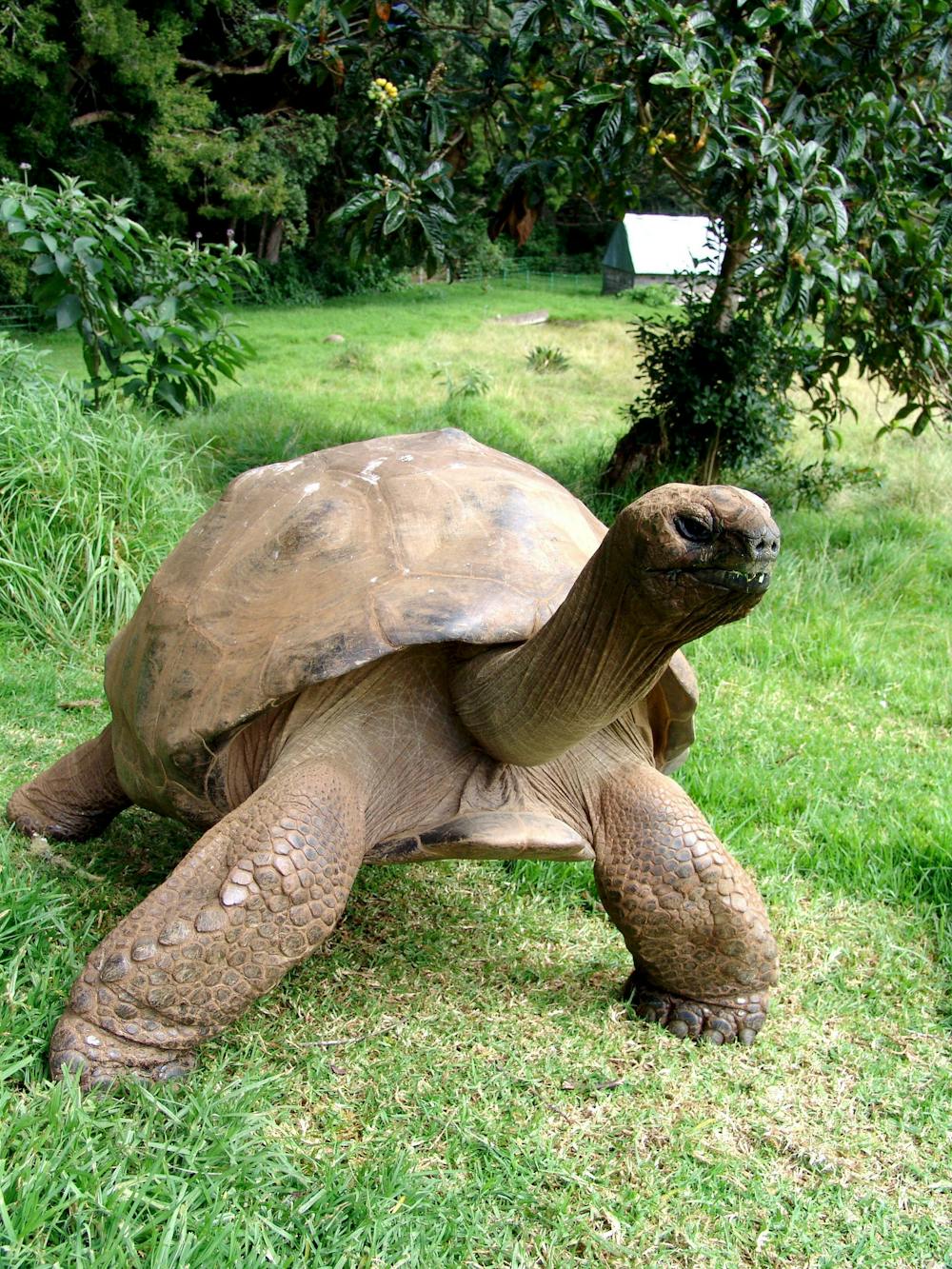
You’ve probably heard turtles live a long (and slow) life. At 190 years, Jonathan the Seychelles giant tortoise might be the oldest land animal alive. But why do some animals live longer than others?
Research published today by myself and colleagues in the journal Science investigates the various factors that may affect longevity (lifespan) and ageing in reptiles and amphibians.
We used long-term data from 77 different species of reptiles and amphibians – all cold-blooded animals. Our work is a collaboration between more than 100 scientists with up to 60 years of data on animals that were caught, marked, released and re-caught.
These data were then compared to existing information on warm-blooded animals, and several different ideas about ageing emerged.
What factors might be important?
One popular line of thought we investigated is the idea that cold-blooded animals such as frogs, salamanders and reptiles live longer because they age more slowly.
These animals have to rely on external temperatures to help regulate their body temperature. As a result they have slower “metabolisms” (the rate at which they convert what they eat and drink into energy).
Animals that are small and warm-blooded, such as mice, age quickly since they have faster metabolisms – and turtles age slowly since they have slower metabolisms. By this logic, cold-blooded animals should have lower metabolisms than similar-sized warm-blooded ones.
However, we found cold-blooded animals don’t age more slowly than similar-sized warm-blooded ones. In fact, the variation in ageing in the reptiles and amphibians we looked at was much greater than previously predicted. So the reasons vertebrates age are more complex than this idea sets out.
Another related theory is that environmental temperature itself could be a driver for longevity. For instance, animals in colder areas might be processing food more slowly and have periods of inactivity, such as with hibernation – leading to an overall increase in lifespan.
Under this scenario, both cold and warm-blooded animals in colder areas would live longer than animals in warmer areas.
We found this was true for reptiles as a group, but not for amphibians. Importantly, this finding has implications for the effects of global warming, which might lead to reptiles ageing faster in permanently warmer environments.
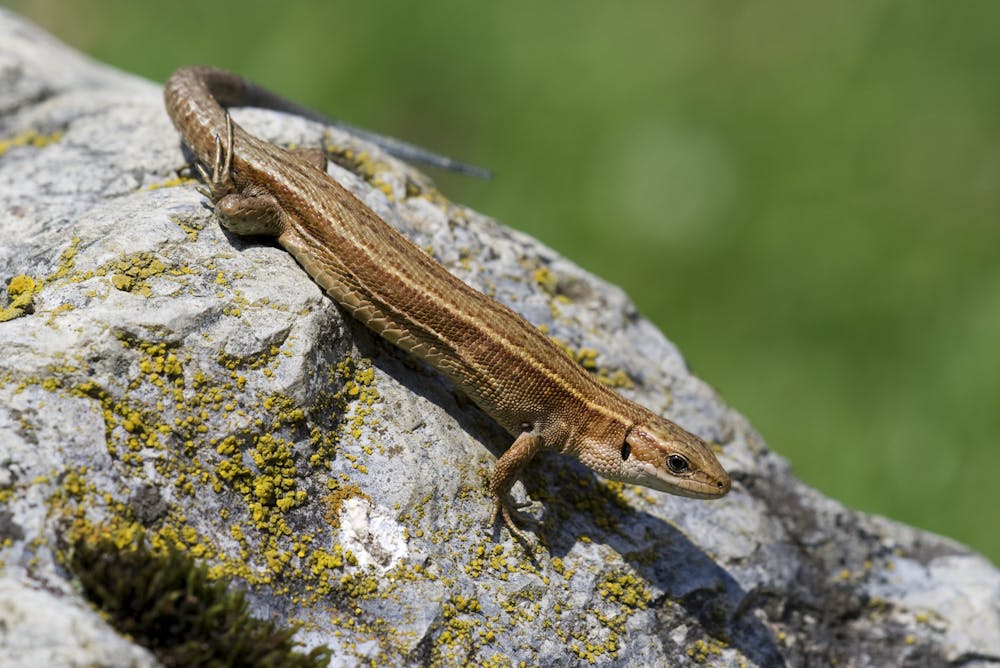 The Viviparous lizard (Zootoca vivipara) is one of the cold-blooded species we studied.
Shutterstock
The Viviparous lizard (Zootoca vivipara) is one of the cold-blooded species we studied.
Shutterstock
One suggestion is that animals with certain types of protections, such as protruding spines, armour, venom or shells, also don’t age as fast and therefore live longer.
A lot of energy is put into producing these protections, which can allow animals to live longer by making them less vulnerable to predation. However, could it be the very fact of having these protections allows animals to age more slowly?
Our work found this to be true. It seems having such protections does lead to animals living longer. This is especially true for turtles, which have hard shell protection and incredibly long lifespans.
We’ll need to conduct more research to figure out why just having protections is linked to a longer life.
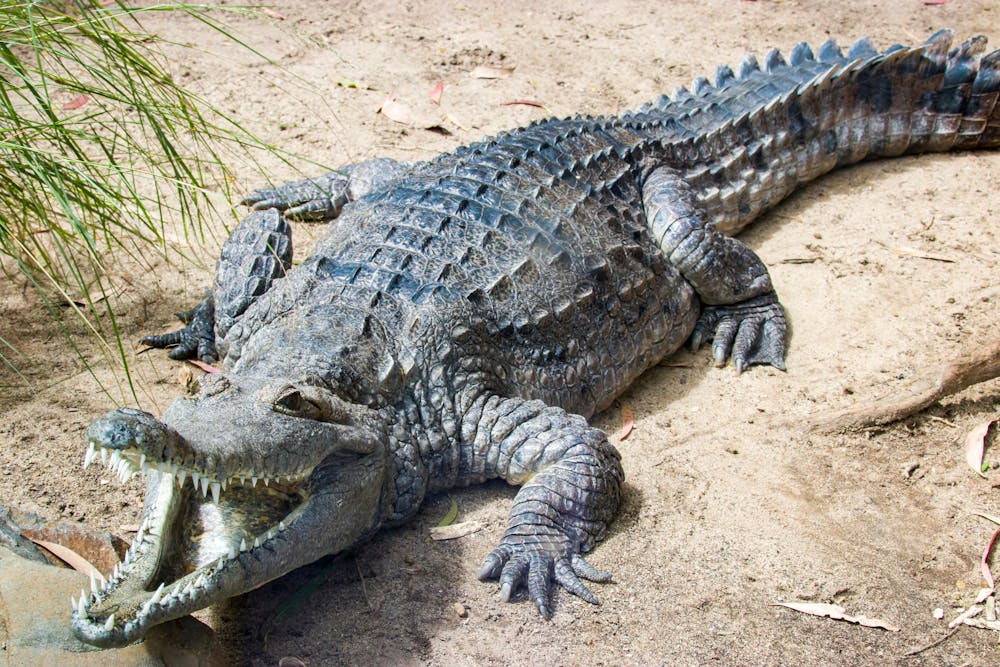 One species of crocodile studied, Crocodylus johnsoni, has a powerful armoured body with protruding scales that protect it from predation.
Shutterstock
One species of crocodile studied, Crocodylus johnsoni, has a powerful armoured body with protruding scales that protect it from predation.
Shutterstock
Finally, it has been posited that perhaps longevity is linked to how late into life an animal reproduces.
If they can keep reproducing later into life, then natural selection would drive this ability, generation to generation, allowing these animals to live longer than those that reproduce early and can’t continue to do so.
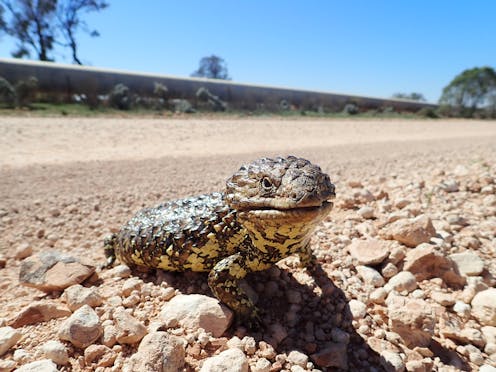
Indeed, we found animals that start producing offspring at a later age do seem to live longer lives. Sleepy lizards (or shinglebacks) are a great example. They don’t reproduce until they’re about five years old, and live until they’re close to 50!
Read more: Breakthrough allows scientists to determine the age of endangered native fish using DNA
The challenge in understanding ageing
To understand ageing, we need a lot of data on the same animals. That’s simply because if we want to know how long a species lives, we have to keep catching the same individuals over and over, across large spans of time.
This is “longitudinal” research. Luckily, it’s exactly what some scientists have committed themselves to. It’s also what my team is doing with sleepy lizards, Tiliqua rugosa. These lizards have been studied continuously at Bundey Bore station in the Mid North of South Australia since 1982.
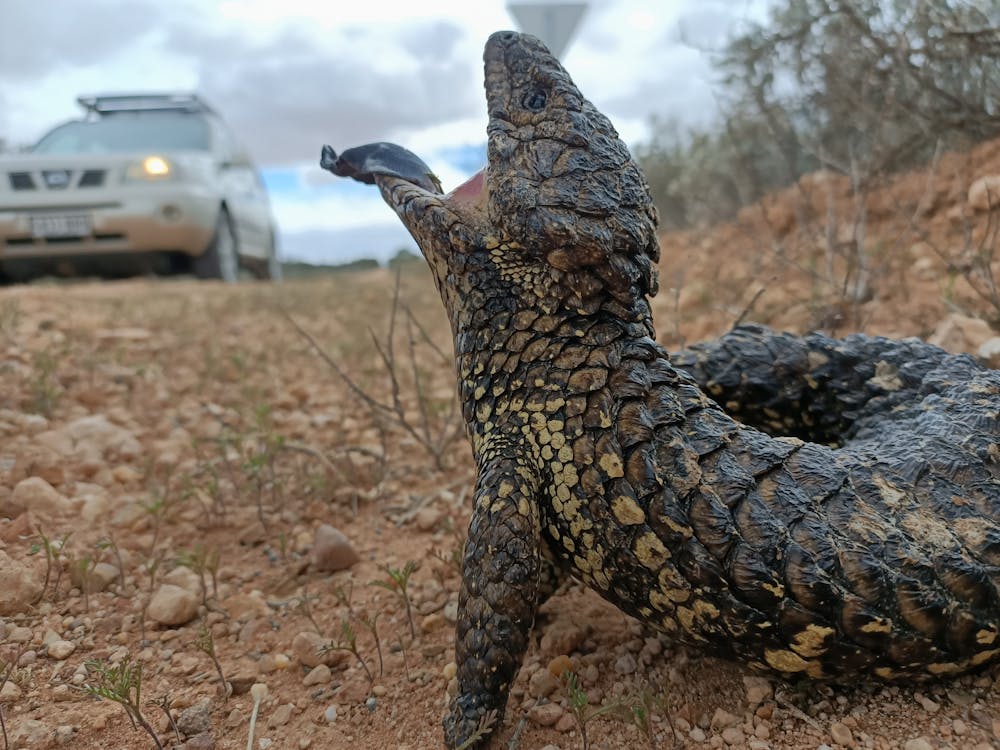 The sleepy lizard is one of the species used in the longevity study. As far as we know, this species lives up to 50 years.
Mike Gardner
The sleepy lizard is one of the species used in the longevity study. As far as we know, this species lives up to 50 years.
Mike Gardner
Here, more than 13,000 lizards have been caught over 40 years of study. Some have been caught up to 60 times! But given the 45-year longevity of these lizards, we’ve been studying them for a shorter time than some of them live. By keeping the survey work going we might find they live even longer.
Some animals’ chance of dying isn’t linked to age
Another interesting part of this research was finding, for a range of animals, that their chance of dying is just as small when they’re quite old compared to when they’re young. This “negligible ageing” is found in at least one species across each of frogs, salamanders, lizards, crocodiles and, of course, in tortoises like Jonathon.
We’re not quite sure why this is. The next challenge is to find out – perhaps by analysing species genomes. Knowing some animals have negligible ageing means we can target these species for future investigations.
Understanding what drives long life in other animals might lead to different biomedical targets to study humans too. We might not live to Jonathan the tortoise’s age, but we could theoretically use this knowledge to develop therapies that help stop some of the ageing process in us.
For now, healthy eating and exercising remain surer ways to a longer life.
Read more: The search to extend lifespan is gaining ground, but can we truly reverse the biology of ageing?
 Sleepy lizards are a kind of blue-tongued skink, found only in Australia.
Mike Gardner
Sleepy lizards are a kind of blue-tongued skink, found only in Australia.
Mike Gardner
Authors: Mike Gardner, Flinders University


















