

How effective is mindfulness for treating mental ill-health? And what about the apps?
- Written by: Nicholas T. Van Dam, Associate professor, The University of Melbourne

Mindfulness forms part of the trillion-dollar wellness industry, representing 1.5–6% of yearly spending around the world (estimated to be more than US$200 million) on wellness products and services.
Smartphone apps, in particular, have skyrocketed in popularity offering incredible promise for mental health with wide reach, and scalability at low cost. Mental ill-health was on the rise before the pandemic but reached new heights during it. Correspondingly, COVID created previously unseen demand for mindfulness apps and online courses.
Read more: What is mindfulness? Nobody really knows, and that's a problem
It’s no surprise people have turned to mindfulness in the wake of the past few stressful years, and their considerable promotion. And while there may be some benefit, it cannot treat mental ill-health on its own, and should not be relied upon to do so.
What does research say about mindfulness for treating mental health?
In-person mindfulness-based programs such as those for stress reduction, which often include health information and guided meditation practice, show moderate benefits among healthy individuals and those with mental ill-health.

Among healthy populations, a comprehensive review shows mindfulness-based programs help most with symptoms of anxiety, depression, and distress, and to a slightly lesser extent, in promoting well-being.
Among individuals with a psychiatric diagnosis, a comprehensive review shows mindfulness-based programs can help with anxious and depressive disorders, as well as pain conditions and substance use disorders. But mindfulness-based programs do not outperform standard talk therapy.
When it comes to structured online mindfulness programs (digital variations on programs like mindfulness-based stress reduction), a review shows benefits are small but still significant for depression, anxiety, and well-being.
Read more: Can an app help us find mindfulness in today's busy high-tech world?
What about mindfulness apps?
The evidence for mobile phone interventions and apps is less positive.
A recent comprehensive review of mobile phone interventions (including apps) combined results from 145 randomised controlled trials of 47,940 participants. The study examined text messaging interventions and apps for a number of mental health conditions relative to no intervention, minimal intervention (such as health information), and active interventions (other programs known to work). The authors “failed to find convincing evidence in support of any mobile phone-based intervention on any outcome”.
One review of mindfulness apps, included in the above comprehensive review, found well-designed randomised controlled trials for only 15 of the hundreds of apps available. Overall results were small to moderate for anxiety, depression, stress, and well-being. While these results sound positive, most studies (about 55%) compared apps to doing nothing at all, while another 20% compared apps to controls like audiobooks, games, relaxing music, or maths training.
When apps are compared to well-designed treatments, the effects are often less promising. One study comparing a mindfulness app to a “sham” (something that looked and felt like mindfulness but was not), the app was no better.
But does it do any harm?
Evidence shows mindfulness meditation can actually make some people worse off.
A recent meta-analysis that examined 83 studies on meditation, including 6,703 particpants, found 8.3% of people became anxious, depressed, or experienced negative changes in their thinking during or after meditation practice.
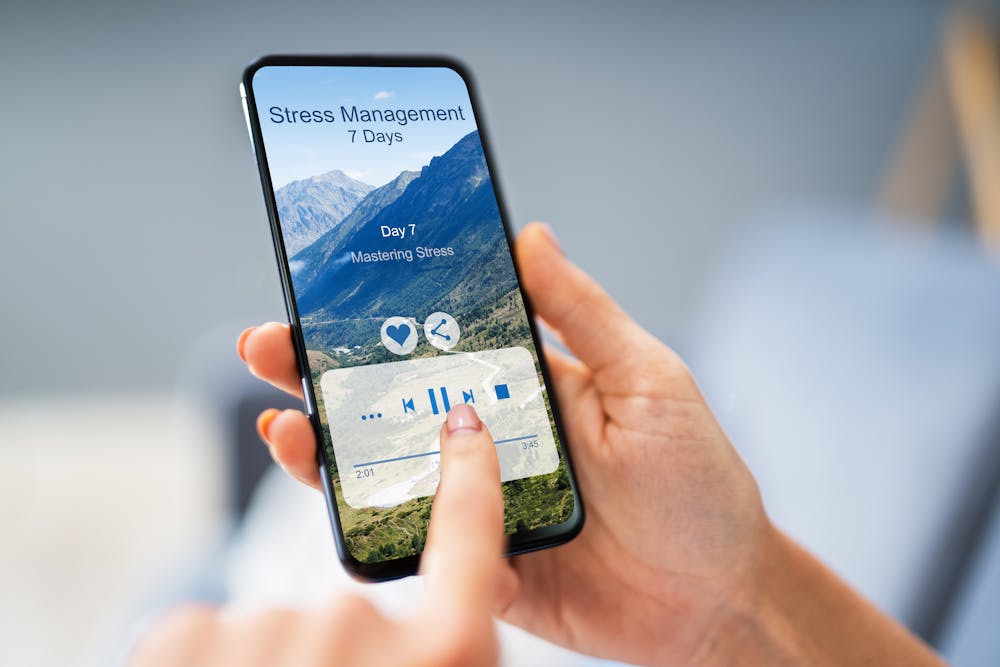 Most studies find mindfulness apps confer little benefit.
Shutterstock
Most studies find mindfulness apps confer little benefit.
Shutterstock
Other research suggests those first exposed to meditation via an app may be more likely to experience adverse effects such as anxiety, depression, or worse.
While apps and other forms of meditation are relatively inexpensive, if they do not work, the return on investment is poor. While the costs may seem relatively small, they can represent significant costs to individuals, organisations, and government. And some learning modules and training programs cost thousands of dollars.
Read more: We don't yet fully understand what mindfulness is, but this is what it's not
Mindfulness should be used ‘as well as’, not ‘instead of’
The investment in these programs is not a problem on its own. Mindfulness meditation (including various digital offerings) has considerable potential. The problem is mindfulness is not enough, and should be used as a supplement to first-line mental health treatment such as psychotherapy and medication, not instead of first-line treatment.
More concerning is that some mindfulness apps claim they can prevent mental health problems. There is not enough evidence yet to be able to make these claims.
In a world where people are facing so many challenges spanning social and income inequality, unprecedented environmental changes, war, economic instability, and global pandemics (to name a few), we must choose support programs very carefully.
While mindfulness may have some benefits for some people, it is not a replacement for first-line treatments for mental ill-health.
Authors: Nicholas T. Van Dam, Associate professor, The University of Melbourne


















