

Physio 'dry needling' and acupuncture – what's the difference and what does the evidence say?
- Written by: Wayne Hing, Professor, Physiotherapy, Bond University

Physiotherapists are increasingly offering needling therapies in addition to their standard care. Many Australian physiotherapists in private practice now offer dry needling or Western medical acupuncture as part of a treatment approach.
Is it just a fad or does science support it?
Read more: Health Check: why do my muscles ache the day after exercise?
Needling, three ways
Physiotherapists can be trained to use dry needling, Western acupuncture and/or traditional acupuncture.
Dry needling involves penetrating the skin with needles to altered or dysfunctional tissue in order to improve or restore function. This often involves needling muscle trigger points to activate a reflexive relaxation of the muscle.
Western acupuncture uses traditional needling meridians (the ancient idea of energy channels through the body) and trigger points. But these ideas are applied to Western understandings of anatomy. In Western acupuncture, points are stimulated to create local tissue changes, as well as spinal and brain effects. The goals is to trigger pain-relieving chemicals, muscle activation or relaxation.
Even though traditional acupuncture points are used with this style of needling, Western acupuncture is not viewed as traditional Chinese medicine.
Traditional acupuncture uses meridian lines or other points based on traditional Chinese medicine assessment methods and approaches.
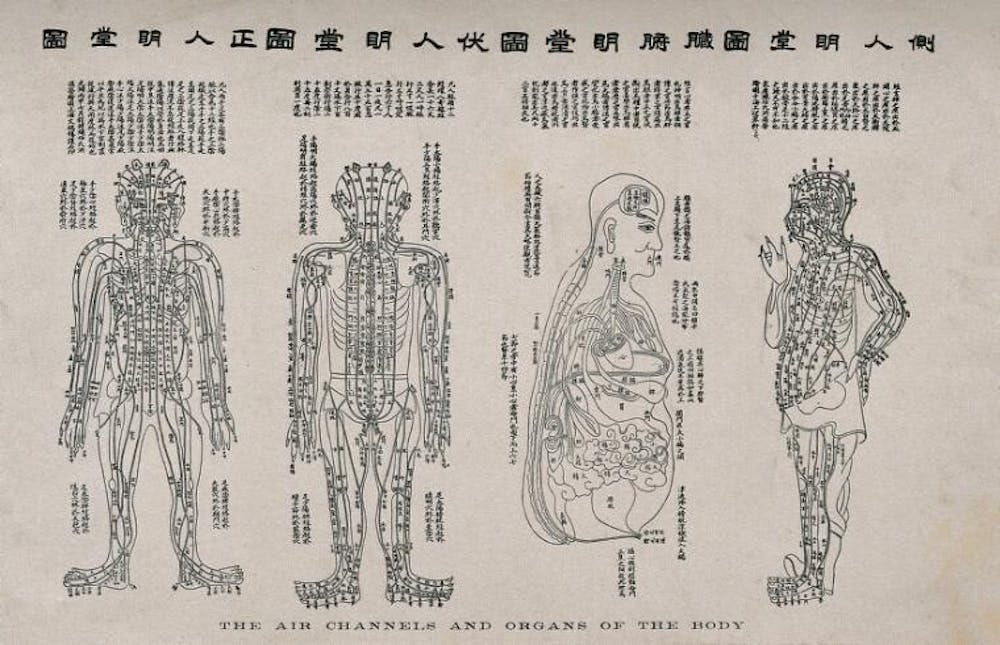
All physiotherapists trained in either acupuncture or dry needling meet safety standards which are viewed as within scope by the Australian Health Practitioners Regulatory Agency and the Physiotherapy Registration Board. These standards cover the level of training required, registration to practice and safety standards that include needle safety and hygiene to protect the public.
Minor reported side effects related to acupuncture including pain and bleeding or bruising from needle insertion are fairly common. But major adverse events – pneumothorax (collapsed lung), excessive bleeding, prolonged aggravation – are rare.
Read more: This ancient Chinese anatomical atlas changes what we know about acupuncture and medical history
What’s needling good for?
Research into the effectiveness of acupuncture and dry needling is variable. Some studies show comparable results between dry needling and acupuncture, while others show more favourable results for one or the other depending on the condition being treated.
A review that assessed the effects of acupuncture and dry needling for the treatment of low-back pain found they may be useful add-on therapies but could not make firm conclusions due to a lack of quality trials.
Another review reported the growing popularity of dry needling world wide and across disciplines and points out that many questions still remain regarding the use of needling.
For migraine and tension headaches, experts say acupuncture seems to reduce the frequency and intensity of attacks – though more research is needed to compare it to other treatments.
Acupuncture and dry needling may reduce pain and improve function for people with neck pain. A systematic review found significant differences between acupuncture and “sham acupuncture” (which is performed away from acupuncture points) when used to treat certain types of chronic pain. However, some research only shows small and temporary relief for neck pain with dry needling.
Results from randomised control trials support the use of needling for shoulder pain, tennis elbow and osteo arthritic knee pain. But a recent systemic review of research reported only weak evidence to support needling to treat plantarfasciitis and chronic ankle instability.
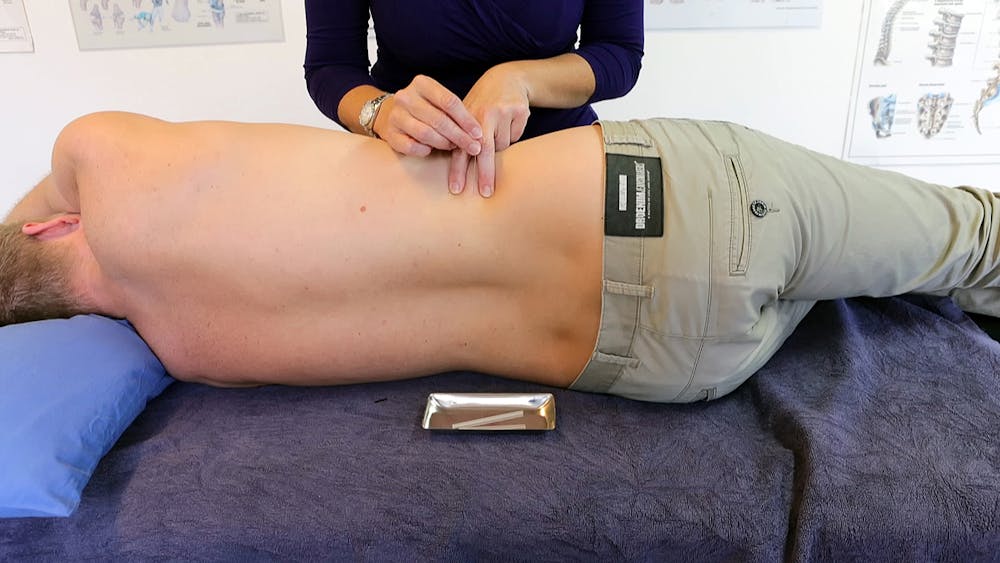 An increasing number of physiotherapists offer dry needling or acupuncture treatment.
Author provided
An increasing number of physiotherapists offer dry needling or acupuncture treatment.
Author provided
Not just for sporting injuries
Similarly, small randomised control trials have shown acupuncture and dry needling might reduce problematic jaw pain (temporo mandibular disorder) and improve mouth opening.
Systematic reviews have reported needling and acupuncture were safe and effective recommendations for the treatment of broad conditions of tendinopathy (the breakdown of collagen in tendons) and fibromyalgia (chronic pain in the muscles and bones).
For women’s health, acupuncture has been shown to be effective for reducing pain with periods, compared to no treatment or non-steroidal pain relief medications – but the research had design limitations.
Though widely used in pregnancy, research into the use of acupuncture to induce labour reports it may increase satisfaction with pain management and reduce pain intensity. But it may have little to no effect on the rates of caesarean or assisted vaginal birth.
In summary, it appears needling techniques – whether dry needling or acupuncture – generally show positive effects over no treatment or “sham” treatments, but more research and high quality trials are needed.
Just one part of a treatment program
Needling may be useful as part of multimodal care – that is, when more than one treatment is used in conjunction to treat a problem.
Physiotherapists may combine needling therapies with exercise prescription, hands-on care including massage, mobilisations and manipulations, and taping techniques. They may also employ therapies that apply external energy such as ultrasound, laser, transcutaneous (under the skin) electrical nerve stimulation and biofeedback.
Finally, while the various needling techniques all use a filiform needle (with a solid filament as opposed to a hollow bore needle), the styles with each can be quite different. Ask what style of needling is being employed to treat you, and if you have a history of finding one style works better for you, discuss this with your practitioner.
Authors: Wayne Hing, Professor, Physiotherapy, Bond University


















