

Modern Australian
Men's Weekly

.

What does equity in schools look like? And how is it tied to growing teacher shortages?

  • Written by Lucas Walsh, Professor and Director of the Centre for Youth Policy and Education Practice, Monash University
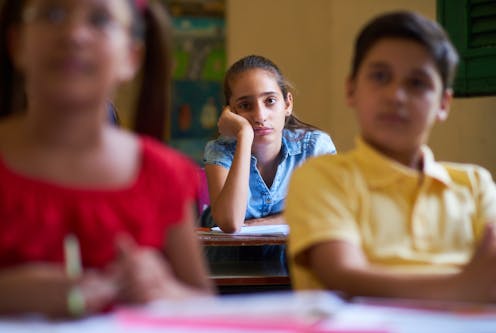
What does equity in schools look like? And how is it tied to growing teacher shortages?

When Prime Minister Anthony Albanese declared victory on election night, he said he wanted to unite Australians around “our shared values of fairness and opportunity, and hard work and kindness to those in need”.

So what would this look like in Australian schools? Schools, after all, are where a society that believes in fairness and opportunity must begin. Equity involves more than fairly funding schools.

It is about matching teachers’ passion with the respect, time, resources and conditions that enable them to do what they signed up to do: make a difference in students’ lives.

Read more: Almost 60% of teachers say they want out. What is Labor going to do for an exhausted school sector?

Based on our research into quality use of evidence do drive quality in education, I suggest equity, hard work and kindness should underpin school policy in three ways.

1. Ensure fairness in funding

The first priority is fairness in funding. It has been ten years since the Gonski review proposed a more equitable approach to school funding. The goal was to ensure differences in students’ educational outcomes are not the product of differences in wealth, income or power.

Since then, the approach has been diluted and gone backwards.

While resourcing to schools increased by over A$2 billion over a decade, the Grattan Institute found that once wage growth is taken into account, private schools received over 80% of this extra funding despite educating less than 20% of Australia’s most disadvantaged students.

COVID-19 has intensified disparities that are hard-baked into Australia schooling through the historical segregation of schools.

The basis of the reform therefore needs to be reviewed. As then Prime Minister Julia Gillard, a former education minister, effectively tied a hand behind the government’s back by committing to the principle that no school would lose funding as a result of the reforms.

This distorted Gonski’s needs-based aspiration.

The needs-based funding that needs to be directed to public schools for them to be fully funded according to the Gonski model equates to more than $1,000 per student each year. But ensuring all schools get a fair share of public funding is only a part of the challenge.

Chart showing shortfalls and excesses in School Resource Standard (SRS) funding by state and territory, 2018-2023
Source: Review of needs‑based funding requirements: final report, December 2019/DESE, CC BY Read more: Still 'Waiting for Gonski' – a great book about the sorry tale of school funding 2. Reward those who choose to teach A second priority relates to fairly rewarding the hard work of teachers. This should include incentives to enter the profession, and better pay and working conditions to keep them there. Teacher shortages are reaching critical levels. Modelling in Queensland, for example, shows a 25% decline in state high school teaching graduates over five years. Secondary school enrolments are predicted to increase by 13% over the same period. As Southern Cross University education professor Pasi Sahlberg notes, teachers “start excited and depart exhausted”. Read more: New Education Minister Jason Clare can fix the teacher shortage crisis – but not with Labor's election plan During the campaign, Labor promised high-achieving students would be paid up to $12,000 a year to study education to lift teacher standards. “We want to make sure our kids get the best education they can. That means we have to make sure they get the best-quality teaching,” Albanese said. nb moved this quote down Labor also announced plans to double the number of high-achieving students enrolling in teacher education over the next decade, from around 1,800 a year at present to 3,600. Also, about 5,000 students who receive an Australian Tertiary Admission Rank (ATAR) of 80 will be able to get an annual $10,000 payment over their four-year degree. An extra $2,000 a year has been promised to students who commit to teach in regional areas – the worst affected by teacher shortages. I think we can cut this par - it doubles up on above Providing incentives like these might work – particularly as only 3% of high achievers in Australia select teaching for undergraduate study. Contrast this to the 19% who select science for undergraduate study. Three decades ago, about tens times this proportion of high achievers chose to study teaching. But, unlike other fields such as agriculture, such rankings year 12 exam marks? are less reliable as predicators of performance in education. It is rightly argued that other skills, such as high-level interpersonal skills, are important to the quality of teaching, alongside high-level literacy and numeracy. We need to be thinking more boldly and expansively about how we can inspire and assess people to enter the profession. Read more: Three charts on teachers' pay in Australia: it starts out OK, but goes downhill pretty quickly 3. Make schools better for teaching But even if such measures might attract new teachers, attrition rates are also concerning. Educators persistently indicate they are suffering stress, burnout, abuse from parents and excessive workload, which takes away from teaching students. Increased workload pressures mean they have less time to focus on teaching students. It ultimately drives many out of teaching. Strikes for better pay in New South Wales in relation to the government’s 2.5% wage cap for public servants are on one level about fair pay, but also reflect deeper concerns about working conditions. Read more: Read the room, Premier. Performance pay for teachers will make the crisis worse Teachers do not feel respected. A 2020 study found nearly three-quarters of educators felt underappreciated. The challenge of keeping teachers in the profession therefore entails much more than pay. Research has shown salary ranks after factors such as commitment to the profession, job satisfaction and positive relationships with students and colleagues. The most common reasons for leaving include workloads, being unappreciated, stress and burnout from years of struggle in substandard conditions. Fostering excellence in teaching is therefore not just about attracting quality candidates, nor is it only about paying them at the right level once they become teachers. It’s about respecting their judgement and professionalism, as well as supporting them throughout their careers. Read more: Higher salaries might attract teachers but pay isn't one of the top 10 reasons for leaving Even though pay might be poor in comparison with other professions and the workload overwhelming, educators continue to teach because they are driven by a deep, passionate moral purpose to make a difference in kids’ lives. We understand the challenges. Let’s hope kindness, fairness and a clear moral purpose drive the policy of Australia’s new government to address current problems as well as deeply embedded historical legacies. The Albanese government has a tough, complex job – not unlike teaching. Authors: Lucas Walsh, Professor and Director of the Centre for Youth Policy and Education Practice, Monash University

Read more https://theconversation.com/what-does-equity-in-schools-look-like-and-how-is-it-tied-to-growing-teacher-shortages-185394

Modern Office Painting in Australia - It's the Real Game Changer

Walk into any modern Australian office today and you'll be struck by the fact it's a whole different beast from the ones we grew up with. Gone are t...

How to Choose the Right Suburb for Your Lifestyle

Choosing the right suburb is one of the most important decisions you’ll make when buying or renting a home. Beyond the property itself, the suburb...

Considering Cryolipolysis Fat Freezing? Here’s What You Need to Know

Body confidence can shift over time, and sometimes even good diet and training can still leave a stubborn area of fat that won’t budge. If you’r...

From Local Tradie to Digital Leader: The Strategy Behind Auto Gate Guys Sydney’s Growth

For many small trade businesses, digital marketing still feels like a buzzword, not a necessity. They rely on word-of-mouth referrals, repeat clients...

Electric Automation System: Smarter Control for Modern Electrical Infrastructure

Modern buildings and industrial facilities are increasingly dependent on intelligent control and efficiency. An electric automation system brings t...

The Damp Truth: Why Your Overflowing Gutters Are an Open Invitation for Termites

When it comes to protecting your home, most people think about visible threats — storm damage, cracked tiles, break-ins. But one of the most destruc...

Is Your Inventory a Sitting Duck? 2 Critical Upgrades to Protect Your Business Assets and Your Bottom Line

Imagine this: you finish a long day on the job, lock up your tools, materials, and work vehicle in the garage, and head home. But overnight, someone b...

Electrician in Melbourne: Reliable Electrical Solutions for Homes and Businesses

Finding a dependable electrician Melbourne is essential when safety, efficiency, and long-term performance matter. Electrical systems form the back...

Rims and Tyres for Sale in Sydney: Performance, Safety, and Style Combined

Finding the right rims and tyres for sale Sydney is about far more than appearance. Tyres and rims directly influence how a vehicle handles, brakes...

Why Access to Doctors in Bundoora Is Essential for Ongoing Community Health

Reliable access to healthcare plays a vital role in maintaining physical wellbeing and peace of mind. Having trusted doctors in Bundoora available ...

Pendant Lights: Elevating Interior Spaces With Style and Purpose

Well-chosen pendant lights have the power to transform interiors by combining focused illumination with strong visual impact. More than just a ligh...

What Sets Professional Family Lawyers in Sydney Apart from General Lawyers?

Choosing the right legal support can make a noticeable difference when dealing with family-related matters. This article will explore what separates...

Balancing Teen Academic Expectations and Wellbeing

For many teenagers, school years are shaped by increasing expectations. Academic performance, future pathways, and comparison with peers can create pr...

Why Ceiling Fans Remain One of the Most Effective Solutions for Year-Round Comfort

Creating a comfortable indoor environment without relying heavily on energy-intensive systems is a priority for many households. Installing ceiling ...

Why an Industrial Air Compressor Is Vital for Modern Manufacturing

In many industrial environments, compressed air is as essential as electricity or water. An industrial air compressor provides the power needed to ...

Why Commercial Carpet Cleaning Services Matter for Professional Spaces

Clean carpets play a major role in shaping how a commercial space looks, feels, and functions. Commercial carpet cleaning services are essential fo...

5 Things to Consider Before Choosing a Commercial Painter

Choosing the right painter for a commercial business can be challenging. Regardless of the type and the size of the property, all commercial project...

Why Medical Fitout Melbourne Practices Rely on for Modern Healthcare Spaces

A well-planned medical fitout Melbourne is essential for creating healthcare environments that support patient care, clinical efficiency, and regula...
















