

Think the dual citizenship saga does not affect state parliamentarians? It might be time to think again
- Written by: Lorraine Finlay, Lecturer in Law, Murdoch University
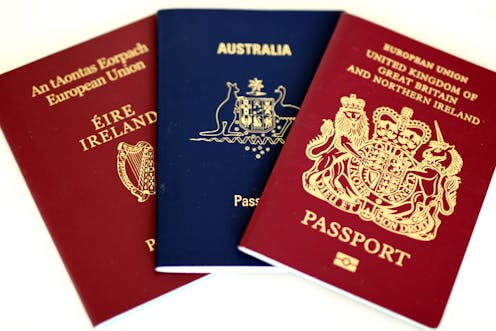
Over the past year, we have seen 15 federal parliamentarians leave the Australian parliament because of dual citizenship.
Under Section 44(i) of the Australian Constitution – which has been given a strict interpretation by the High Court of Australia in recent cases – a person is not eligible to nominate for, or be elected to, the federal parliament if they are a dual citizen. The removal of such a large number of parliamentarians in such a short space of time is unprecedented.
Throughout this controversy, it has been assumed that any dual citizenship problems are confined to the federal parliament. Certainly, it is widely acknowledged that state constitutions do not contain the same general prohibition of dual citizenship, and that dual citizens are at least initially eligible to be elected to state parliaments.
Unfortunately, the analysis generally stops at this point. There has been little consideration given to the important follow-up question of whether there are any other disqualification provisions that might affect any dual citizens sitting in our state parliaments.
An examination of state constitutions (and relevant electoral laws) reveals that while a dual citizen is eligible to be elected, this citizenship status may subsequently put them at risk of disqualification if they engage with that foreign citizenship while serving in the parliament.
In particular, in New South Wales, Queensland, Western Australia and Tasmania, the state constitutions, or relevant electoral laws, provide that a parliamentary seat will become vacant if a member commits any act that acknowledges allegiance to any foreign power.
This disqualification does not apply in Victoria, the ACT or the Northern Territory, and in South Australia it has been expressly limited to make it clear it doesn’t apply in particular circumstances.
Clearly, these state provisions are substantially different from the dual citizenship prohibition at the national level. A dual citizen is eligible to be elected as a state member of parliament, and will only be disqualified if there is a positive action taken by them that acknowledges a foreign allegiance.
And that’s the pertinent question: what exactly constitutes an “acknowledgement of allegiance”?
A plain reading of this phrase would seem to suggest that any positive act that seeks to exercise any right arising from citizenship would be disqualifying. In essence, a person who seeks to rely on their foreign citizenship in some way (however trivial) is making an acknowledgement of that foreign allegiance. Some obvious examples would be travelling on a foreign passport, or even renewing a foreign passport.
If a state MP from NSW, Queensland, WA or Tasmania did either of these things, they would appear to be in breach of the state constitutional requirements, resulting in their disqualification from parliament.
This issue has been been flagged as a potential problem in the past. For example, leading constitutional expert Professor Gerard Carney suggested almost 20 years ago that if an elected state member
… subsequently acts to affirm the foreign citizenship, such as by renewing or applying for a foreign passport, disqualification will be incurred.
The question was also considered by the NSW Parliamentary Joint Committee on the ICAC, which recommended repealing this grounds for disqualification back in 1998.
This broad interpretation is further reinforced by the fact that South Australia saw a need back in 1994 to insert a qualifying provision into its state constitution to provide that members would not be disqualified simply because they acquired or used a foreign passport.
The fact that such a qualification was thought necessary highlights that acquiring or using a foreign passport will ordinarily fall into the category of being an “acknowledgement of allegiance”.
It is important to note these issues have never been tested before the state courts, and there is no particular evidence to suggest any current state parliamentarians are in breach.
It is also worth noting that some jurisdictions – notably Queensland – have provisions that allow parliament to resolve to disregard a “trivial” disqualifying event.
But given we are having a national conversation about dual citizenship and the Australian Constitution, it seems an opportune time to consider the constitutional impact of dual citizenship at the state level as well. Otherwise, we may find we are still left with a constitutional cloud hanging over a number of state parliaments.
At the very least, the affected state parliaments should introduce a citizenship register like the one introduced last year by the federal parliament. Requiring citizenship information be disclosed is a necessary first step to reassure the public that the dual citizenship controversy will not expand to disqualify any of our state parliamentarians.
When the prime minister referred the question of Section 44 to the Joint Standing Committee on Electoral Matters, he did so on the basis that:
Australians must be assured that all members of the Australian Parliament are constitutionally eligible to serve.
The same principle must also apply to our state parliaments.
Authors: Lorraine Finlay, Lecturer in Law, Murdoch University


















