

Australia can help ensure the biggest mine in PNG's history won't leave a toxic legacy
- Written by: Michael Main, Visiting Scholar, Australian National University
The COVID pandemic slowed mining activity across the Pacific. But as economic activity returns, an Australia-based company is poised to pursue what would be the largest mine in Papua New Guinea’s history.
The vast gold and copper project, known as the Frieda River mine, would also include a hydroelectric plant and a dam with a storage capacity for around 4.6 billion tonnes of mine tailings and waste rock.
The project is awaiting approval by the PNG government. However, locals, conservationists and experts say it could cause catastrophic harm to one of the world’s most important river systems and should not proceed as proposed.
Australia is PNG’s largest development partner. As resource extraction expands across the Pacific, the new Labor government is well placed to help our neighbours ensure mining activity doesn’t harm people or the environment.
Remote, unstable terrain
The Frieda River mine is proposed by Brisbane-based, Chinese-owned company Pan Aust.
The project centres on the Frieda River copper-gold deposit located in the tropical mountain ranges of northwest PNG.
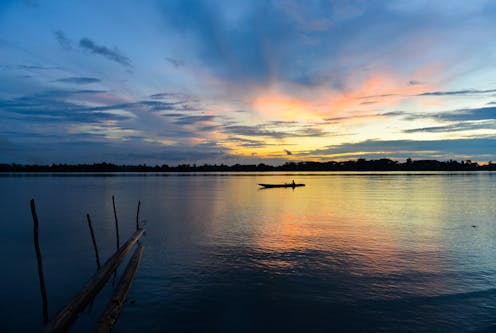
The river flows into the Sepik River Basin, one of the world’s great river systems. It’s the largest unpolluted freshwater system in New Guinea and among the largest freshwater basins in the Asia-Pacific.
The Frieda River deposit was discovered in the 1960s. It lies in extremely remote terrain, along the Pacific Ring of Fire which is prone to seismic activity.
The mine would produce tailings (or waste materials) containing sulphide, which turns into sulphuric acid when exposed to oxygen. For this reason, the tailings must be permanently covered by water.
The proposed mine’s location, high in the mountains, means a tailings accident could devastate the entire Sepik River Basin.
About 430,000 people depend on the Sepik River and nearby forests for their livelihood. The proposal has galvanised massive opposition from both locals and others.
Downplaying the risks
In 2020, ten independent experts including myself, were commissioned by PNG’s Centre for Environmental Law and Community Rights to individually review the project’s “environmental impact statement”. The work was undertaken pro bono.
I’m an experienced gold exploration geologist and environmental scientist. In my review, I found the statement downplayed or obscured the proposal’s extraordinary level of risk.
First, it omitted a report by design engineers that analysed the extreme consequences of dam failure.
Second, the main report failed to mention the dam would need an intensive inspection and maintenance regime “in perpetuity”. In other words, a potentially toxic dam in a remote part of a very poor country requires highly skilled and experienced professionals to maintain it – not just for the 33-year life of the mine, but forever.
Our reports prompted a group of UN Special Rapporteurs to write letters of concern to the governments of PNG, Australia, China and Canada, where companies involved in the joint venture have ties.
The letters said the mine’s development appeared to “disregard the human rights of those affected … given the nature of the project it could undermine the rights of Sepik children to life, health, culture, and a healthy environment, including the rights of unborn generations.”
The Conversation contacted Pan Aust for a response to these claims. In a statement, the company said it was “respectfully engaged in the Government of Papua New Guinea’s approvals process” and as such, it was inappropriate to provide a public comment.
Read more: Destitution on Australia's hardening border with PNG – and the need for a better aid strategy
New safeguards are needed
Inadequate consideration of a mine’s social and environmental impact is rife cross the Pacific. And PNG provides many examples of the catastrophes that can result.
Tailings from BHP’s ill-fated Ok-Tedi mine, located in the same mountain range as the proposed Frieda River mine, severely damaged nearby rivers.
And environmental damage from the Panguna copper mine was a key factor in community unrest and the Bougainville civil war.
Recent research into governance of mining in PNG found government agencies were under-resourced, leaving “companies as effectively self-regulating”.
Proponents of mining in PNG frequently cite its contribution to economic development. But for the benefits to be realised, resources must be extracted in a way that is environmentally, socially and economically sustainable.
New laws are needed to ensure resource extraction projects in PNG don’t cause long-lasting social and environmental damage. This should include mandatory, transparent and independent reviews of projects.
Australia has extensive experience with environmental regulation of mining projects and can assist in this regard. Such assistance should be delivered in a way that strengthens relations between Australia and PNG, and empowers and equips the smaller nation.
Sustainable development for our Pacific neighbours is in Australia’s strategic interests. Australian companies often benefit significantly from resource extraction in PNG, creating an extra responsibility to ensure better outcomes.
Read more: A brutal war and rivers poisoned with every rainfall: how one mine destroyed an island
Authors: Michael Main, Visiting Scholar, Australian National University


















