

restoring nature is not a silver bullet for global warming, we must cut emissions outright
- Written by: Kate Dooley, Research Fellow, Climate & Energy College, The University of Melbourne
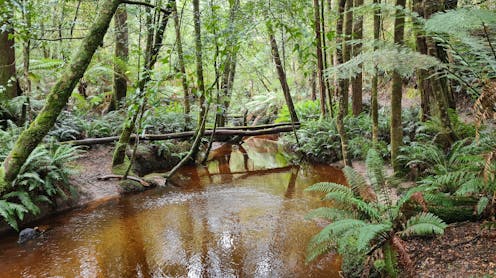
Restoring degraded environments, such as by planting trees, is often touted as a solution to the climate crisis. But our new research shows this, while important, is no substitute for preventing fossil fuel emissions to limit global warming.
We calculated the maximum potential for responsible nature restoration to absorb carbon dioxide in the atmosphere. And we found that, combined with ending deforestation by 2030, this could reduce global warming 0.18°C by 2100. In comparison, current pledges from countries put us on track for 1.9-2℃ warming.
This is far from what’s needed to mitigate the catastrophic impacts of climate change, and is well above the 1.5℃ goal of the Paris Agreement. And it pours cold water on the idea we can offset our way out of ongoing global warming.
The priority remains rapidly phasing out fossil fuels, which have contributed 86% of all CO₂ emissions in the past decade. Deforestation must also end, with land use, deforestation and forest degradation contributing 11% of global emissions.
The hype around nature restoration
Growing commitments to net-zero climate targets have seen an increasing focus on nature restoration to remove CO₂ from the atmosphere, based on claims nature can provide over one-third of climate mitigation needed by 2030.
However, the term “nature restoration” often encompasses a wide range of activities, some of which actually degrade nature. This includes monoculture tree plantations, which destroy biodiversity, increase pollution and remove land available for food production.
Indeed, we find the hype around nature restoration tends to obscure the importance of restoring degraded landscapes, and conserving existing forests and other ecosystems already storing carbon.
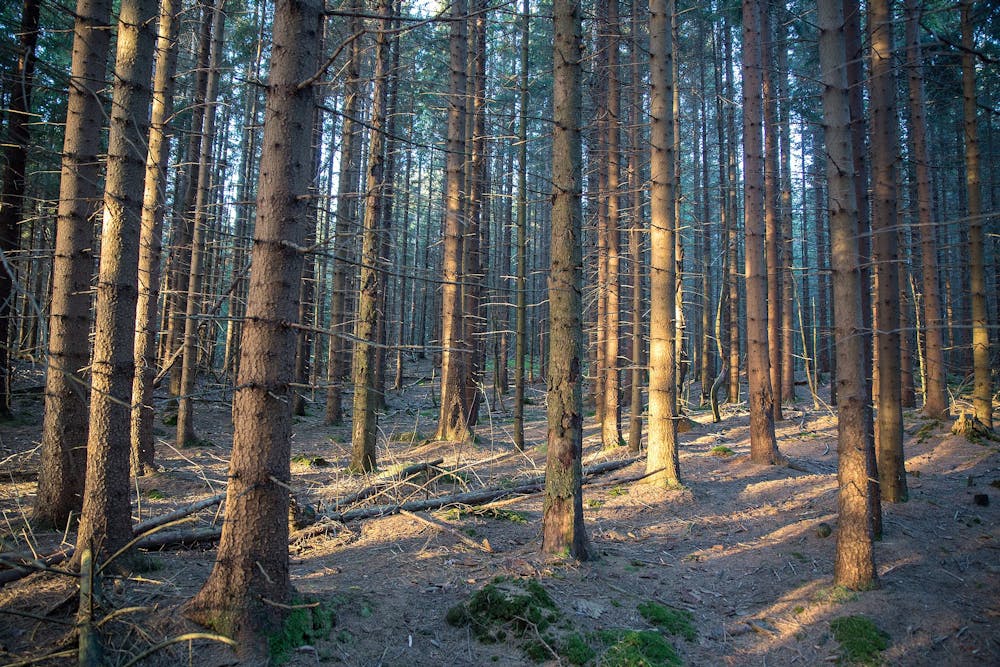
This is why we applied a “responsible development” framework to nature restoration for our study. Broadly, this means restoration activities must follow ecological principles, respect land rights and minimise changes to land use.
This requires differentiating between activities that restore degraded lands and forests (such as ending native forest harvest or increasing vegetation in grazing lands), compared to planting a new forest.
The distinction matters. Creating new tree plantations means changing the way land is used. This presents risks to biodiversity and has potential trade-offs, such as removing important farmland.
On the other hand, restoring degraded lands does not displace existing land uses. Restoration enhances, rather than changes, biodiversity and existing agriculture.
Read more: 5 big ideas: how Australia can tackle climate change while restoring nature, culture and communities
The potential of nature restoration
We suggest this presents the maximum “responsible” land restoration potential that’s available for climate mitigation. We found this would result in a median 378 billion tonnes of CO₂ removed from the atmosphere between 2020 and 2100.
That might sound like a lot but, for perspective, global CO₂ equivalent emissions were 59 billion tonnes in 2019 alone. This means the removals we could expect from nature restoration over the rest of the century is the same as just six years worth of current emissions.
Based on this CO₂ removal potential, we assessed the impacts on peak global warming and century-long temperature reduction.
We found nature restoration only marginally lowers global warming – and any climate benefits are dwarfed by the scale of ongoing fossil fuel emissions, which could be over 2,000 billion tonnes of CO₂ between now and 2100, under current policies.
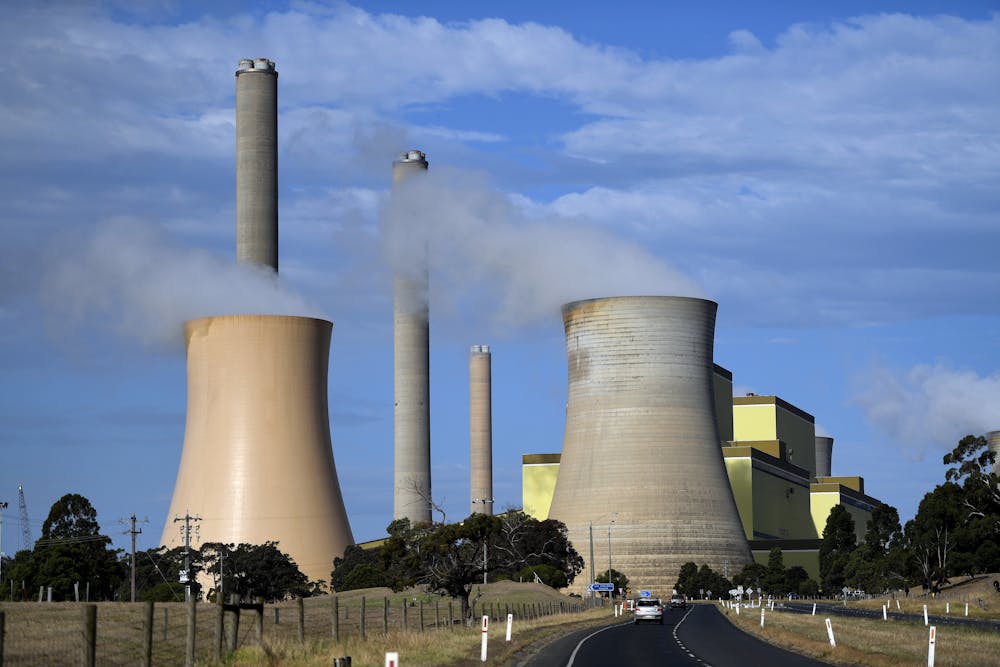 Rapidly phasing out fossil fuels is the only way we’ll reach our climate goals.
AAP Image/Julian Smith
Rapidly phasing out fossil fuels is the only way we’ll reach our climate goals.
AAP Image/Julian Smith
But let’s say we combine this potential with a deep decarbonisation scenario, where renewable energy is scaled up rapidly and we reach net zero emissions globally by 2050.
Then, we calculate the planet would briefly exceed a 1.5℃ temperature rise, before declining to 1.25-1.5℃ by 2100.
Of course, phasing out fossil fuels while restoring degraded lands and forests must also be coupled with ending deforestation. Otherwise, the emissions from deforestation will wipe out any gains from carbon removal.
Given this, we also explored the impact of phasing out ongoing land-use emissions, to reach net-zero in the land sector by 2030.
As with restoration, we found halting deforestation by 2030 has a very small impact on global temperatures, and would reduce warming by only around 0.08℃ over the century. This was largely because our baseline scenario already assumed governments will take some action. Increasing deforestation would lead to much larger warming.
Taken together – nature restoration plus stopping deforestation – end-of-century warming could be reduced by 0.18℃.
Is this enough?
If we enter a low-emissions pathway to limit global warming to 1.5℃ this century, we expect global temperature rise to peak in the next one to two decades.
As our research shows, nature restoration will unlikely be done quickly enough to offset the fossil emissions and notably reduce these global peak temperatures.
 A significant increase in deforestation would see significant levels of global warming.
Kai Bossom/Unsplash, CC BY
A significant increase in deforestation would see significant levels of global warming.
Kai Bossom/Unsplash, CC BY
But let us be clear. We are not suggesting nature restoration is fruitless, nor unimportant. In our urgency to mitigate climate change, every fraction of a degree of warming we can prevent counts.
Restoring degraded landscapes is also crucial for planetary health – the idea human health and flourishing natural systems are inextricably linked.
What’s more, protecting existing ecosystems – such as intact forests, peatlands and wetlands – has an important immediate climate benefit, as it avoids releasing the carbon they store.
What our research makes clear is that it’s dangerous to rely on restoring nature to meet our climate targets, rather than effectively and drastically phasing out fossil fuels. We see this reliance in, for instance, carbon offset schemes.
Read more: Now we know the flaws of carbon offsets, it's time to get real about climate change
Retaining the possibility of limiting warming to 1.5℃ requires rapid reductions in fossil fuel emissions before 2030 and global net-zero emissions by 2050, with some studies even calling for 2040.
Wealthy nations, such as Australia, should achieve net-zero CO₂ emissions earlier than the global average based on their higher historical emissions.
We now need new international cooperation and agreements to stop expansion of fossil fuels globally and for governments to strengthen their national climate pledges under the Paris Agreements ratcheting mechanism. Promises of carbon dioxide removals via land cannot justify delays in these necessary actions.
Authors: Kate Dooley, Research Fellow, Climate & Energy College, The University of Melbourne


















