

Google AI


Modern Australian

Māori hold a third of NZ’s fishing interests, but as the ocean warms and fish migrate, these rights don't move with them

  • Written by: Maui Hudson, Associate Professor, Director of Te Kotahi Research Institute, University of Waikato
Māori hold a third of NZ’s fishing interests, but as the ocean warms and fish migrate, these rights don't move with them

Record high ocean temperatures and marine heatwaves have become increasingly common in the waters off New Zealand in the past decade.

During the same period, commercial fisheries have landed lower volumes for several fish stocks, including hoki and tarakihi.

Māori hold almost a third of commercial fisheries interests in Aotearoa, but these are constrained to certain areas. The impacts of warming seas on Māori communities’ cultural and economic future well-being are not well understood.

For many Māori, fisheries are the most significant assets. With my colleagues Tony Craig and Katherine Short at Terra Moana, we explored how changing ocean temperatures may affect Māori commercial fisheries as part of the Moana Project.

Most of the fish species of interest to New Zealand’s commercial, recreational and customary fishers are managed under the government’s Quota Management System (QMS).

It was introduced in 1986 and determines allowable fish harvests, known as “total allowable catch” (TAC). The system replaced open access with set catch limits and transferable quota rights, which means quota holders can trade and sell their catch allowance.

The impacts of climate change on the marine environment are well documented in the latest report by the Intergovernmental Panel on Climate Change (IPCC). They include marine heatwaves, more severe storms, rising sea levels and changes in salinity, stratification, circulation, oxygen levels and acidity.

Read more: Putting the community back into business: what te ao Māori can teach us about sustainable management

As our moana (ocean) changes, so will the distribution of fish species.

Recent reviews analysed the effects of climate change on New Zealand’s commercial fisheries and found most fished species to be vulnerable to changes in temperature.

Any geographical expansion or shift in fish stocks will have major implications for Māori commercial seafood interests, given quota ownership is limited to specified management areas.

The distribution of fisheries is changing

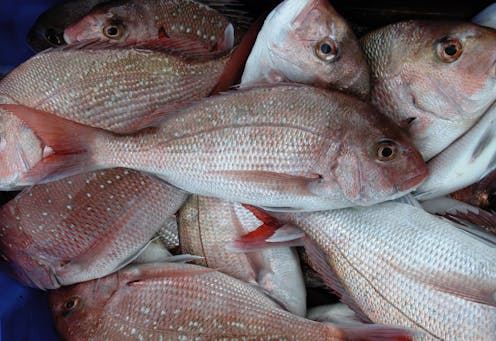
Snapper, for example, prefer waters of 12-21℃. This correlates with better survival rates of larval and subsequent life stages.

This also matches with fishers’ observations of significant increases in snapper in Te Moana-a-Toi/Bay of Plenty where sea surface temperatures reached up to 2.4℃ above average in the first six months of 2022.

Snapper
Snapper are most common in warmer waters around New Zealand. Getty Images

Recent declines in tarakihi in Te Moana-a-Toi have largely been attributed to overfishing. But given this migratory fish is known to travel from Banks Peninsula in the south to Te Moana-a-Toi in the north, it is also feasible that changing temperatures have affected the locations of spawning, which is usually triggered when temperatures are below 16℃, and restricted the species’ migratory journey.

Fishers have also recently caught snapper and kingfish around Rakiura/Stewart Island, an area previously considered too cold for these species. What if finding snapper around Rakiura represents both an expansion in the species’ distribution and a geographical shift?

Read more: Why Indigenous knowledge should be an essential part of how we govern the world's oceans

The quota system is not set up for a changing ocean

In the negotiations between Māori and the Crown leading up to the 1992 Fisheries Settlement, climate variability from El Niño and La Niña weather patterns was considered, but little thought was given to the implications of climate change.

New Zealand’s exclusive economic zone is divided into ten fisheries management areas (FMAs). Based on the known biological distribution of QMS fish stocks, quota management areas (QMAs) were defined for individual species. Some align with FMAs, but with environmental change and fish movement related to climate change, the future footprint of fisheries may differ considerably from the time QMAs were defined.

Climate change will affect Māori fisheries and aquaculture ownership rights and interests. If fished species move into new areas, this will affect the rights of individual iwi under the fisheries settlement. The allocation of quota under the settlement will be affected over time by the relationship between static iwi land interests and mobile fish stocks.

Two species, hoki and snapper, illustrate how this could play out.

Maps of quota management areas fro hoki and snapper.
NIWA Excluding the Kermadec Islands where neither species is caught, hoki can be considered as having a single QMA (left map above). This means that quota ownership is not likely to be affected by any climate-related geographical shift as any stock movement remains within one QMA. Conversely, snapper (right map above) is fished in five quota management areas, and any geographical change could have major consequences for individual area-based quota allocations. Of the fished areas, the Snapper 1 (SNA1) fishery is by far the biggest, with a total allowable catch of 8,050 metric tons (mt) allocated annually between commercial (4,500mt), recreational (3,500mt) and customary (50mt) interests. Quota value changes over time To understand the potential implications of geographical shifts of fished species, we determined the changes in quota values for some species over the past ten years. How science and policy respond to the potential implications of climate change will be critical for iwi interests. Māori now own 33% of New Zealand’s fishing quota volume (47% of value). These iwi revenue streams are vulnerable to climate change, rendering the fisheries settlements less timeless than intended. It is critical for iwi to understand how their rights and interests in the marine environment are likely to evolve. To uphold iwi interests, we need economic analysis alongside the science exploring the effects of climate change on stocks. This will better enable iwi, as kaitiaki and right holders, to participate in the marine reform agenda announced last year to ensure the long-term health and resilience of ocean and coastal ecosystems, including fisheries. Tony Craig and Katherine Short, at Terra Moana, carried out the primary research. Maui Hudson leads the research within the Moana Project, where this work was completed.

Authors: Maui Hudson, Associate Professor, Director of Te Kotahi Research Institute, University of Waikato


Read more https://theconversation.com/maori-hold-a-third-of-nzs-fishing-interests-but-as-the-ocean-warms-and-fish-migrate-these-rights-dont-move-with-them-186284

Pool and Deck Design: How to Plan the Perfect Outdoor Living Space for Your Sydney Home

For many Australians, the backyard is where life happens. Summer barbecues, weekend swims and long evenings outdoors are all part of the lifestyle, ...

Is Solar Pool Heating Worth It? What Sydney Homeowners Should Know

There's nothing quite like a backyard pool on a hot Sydney day. But once autumn rolls in, many pools sit unused for months because the water is simp...

Planning a Luxury House Move: A Week-by-Week Timeline for Prestige Sydney Homes

Selling or buying a prestige home is a major milestone. Whether it's a waterfront residence in Birchgrove, a grand Federation home in Haberfield or ...

Downsizing or Upgrading Your Caravan? Here's How to Sell It Without the Hassle

Selling a caravan can feel like a major task, especially when you are unsure about its value, paperwork, or how to find a buyer. Whether you are dow...

The Best Overseas Adventure Holidays for Australians Who Love the Outdoors

Australia offers no shortage of incredible outdoor experiences, but sometimes the best way to satisfy your sense of adventure is to head overseas. A...

Cape Town Wine Shuttle: Winelands Tasting & Tours

Embark on an unforgettable journey through the picturesque Cape Winelands, where world-class wines and breathtaking scenery await. Our Cape Town Win...

Why Giant Rats Tail Grass Keeps Coming Back After Spraying

Giant Rats Tail Grass (GRT) is one of the most frustrating pasture weeds for farmers and lifestyle property owners. You spray an infested area, see th...

When Custom Cardboard Boxes Make Sense for Your Business

Custom cardboard boxes can be useful when a standard carton does not fit a product, packing method or presentation requirement particularly well. A ...

Bottle Label Printing: Key Factors for a Professional Finish

Why the Printing Method Matters When businesses need packaging or printed containers developed for a particular application, the right supplier can m...

Virtual Livestock Fencing and GPS Tracking: Improving Visibility Across Cattle Properties

What Virtual Livestock Fencing Means for Modern Cattle Management Managing cattle across extensive properties requires more than knowing where anim...

Sydney Pawnbrokers Explained: How Hocking Your Car Actually Works

Sometimes you need cash, and you need it soon. If you own a car, you may already have a way to get it. That's what people mean when they say they've...

Moving Interstate from the Gold Coast to Brisbane (or Back)? What Removalists Wish You Knew First

Have you talked to anyone who’s done the move? They say the same thing: the drive up the M1 is the easy part. It's everything around it that catches...

Why the Spring School Holidays Are a Great Time to Visit Coffs Harbour

The spring school holidays are a good time to spend a few days on the Coffs Coast. The weather is starting to warm up, there is plenty to do outdoor...

What to Do When an Older Car Is No Longer Worth Keeping in Melbourne

Ever looked at another repair quote and wondered whether your old car is still worth the trouble? It is a common turning point for Melbourne motoris...

Your Baby's First Year: A Local Guide to Feeding, Sleep, and When to Get Extra Support

Ask ten parents in a Brisbane mothers' group how their baby is feeding or sleeping, and expect ten different answers.  Someone's baby sleeps throug...

Kitchen and Laundry Makeover Ideas That Don't Require a Full Renovation

Full kitchen renos are expensive — and most people don't actually need one.  They need the kitchen to stop looking like it's stuck in 2009, or they...

How Technology Is Reshaping the Modern Australian Commercial Kitchen

The commercial kitchen has always been shaped by technology. Refrigeration changed how ingredients could be stored, modern ventilation transformed k...

The Number on a Roller Blind Fabric That Nobody Explains

Somewhere in the fabric book, next to the colour name, there is a percentage. Three per cent. Five per cent. Ten per cent. Nobody explains it, most c...















