

Was Tricia the elephant happy? Experts on the ethics of keeping such big, roaming creatures in captivity
- Written by: Jessica Turner, PhD Candidate, University of Adelaide
The beloved Asian elephant Tricia died at Perth Zoo this month at the ripe old age of 65, making her one of the world’s oldest elephants.
Tricia was born in 1957 and arrived at Perth Zoo in 1963 from Vietnam. Her keeper described her as expressive, playful, and mischievous.
Tricia’s death has led to an outpouring of grief in Perth, especially among zookeepers and her fellow elephants, Putra Mas and Permai. But it has also sparked renewed debate about the ethics of keeping such long-lived, wandering animals in zoos for decades.
This is an important topic to debate as, historically, elephant welfare in captivity has been poor. So are elephants generally happy and safe in enclosures today?
Vale Tricia | Perth Zoo.The challenges of keeping elephants captive
Animal welfare, as a concept, is complex and evolving. In broad strokes, welfare is defined as an animal’s ability to avoid suffering and sustain fitness. This requires human carers to not only provide for physical needs, but mental ones.
But animal welfare wasn’t always a priority for captive elephants. A notorious example is elephants being held captive in circuses. These elephants were separated from their mothers at an early age for training, confined for long periods and moved improperly in flatbeds and box cars from place to place.
Promoting good welfare for elephants in captivity is difficult due to their larger size, which requires greater resources such as water, space and up to 150 kilograms of food daily.
Satisfying their space and exercise needs in a captive environment is likely impossible. In the wild, elephants can roam great distances – up to 195km in a day - and are continually on the move.
An Asian elephant playing in a pool at Oregon Zoo.These animals also have highly developed cognitive abilities, rivalling those of primates. For example, elephants can manufacture and use tools, such as manipulating and stripping branches to swat insects.
Elephants have a playful side. They splash water and mud or, in dry periods, use their trunks to entangle the trunks of others under the shade of a tree.
Various accounts suggest they can also show compassion, be cooperative, recognise themselves in a mirror, and demonstrate altruism.
Read more: Rewilding: conservationists want to let elephants loose in Europe – here's what could happen
They also demonstrate strong social bonds with other elephants. Emerging evidence suggests grief and comfort are displayed upon the death of a bonded family member. Management practices that disrupt these bonds lead to suffering.
Tricia became the foster mother of three elephant calves who came to Perth Zoo. Tragically in 2007, one of the elephants was euthanised due to health complications. Tricia grieved this loss for a year.
Animal welfare in modern zoos
Modern Australian zoos have made animal welfare a top priority. Some key considerations in assessing welfare are the complexity of the enclosure, a varied and species-appropriate diet, behavioural enrichment and regular heath care.
Carers also keep an eye out for behaviours suggestive of fear, stress, and anxiety, such as pacing, aggression, and self-harm.
Perhaps one of the best examples of the progress of zoological parks is Tricia herself. The captivity conditions in her early days were poor, by today’s standards.
Read more: Early trauma affects an elephant's ability to assess threat from lions – new research
She was originally housed in a concrete enclosure. Tricia was moved to a new enclosure in 1986 that included a new barn and pool.
The current elephant enclosure at Perth Zoo has tripled in size and contains a swimming pool, mud wallow, trees, scratching posts, and a heated barn with sand floors and sleeping mounds.
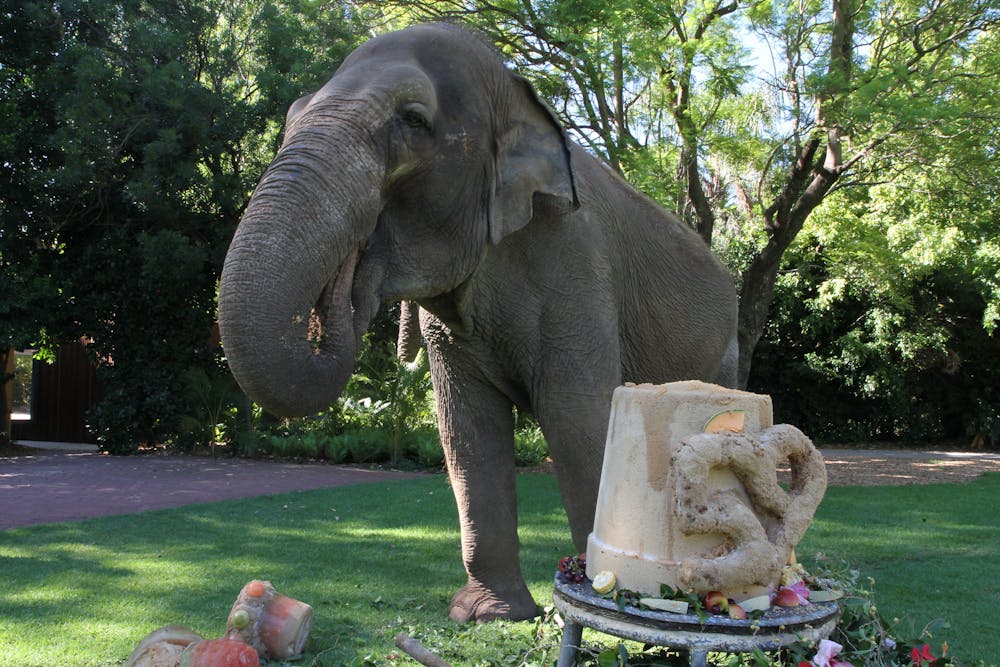
Various activities aimed at improving her life quality were also available in the form of zoo walks and painting – an extension of drawing and scribbling elephants do in the wild.
As a reader you may be thinking that, sure, this sounds nice, but how could it really compare to the freedoms and space of the wild?
Unfortunately achieving good welfare in the wild is rarely a given either. Wild populations of Asian elephants are listed as endangered, with a rapidly decreasing population and a long time between generations of 22-25 years.
They face many threats such as urban encroachment, hunting and habitat decline. They’re also viewed as pests by farmers and timber loggers.
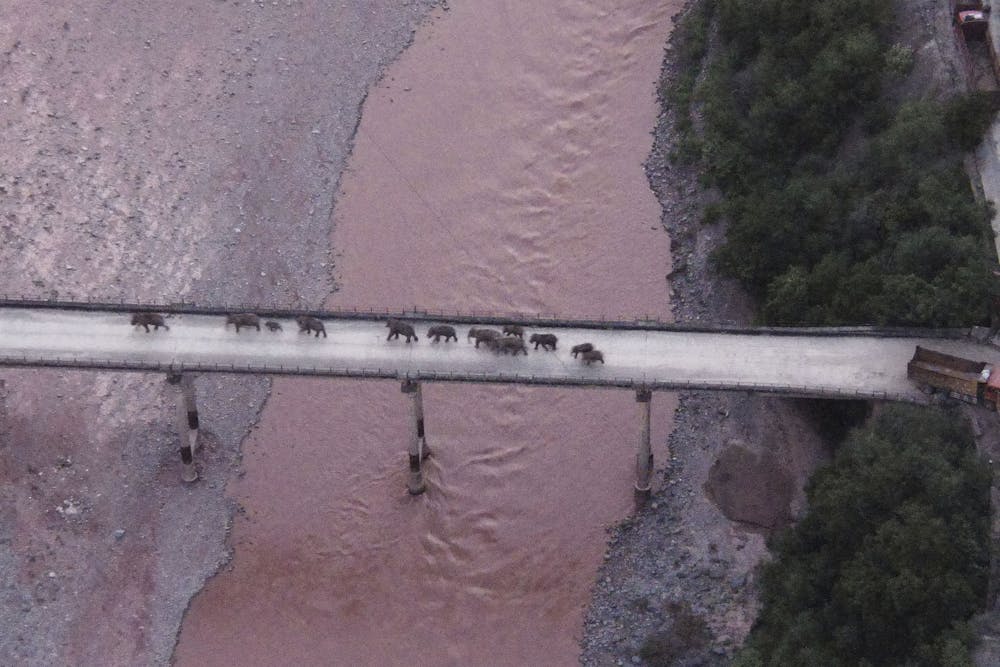 A herd of wandering Asian elephants went viral last year when they travelled hundreds of kilometres in China.
Yunnan Provincial Command Center for the Safety and Monitoring of North Migrating Asian Elephants via AP
A herd of wandering Asian elephants went viral last year when they travelled hundreds of kilometres in China.
Yunnan Provincial Command Center for the Safety and Monitoring of North Migrating Asian Elephants via AP
Today’s captive elephants are often part of breeding and conservation programs aimed at Asian elephants. While captive breeding programs are unlikely to make significant contributions to wild population numbers, highlighting their plight in the wild to visitors can promote the conservation message.
Some zoos also use their experience to become involved in conservation efforts in the elephants’ home countries, where success is more likely. As an example, Australia Zoo has invested funds in an Indonesian elephant hospital to rehabilitate injured animals.
The future of captive elephants
Australian zoos are recognising the challenges of keeping certain species within their walls. We’re seeing a shift away from actively adding or replacing exotic species, in favour of redeveloping larger and more complex enclosures for remaining animals. Priority is given to species part of conservation and breeding programs.
So can we re-introduce elephants who have spent most of their lives zoos, back into the wild? This would be unethical, due to their reliance on generational knowledge to find food, water and migration routes.
But there is increasing recognition of the need for stable social groups, and a resolve to house Asian elephants across fewer locations that can provide the best conditions for them.
For example, Perth Zoo is searching for a new home for their two remaining elephants where they can be integrated into a larger herd. And Melbourne zoo will house their herd at Werribee Open Range Zoo, which will expand to 21 hectares available for roaming.
Only time will tell what the future holds for elephants in zoos. But we should take heart in the progress that has been made to elephant housing and care over the last 50 years, as well as a greater recognition of any emerging issues, ensuring robust debate.
Authors: Jessica Turner, PhD Candidate, University of Adelaide


















