

Does osteopathy work?
- Written by: Amie Steel, Postdoctoral Research Fellow, University of Technology Sydney
Every year, Australian osteopaths provide around 3.9 million clinical consultations.
Osteopathy is a manual therapy developed by US physician Andrew Still in the mid-1800s, and it’s recognised by the World Health Organisation as a traditional system of medicine.
Osteopaths rely on manual contact with patients for both diagnosis and treatment and employ a wide variety of therapeutic manual techniques within their clinical practice. Some of these techniques may overlap with techniques used by a chiropractor (such as spinal manipulation) or a physiotherapist (such as stretching). But as a practice osteopathy is considered distinct from other health care professions.
Pockets of research examining osteopathic care have been conducted over the last 20 years, but there are still more questions than answers about its safety and effectiveness.
Read more: Myotherapy: panacea or placebo?
What is the current evidence?
I recently led a study into the existing research examining care delivered by an osteopath compared with other treatment options. The research suggested variable benefits to people receiving osteopathic treatment, depending on the condition being examined.
The first study compared osteopathy’s effect on low back pain with the regular medical approach to back pain. For this study, the regular medical approach included analgesic or anti-inflammatory medication, active physical therapy, hot or cold packs and structural support. While osteopathy was not linked with any difference in participants’ perceived pain levels, the researchers found the group receiving osteopathy used less medication and required less physical therapy.
In another study a few years later, people experiencing back pain reported an improvement in their symptoms when compared to people receiving no treatment, but not really any benefit compared to individuals receiving sham osteopathy.
A third study on back pain compared osteopathy to physiotherapy (either as physiotherapist-led group exercise or one-on-one physiotherapy) and found similar outcomes in all three groups.
The sum of these studies suggests osteopathy is just as effective (or ineffective) as standard medical care or physiotherapy in treating chronic back pain, but may be able to reduce use of pain medication.
Read more: Chiropractic therapy: placebo or panacea?
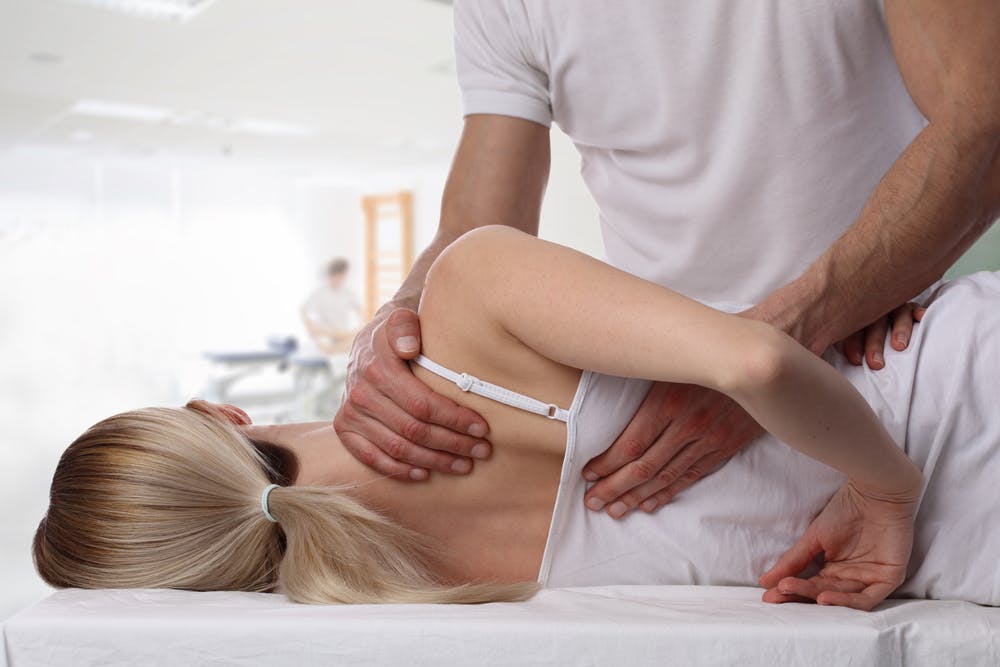 Osteopaths use many different techniques which makes it hard to assess the effectiveness.
from www.shutterstock.com
Osteopaths use many different techniques which makes it hard to assess the effectiveness.
from www.shutterstock.com
Our review also found a number of studies which examined how the cost of osteopathic care compared to other treatment options. Most interesting of these was an Italian study which found osteopathic treatment of premature infants in neonatal intensive care units (NICU) were able to gain weight more quickly and be discharged from hospital on average six days earlier than the infants in the control group.
This is a very important finding not only for the premature infants and their families, but also for the health budget. This low-cost treatment (€20, or A$32, per session) resulted in a reduction of nearly €3,000 (A$4,740) in hospital costs per participant.
This original study has been repeated in a larger clinical trial, and while the effect size was smaller it still showed a positive outcome for osteopathic treatment (four days shorter stay).
The other studies we found looked at a range of conditions including pancreatitis, neck pain, back pain and migraine headache, but the study designs were not strong enough to give any meaningful answers.
Of course, new evidence about osteopathy is being published all of the time, with recent studies suggesting it may benefit people with migraine and irritable bowel syndrome, but is unlikely to help fibromyalgia.
Unfortunately, for most health conditions we only have one or two studies that look at osteopathy. So we have very little conclusive information to help us understand its true value in the wider Australian health care system.
Read more: Modern acupuncture: panacea or placebo?
Why are there so many gaps?
Osteopathy is a system of medicine, not just one treatment. An osteopath may use different techniques and treatments to support their patient - many of which are employed by other health professionals such as physiotherapists.
Even the osteopathy-specific “manual techniques” that may be used will vary depending on the individual’s needs and preferences. This presents many challenges to researchers trying to study its effectiveness.
We also know little about how osteopathy works because the most common cluster of conditions treated by osteopaths relate to pain, and as a scientific community we’re still undecided about the process of pain in the body.
So unlike a drug study, where an expected change to the body’s physiology can be tracked through changes in blood or other bio markers, most studies where musculoskeletal pain is being treated end up relying on the patient’s experience of pain or their need for pain medication, as the main measure of whether the treatment has had an effect.
Research also requires funding and interest from researchers, and osteopathy in Australia has very little of either. While there are recent developments which may increase the amount of Australian osteopathic research, we need a concerted effort from researchers, funders and the osteopathic community to address the knowledge gaps.
Read more: Reflexology: panacea or placebo?
Authors: Amie Steel, Postdoctoral Research Fellow, University of Technology Sydney
Read more http://theconversation.com/does-osteopathy-work-98848


















