

Gwen Harwood was one of Australia's finest poets – she was also one of the most subversive
- Written by: Cassandra Atherton, Professor of Writing and Literature, Deakin University
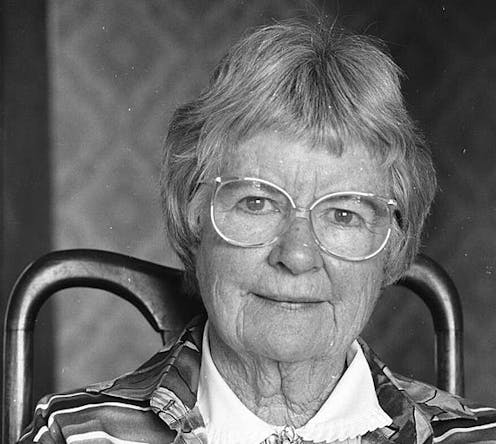
Gwen Harwood is one of Australia’s finest poets. Her poetry is studied in secondary schools across the nation. While she remains largely unknown internationally, her poetry and letters continue to excite and inspire readers 27 years after her death.
Over her lifetime, she published more than 400 poems, 13 libretti, and six collections of poetry: Poems (1963), Poems / Volume Two (1968), Selected Poems (1975), The Lion’s Bride (1981), Bone Scan (1988), and The Present Tense (1995).
Harwood’s Collected Poems 1943–1995 was published posthumously in 2003. There are also three volumes of her extraordinary letters: Blessed City (1990), A Steady Storm of Correspondence (2001) and Idle Talk, Letters 1960–1964 (2015).
Review:
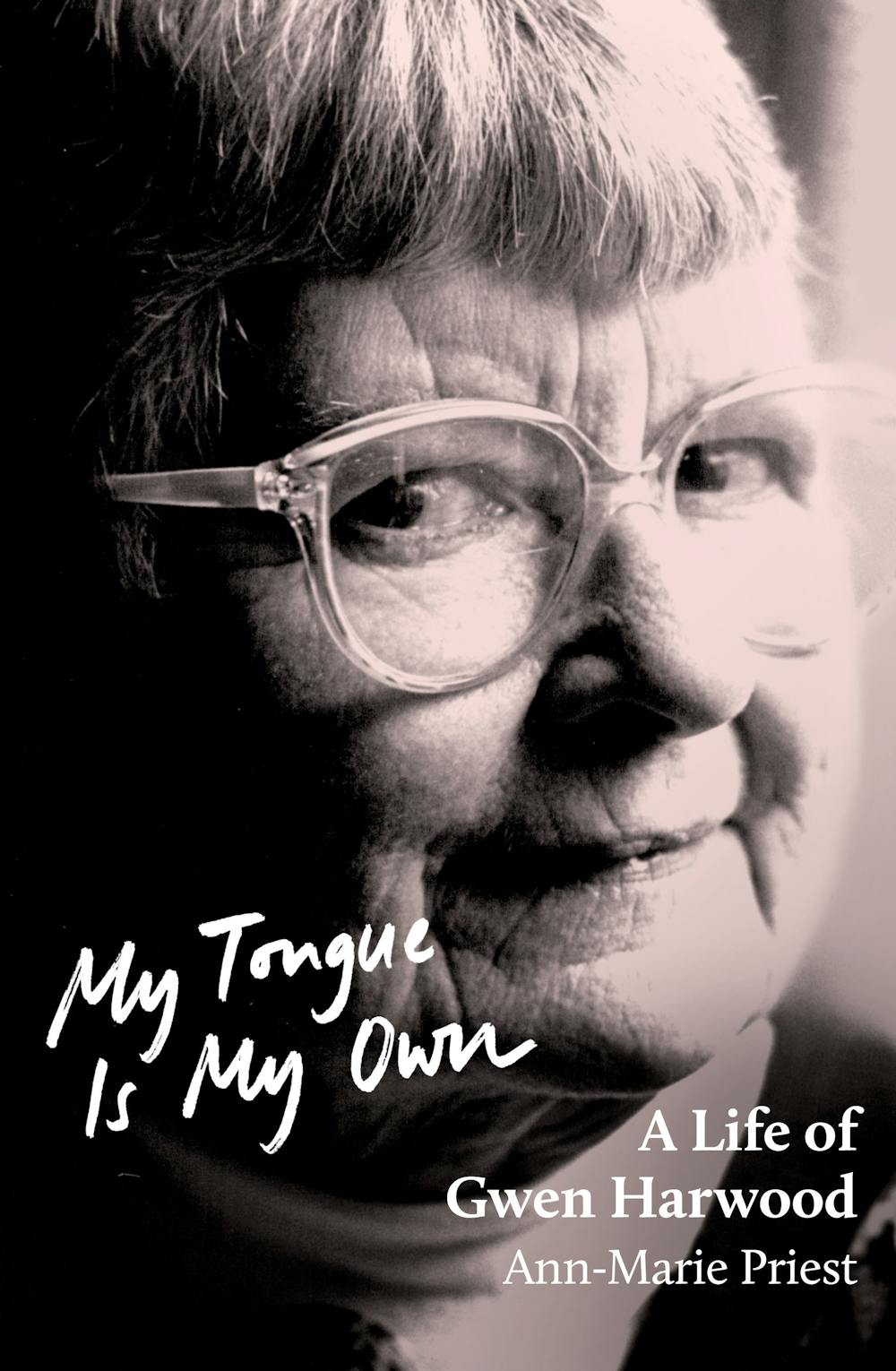
My Tongue is My Own: A Life of Gwen Harwood – Ann-Marie Priest (La Trobe University Press)
Bad Art Mother – Edwina Prestion (Wakefield Press)
 Harwood’s biographer Ann-Marie Priest.
Black Inc.
Read more:
Judith Wright, an activist poet who was ahead of her time
An accessible account
Priest’s biography is an accessible account of Harwood’s life, often filtered through and framed by an examination of Harwood’s complex relationships.
John Harwood, Gwen Harwood’s oldest child and literary executor, revealed in a recent issue of Australian Book Review that he had initially gone against his mother’s wishes to “tell all” and embargoed much of her correspondence. After his father died, John Harwood allowed Priest access to this material.
Priest’s reconstruction of events synthesises of a plethora of sources, including a massive quantity of letters, diaries, and interviews with Harwood’s friends and correspondents. She combines this with some analysis of Harwood’s poems to create a riveting narrative, exploring Harwood’s private and literary life.
She places Harwood’s love affairs upfront, beginning the biography with the sentence:
When Gwen Harwood was in her mid-fifties, she sent some childhood photos to a younger poet who had recently become her lover.
This foregrounds Priest’s frank discussions of Harwood’s marriage, which Harwood’s correspondence characterises as fraught and difficult. Priest’s biography also reveals the names of various lovers, starting when she was seventeen with composer, conductor and scholar Robert Dalley-Scarlett.
In her recent review of My Tongue is My Own, Stephanie Trigg comments that the biography “does not challenge the genre”, but praises the way Priest does not “foreground her own voice”, putting “Harwood’s voice – or rather, her many voices – at the heart of this volume.”
At times, perhaps, this is at the expense of delving further into Harwood’s role as a “self-confessed notorious trickster-prankster”. Indeed, many of Harwood’s published letters reveal her penchant for entertaining disguises and game-playing.
Taking Harwood more-or-less at her word, and her correspondence and discussions with people mostly at face value – without significant authorial caveats, qualifications or challenges – tends to give priority to the sometimes questionable narrative that Harwood wrote for herself.
John Harwood notes that when his mother was alive, she courted two separate biographers simultaneously and
led them a merry dance […] My mother’s plan was to oversee the writing of her own life.
Perhaps Priest is inviting her readers to read against the grain and identify moments where they believe Harwood’s assertions may be unreliable.
Unreliable narrators
The subversiveness of unreliable narrators is explored in Edwina Preston’s Bad Art Mother, alongside dominant contemporary discourses about motherhood and poetry. Significantly, Preston includes a statement about the Bulletin hoax and Harwood’s comment on it as an epilogue to her novel:
someone I thought a friend said … “I thought no woman would ever use that word,” and made it clear I was cut off from decent motherhood.
Harwood’s biographer Ann-Marie Priest.
Black Inc.
Read more:
Judith Wright, an activist poet who was ahead of her time
An accessible account
Priest’s biography is an accessible account of Harwood’s life, often filtered through and framed by an examination of Harwood’s complex relationships.
John Harwood, Gwen Harwood’s oldest child and literary executor, revealed in a recent issue of Australian Book Review that he had initially gone against his mother’s wishes to “tell all” and embargoed much of her correspondence. After his father died, John Harwood allowed Priest access to this material.
Priest’s reconstruction of events synthesises of a plethora of sources, including a massive quantity of letters, diaries, and interviews with Harwood’s friends and correspondents. She combines this with some analysis of Harwood’s poems to create a riveting narrative, exploring Harwood’s private and literary life.
She places Harwood’s love affairs upfront, beginning the biography with the sentence:
When Gwen Harwood was in her mid-fifties, she sent some childhood photos to a younger poet who had recently become her lover.
This foregrounds Priest’s frank discussions of Harwood’s marriage, which Harwood’s correspondence characterises as fraught and difficult. Priest’s biography also reveals the names of various lovers, starting when she was seventeen with composer, conductor and scholar Robert Dalley-Scarlett.
In her recent review of My Tongue is My Own, Stephanie Trigg comments that the biography “does not challenge the genre”, but praises the way Priest does not “foreground her own voice”, putting “Harwood’s voice – or rather, her many voices – at the heart of this volume.”
At times, perhaps, this is at the expense of delving further into Harwood’s role as a “self-confessed notorious trickster-prankster”. Indeed, many of Harwood’s published letters reveal her penchant for entertaining disguises and game-playing.
Taking Harwood more-or-less at her word, and her correspondence and discussions with people mostly at face value – without significant authorial caveats, qualifications or challenges – tends to give priority to the sometimes questionable narrative that Harwood wrote for herself.
John Harwood notes that when his mother was alive, she courted two separate biographers simultaneously and
led them a merry dance […] My mother’s plan was to oversee the writing of her own life.
Perhaps Priest is inviting her readers to read against the grain and identify moments where they believe Harwood’s assertions may be unreliable.
Unreliable narrators
The subversiveness of unreliable narrators is explored in Edwina Preston’s Bad Art Mother, alongside dominant contemporary discourses about motherhood and poetry. Significantly, Preston includes a statement about the Bulletin hoax and Harwood’s comment on it as an epilogue to her novel:
someone I thought a friend said … “I thought no woman would ever use that word,” and made it clear I was cut off from decent motherhood.
 Bad Art Mother focuses on a group of Australian women artists in the 1960s struggling with their ambition and seeking traction in the male-dominated art scene. Characters are based on Melbourne artists and writers Georges and Mirka Mora, Joy Hester, and the founders of Heide, John and Sunday Reed.
At the heart of the book is not only a scandal akin to the Bulletin hoax, but lively and compelling letters, not unlike Harwood’s famed correspondence. Preston pieces together her protagonist’s life in a series of broken, searing vignettes, clever epistolary writing, and retrospective musings.
In Bad Art Mother, Veda Gray aspires to be a poet but struggles with society’s expectation that women have a duty to be wives and mothers rather than artists. This leads to her allowing the famous and chauvinistic poet, Mr Parish, and his wife to become legal guardians of her child, Owen – a character based on Sweeney Reed, who was adopted by John and Sunday.
Veda is presented as making this decision so that she has more time to write, and asks her sister, “What sort of a mother chooses a book over a child?”
But the issues at stake are more insidious than this. Preston demonstrates in subtle prose that none of the men question if they are good fathers or husbands. She exposes the ways that even Veda’s son undermines her by choosing, prioritising and praising the more conventional mother-figures in his life.
When her manuscript, The Poems of Veda Gray is accepted for publication, Veda explains to her sister that the publisher wants to
reconsider the content and reassess the sequencing of the book […] a different opening poem is required (perhaps a sonnet? They suggest, because didn’t Shakespeare write lots of those?)
It is at this point that Veda becomes “an inventor of plots to foil publishers”.
Bad Art Mother focuses on a group of Australian women artists in the 1960s struggling with their ambition and seeking traction in the male-dominated art scene. Characters are based on Melbourne artists and writers Georges and Mirka Mora, Joy Hester, and the founders of Heide, John and Sunday Reed.
At the heart of the book is not only a scandal akin to the Bulletin hoax, but lively and compelling letters, not unlike Harwood’s famed correspondence. Preston pieces together her protagonist’s life in a series of broken, searing vignettes, clever epistolary writing, and retrospective musings.
In Bad Art Mother, Veda Gray aspires to be a poet but struggles with society’s expectation that women have a duty to be wives and mothers rather than artists. This leads to her allowing the famous and chauvinistic poet, Mr Parish, and his wife to become legal guardians of her child, Owen – a character based on Sweeney Reed, who was adopted by John and Sunday.
Veda is presented as making this decision so that she has more time to write, and asks her sister, “What sort of a mother chooses a book over a child?”
But the issues at stake are more insidious than this. Preston demonstrates in subtle prose that none of the men question if they are good fathers or husbands. She exposes the ways that even Veda’s son undermines her by choosing, prioritising and praising the more conventional mother-figures in his life.
When her manuscript, The Poems of Veda Gray is accepted for publication, Veda explains to her sister that the publisher wants to
reconsider the content and reassess the sequencing of the book […] a different opening poem is required (perhaps a sonnet? They suggest, because didn’t Shakespeare write lots of those?)
It is at this point that Veda becomes “an inventor of plots to foil publishers”.
 Edwina Preston.
Author provided
In My Tongue is My Own, Priest outlines how Harwood’s use of “fuck” was considered repugnant largely because Harwood was a woman and mother. Veda is similarly labelled “lewd” and indecent for her literary intervention. The headline, “End of Line for Disgraced Lady Poet” is similar to the headlines about Harwood after the Bulletin scandal. The same term – “lady poet” – had been used to undermine Harwood.
Priest states that Harwood
understood that men were wary of women with aspirations to write […] and all too ready to dismiss them.
Priest’s and Preston’s books – one a biography with a strong narrative impetus, and one a work of fiction with powerful biographical undercurrents – explore a comment Harwood made in a pithy interview with John Beston:
I feel that I have sometimes been handicapped by being the poet-housewife figure; you know, how she can make a nice apricot sponge and write poetry too. There is a savage, nasty part lurking somewhere down there, and yet this is part of the kind mother too.
Both works present an opportunity to reflect on the relationship between patriarchy and women’s artistic pursuits, including their ambitions and the reception of their work. It is salutary to consider how fraught it can be for women creative artists to obtain real opportunities to make art and also the recognition they deserve.
Authors: Cassandra Atherton, Professor of Writing and Literature, Deakin University
Edwina Preston.
Author provided
In My Tongue is My Own, Priest outlines how Harwood’s use of “fuck” was considered repugnant largely because Harwood was a woman and mother. Veda is similarly labelled “lewd” and indecent for her literary intervention. The headline, “End of Line for Disgraced Lady Poet” is similar to the headlines about Harwood after the Bulletin scandal. The same term – “lady poet” – had been used to undermine Harwood.
Priest states that Harwood
understood that men were wary of women with aspirations to write […] and all too ready to dismiss them.
Priest’s and Preston’s books – one a biography with a strong narrative impetus, and one a work of fiction with powerful biographical undercurrents – explore a comment Harwood made in a pithy interview with John Beston:
I feel that I have sometimes been handicapped by being the poet-housewife figure; you know, how she can make a nice apricot sponge and write poetry too. There is a savage, nasty part lurking somewhere down there, and yet this is part of the kind mother too.
Both works present an opportunity to reflect on the relationship between patriarchy and women’s artistic pursuits, including their ambitions and the reception of their work. It is salutary to consider how fraught it can be for women creative artists to obtain real opportunities to make art and also the recognition they deserve.
Authors: Cassandra Atherton, Professor of Writing and Literature, Deakin University 

















