

Saving burned or injured animals draws our sympathy. But some don't survive after release. Here's why
- Written by: Holly Cope, Postdoctoral Research Associate, University of Sydney
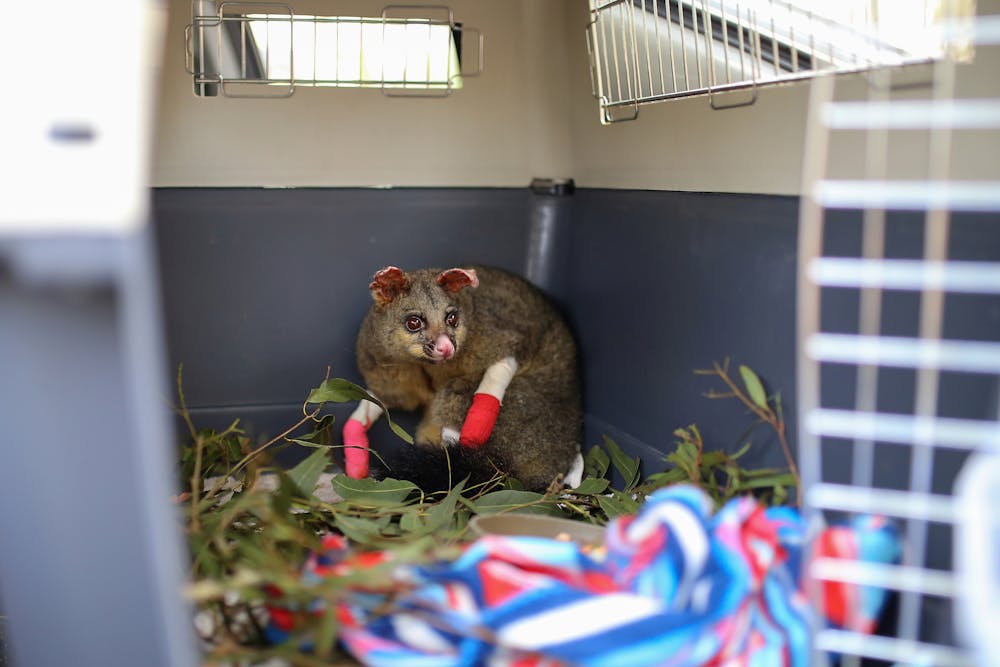
Every year, Australia’s wildlife volunteers devote time, effort and their own money to rescue, rehabilitate and release tens of thousands of native animals. Their efforts get a lot of media attention, particularly after huge disasters like the megafires of the 2019 Black Summer.
Readers will remember vivid images of koalas being rescued along with efforts to provide food to survivors in burnt habitats.
But little is known about what happens to these creatures after they’re released back into the wild. Our new research on hand-reared brushtail possums has found release back into the wild can be fraught with danger.
In our study, almost half were killed. The main culprit: foxes. But there are things we can do.
Rescue, rehabilitation and release
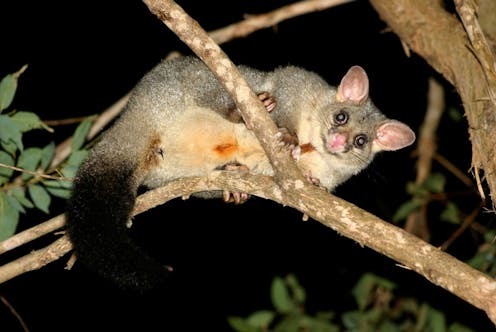
Brushtail possums are the fifth most rescued native species in New South Wales. When a mother possum is attacked by a predator, hit by a car or burnt in a bushfire, human volunteers will often artificially raise any orphaned offspring.
Rearing babies as well as rescue and rehabilitation are important. But the wild holds threats such as hungry predators. Not only that, but the reason an animal had to be rescued in the first place could still be present.
To find out the fate of rescued animals, we used radio-tracking collars to follow 20 hand-reared possums up to 40 days after release. Of these, only eight (40%) survived until the end of the study, while nine (45%) were killed by foxes or had to be returned to rehabilitation, and three possums had unknown fates, as they lost radio signal.
Foxes were responsible for all possum deaths, and most happened within three days of release. Unfortunately, hand-reared animals often haven’t learned the behaviours to detect and avoid predators.
You might think survival would be a game of chance. In fact, we found possums with more exploratory personalities and those which were less tame were more likely to survive. These qualities may have helped possums find food and refuge more effectively on their own in the wild.
That means the odds are stacked against orphaned, hand-reared possums. Because they’ve been raised by human carers, their personalities can be very different to those of wild possums. In short, captivity can alter the development of behaviours which might be important for survival in the wild. The longer animals spend with humans and the more tame they become, the less they seek refuge, recognise predators and find food effectively.
By contrast, it didn’t matter much whether the possums were released without further support, or whether carers left food supplies to get them started. It also didn’t matter much whether they were released in urban or rural areas.
The possums which had highest survival rates were those which retained their wildness and had not become tame.
What can we learn?
So what should Australia’s wildlife carers do? It’s not as simple as advising wildlife rehabilitation organisations to minimise how long animals spend in captivity. Animals have to remain in rehabilitation until their illness or injury is treated, they’re physically ready for release and a suitable release site has been found.
We believe we need to test and develop new ways of reducing tameness and encouraging exploratory behaviour during rehabilitation.
Wildlife rehabilitators could use databases like Feral Scan to gauge how often introduced predators have been seen at particular release sites. Rehabilitators could also talk to local land managers to take advantage of fox control efforts, and aim to release possums when fox numbers have been suppressed. We also need to continue developing effective methods to train possums to avoid predators, such as borrowing from successful antipredator training used for other marsupials.
Where to from here?
In our recent review, we analysed 112 studies on wildlife survival rates during rehabilitation or after release. We found factors affecting survival were often specific to species or contexts, such as the region of the world or the reason the animal needed rehabilitation.
Globally, we found human-related factors like collisions with cars and introduced predators were major causes of injury and death for rescued and released wildlife. Tackling threats in the environment must remain a priority to reduce the need for wildlife rescue in the first place.
We hope studies such as ours can improve guidelines for wildlife rescue, rehabilitation and release. To improve survival rates, scientists, government agencies and wildlife volunteers must develop evidence-based and species-specific protocols to give every rehabilitated animal the best chance at living a life in the wild.
As urbanisation fragments habitat and with natural disasters set to be more frequent and more severe due to climate change, we will need these protocols to enable quick, efficient rescue programs for wildlife.
Read more: Simply returning rescued wildlife back to the wild may not be in their best interest
Authors: Holly Cope, Postdoctoral Research Associate, University of Sydney


















