

3 reasons why women leaders actually matter for women
- Written by: Ramona Vijeyarasa, Senior Lecturer and Juris Doctor Program Head, University of Technology Sydney and Women's Leadership Institute Australia Research Fellow, University of Technology Sydney
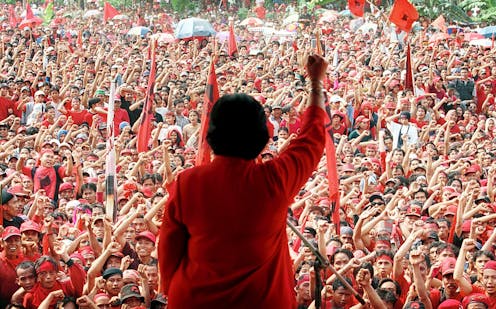
There are currently just 30 female presidents and prime ministers worldwide. Moldova and Barbados are the only two countries where women occupy both the positions of president and prime minister, while Bangladesh is the only nation where a woman has led for more years than a man over the last half century.
Clearly, women leaders matter as a question of gender equity, but as my research shows, they may also matter to women in other ways.
I looked at four different female presidents in three different political systems: the Philippines’ first female president, Corazon Aquino (1986–1992) and its second female leader, Gloria Macapagal Arroyo (2001–2010); Indonesia’s first and only female president, Megawati Sukarnoputri (2001–2004); and Sri Lanka’s Chandrika Bandaranaike Kumaratunga (CBK).
CBK, who was Sri Lanka’s fifth president from 1994 to 2005, followed in the footsteps of her mother, Sirimavo Bandarnaike, the world’s first female elected head of government in 1960.
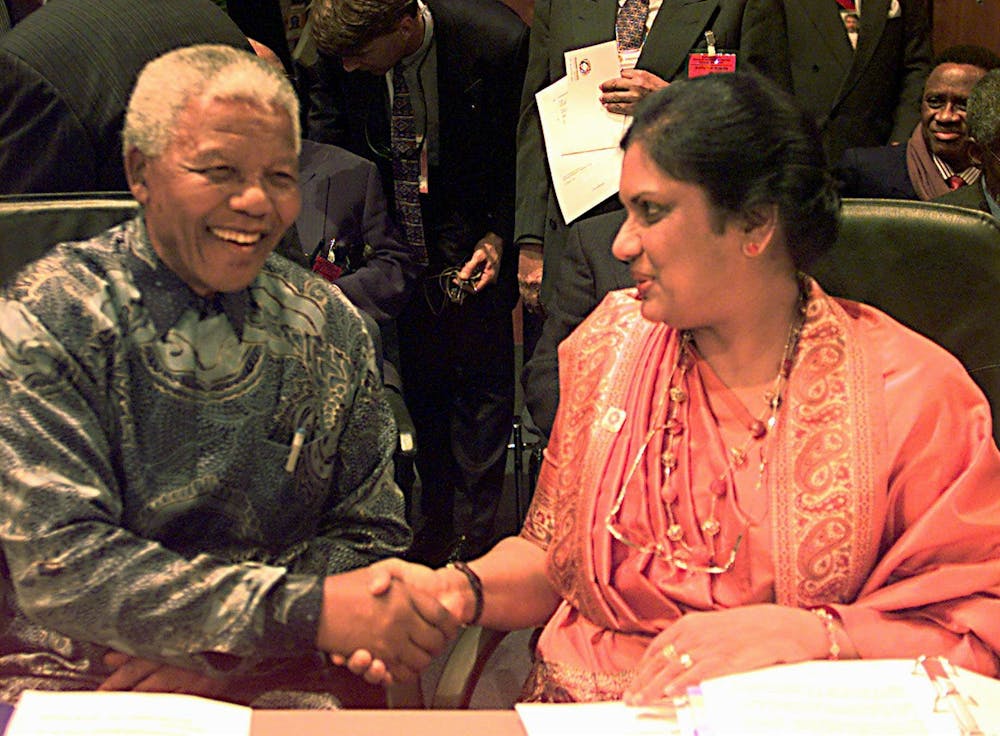
I was interested in the difference these women leaders made on women’s lives through the law. However, I did not want to blindly place a positive spin on the impact women have as presidents.
My research used the Gender Legislative Index, which relies on human evaluators and machine learning to determine how well laws advance women’s rights. The index indicated whether the laws enacted during these leaders’ tenures were “good” for women.
Of course, “women” are not a monolithic category with the same interests and needs. And nor are women leaders all the same. But there are three reasons why women leaders may matter more to women.
1. Bringing women up the ladder
Appointment powers are central to presidential leadership. President Macapagal Arroyo herself acknowledged to me that President Aquino had “paved the way” for her, in multiple ways.
Aquino had invited Macapagal-Arroyo to join her government as Assistant Secretary of the Department of Trade and Industry.
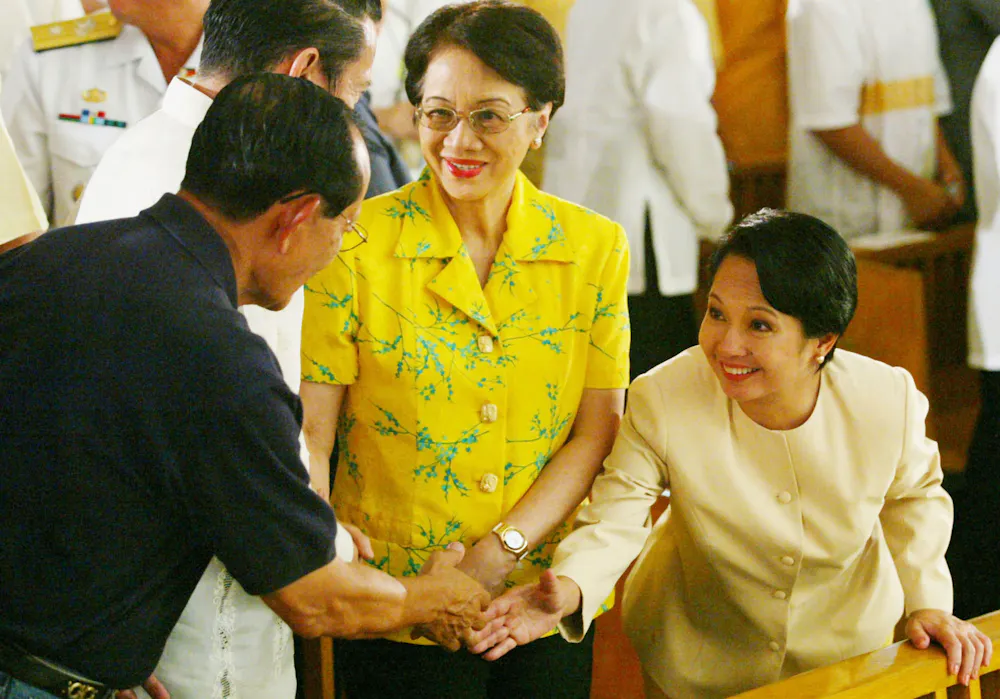 The then Philippine President Gloria Macapagal Arroyo, right, is greeted by former president Fidel Ramos, as former president Corazon Aquino, centre, looks on in 2003.
Bullit Marquez/AP
The then Philippine President Gloria Macapagal Arroyo, right, is greeted by former president Fidel Ramos, as former president Corazon Aquino, centre, looks on in 2003.
Bullit Marquez/AP
Cabinet members directly influence what bills are introduced into the national legislature. Yet women have traditionally held fewer ministerial posts. Those held were often positions with discernible “feminine” characteristics or “low-prestige” portfolios, such as ageing, children and the family.
Of the four women I studied, like female leaders in Latin America, three appointed more women to their cabinets than the male leaders who preceded them. President Megawati, whose female appointees matched her predecessor, was the exception.
Aquino was known for appointing empowered political women to her administration such as Dr Lourdes Reynes Quisumbing, the country’s first female Secretary of Education and Miriam Defensor-Santiago, appointed head of the Bureau of Immigration and Deportation. Defensor-Santiago later ran for president (unsuccessfully) and was the first Southeast Asian elected to the International Criminal Court.
 Miriam Defensor Santiago pictured in 2016.
Mark R. Cristino/EPA
Miriam Defensor Santiago pictured in 2016.
Mark R. Cristino/EPA
Among Kumaratunga’s seven female appointees, one was responsible for housing, construction and development, a significant portfolio in Sri Lanka.
Arroyo appointed a remarkable 12 women cabinet members (compared to two under her predecessor). Such female appointees potentially (although not necessarily) open the door to better representation of women’s interests.
2. Legislating for women
Few women leaders in history have been acknowledged as advocates for women. Yet in certain fields, laws may be enacted at a faster pace when women’s groups mobilise more resources to exploit a window of opportunity.
 Indonesia’s Elimination of Violence in the Household Act, signed into law by President Megawati in 2004, took seven years to enact. As a point of contrast, Indonesia’s Marriage Law (Law No. 1/1974), which regulated polygamy and forced marriage and better protected women’s assets, was debated for 75 years before passing.
In Sri Lanka, CBK managed the Asian tsunami at the tail-end of her tenure. In the post-tsunami recovery, she focused on widows, livelihood assistance for women and the appointment of women in disaster management committees at all levels.
President Macapagal-Arroyo was a senator when she authored a bill to combat violence against women. It was eventually re-tabled and expanded into the Philippines’ Anti-Violence against Women and their Children Act, which she signed into law in 2004. Yet Macapagal-Arroyo’s role in the law’s enactment is often brushed over by women’s groups.
3. The significance of ‘Madam’ President
The role model effect is hard to prove but everywhere I turned, informants noted the significance of having a woman lead. As the first female presidents of their nations, Aquino, Kumaratunga and Megawati shifted norms around politics, which had been seen as a place exclusively for men and inappropriate for women.
The utterance of “She” or “Madam” means far more than a simple shift in gender pronoun. Sri Lanka’s “mother-daughter duo” as president and prime minister was a stark contrast to Sri Lanka today. Male leader, President Rajapaksa, recently fled the country after severe economic mismanagement, only to be replaced by another man, the former prime minister (Ranil Wickramasinghe) – hardly a new beginning.
While comparisons have their limitations, the 11 years of leadership under CBK were a period of relative stability for a nation that has been plagued by increasingly repressive (male) leaders in recent years.
But the role mode effect of a female leader can only last so long. For women leaders to be part of a nation’s future and not just its history, parties need to invest in enabling women currently engaged in politics to rise and successfully contest for the top job.
Not just a question of gender
There is something distinct about women’s leadership. Yet, in the words of one of Sri Lanka’s leading female Muslim activists, “the choice of leaders, their capacity and their leadership, depends on many qualities which are more human than women or men”.
It is important to acknowledge that there were setbacks for Filipino women’s reproductive health under Presidents Aquino and Macapagal Arroyo, such as the latter promoting non-scientific natural family planning.
In Indonesia meanwhile, a gender equality quota – whereby 30% of a party’s candidates must be women – was described as the most important law introduced during President Megawati’s tenure. However, she was its primary opponent and only signed the bill into law when she feared the loss of the “women’s vote” in 2004. (An election which she did, in fact, lose.)
It remains to be seen what the current crop of female leaders will mean for millions of women.
Indonesia’s Elimination of Violence in the Household Act, signed into law by President Megawati in 2004, took seven years to enact. As a point of contrast, Indonesia’s Marriage Law (Law No. 1/1974), which regulated polygamy and forced marriage and better protected women’s assets, was debated for 75 years before passing.
In Sri Lanka, CBK managed the Asian tsunami at the tail-end of her tenure. In the post-tsunami recovery, she focused on widows, livelihood assistance for women and the appointment of women in disaster management committees at all levels.
President Macapagal-Arroyo was a senator when she authored a bill to combat violence against women. It was eventually re-tabled and expanded into the Philippines’ Anti-Violence against Women and their Children Act, which she signed into law in 2004. Yet Macapagal-Arroyo’s role in the law’s enactment is often brushed over by women’s groups.
3. The significance of ‘Madam’ President
The role model effect is hard to prove but everywhere I turned, informants noted the significance of having a woman lead. As the first female presidents of their nations, Aquino, Kumaratunga and Megawati shifted norms around politics, which had been seen as a place exclusively for men and inappropriate for women.
The utterance of “She” or “Madam” means far more than a simple shift in gender pronoun. Sri Lanka’s “mother-daughter duo” as president and prime minister was a stark contrast to Sri Lanka today. Male leader, President Rajapaksa, recently fled the country after severe economic mismanagement, only to be replaced by another man, the former prime minister (Ranil Wickramasinghe) – hardly a new beginning.
While comparisons have their limitations, the 11 years of leadership under CBK were a period of relative stability for a nation that has been plagued by increasingly repressive (male) leaders in recent years.
But the role mode effect of a female leader can only last so long. For women leaders to be part of a nation’s future and not just its history, parties need to invest in enabling women currently engaged in politics to rise and successfully contest for the top job.
Not just a question of gender
There is something distinct about women’s leadership. Yet, in the words of one of Sri Lanka’s leading female Muslim activists, “the choice of leaders, their capacity and their leadership, depends on many qualities which are more human than women or men”.
It is important to acknowledge that there were setbacks for Filipino women’s reproductive health under Presidents Aquino and Macapagal Arroyo, such as the latter promoting non-scientific natural family planning.
In Indonesia meanwhile, a gender equality quota – whereby 30% of a party’s candidates must be women – was described as the most important law introduced during President Megawati’s tenure. However, she was its primary opponent and only signed the bill into law when she feared the loss of the “women’s vote” in 2004. (An election which she did, in fact, lose.)
It remains to be seen what the current crop of female leaders will mean for millions of women.
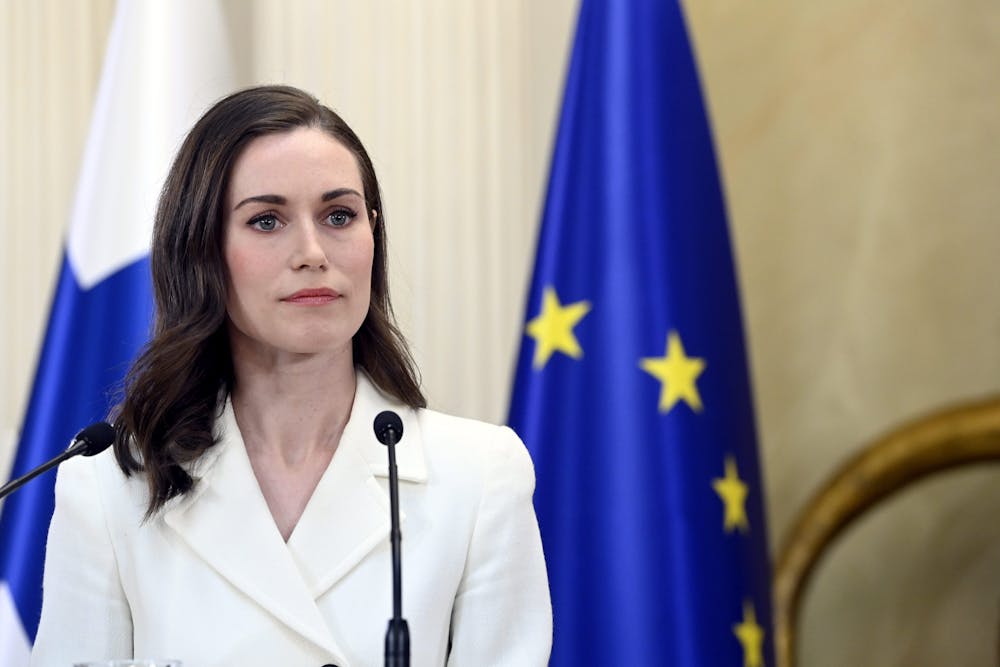 Finland’s Prime Minister Sanna Marin.
Heikki Saukkomaa/AP
Finland’s Sanna Marin, who leads a five-party coalition all headed by women, has called for more gender-responsive laws. Meanwhile Barbados’ Mia Mottley shifted the parameters of debate in her nation with a recent powerful climate change speech.
Mottley’s question, “when will leaders lead?” might just inspire the current cohort of female leaders to do more and to do better for fellow women.
Authors: Ramona Vijeyarasa, Senior Lecturer and Juris Doctor Program Head, University of Technology Sydney and Women's Leadership Institute Australia Research Fellow, University of Technology Sydney
Finland’s Prime Minister Sanna Marin.
Heikki Saukkomaa/AP
Finland’s Sanna Marin, who leads a five-party coalition all headed by women, has called for more gender-responsive laws. Meanwhile Barbados’ Mia Mottley shifted the parameters of debate in her nation with a recent powerful climate change speech.
Mottley’s question, “when will leaders lead?” might just inspire the current cohort of female leaders to do more and to do better for fellow women.
Authors: Ramona Vijeyarasa, Senior Lecturer and Juris Doctor Program Head, University of Technology Sydney and Women's Leadership Institute Australia Research Fellow, University of Technology SydneyRead more https://theconversation.com/3-reasons-why-women-leaders-actually-matter-for-women-183440


















