

Jim Chalmers is a good performer, but can he hold the public's trust through hard times?
- Written by: Michelle Grattan, Professorial Fellow, University of Canberra
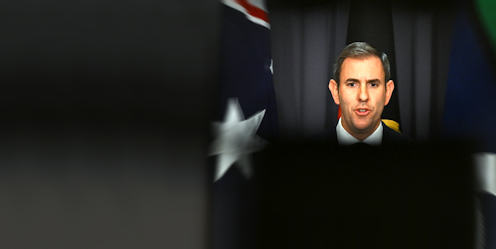
Jim Chalmers delivers bad economic news well, which is a good thing because there’s a great deal of it about, with a lot more to come.
The treasurer – at this early stage shaping up as one of the government’s strongest performers – comes across as combining frankness with empathy.
That doesn’t, of course, mean he or the government can do a lot to ease the financial pain many people will experience over the next year.
Chalmers’ Thursday economic statement to parliament put an overview on what most ordinary Australians know. From buying groceries, filling their petrol tanks, to paying their mortgages, households are feeling a big squeeze, and they’re aware it’s getting worse.
On Tuesday, the constraints on many people’s budgets will tighten further, when the Reserve Bank unveils another hike in interest rates.
The bank talks in aggregates when it announces increases, emphasising the buffer that exists to absorb rate rises.
Chalmers personalises the position families hit by inflation and rate rises find themselves in.
After Wednesday’s release of the 6.1% inflation figure (to the year ending June), he told a news conference: “A lot of people are living pay cheque to pay cheque for whom this inflation will be devastating because it’s getting harder and harder for them to substitute things out of their household budgets.”
And on Thursday he said: “There’s no point pretending these rate rises don’t hurt – they do and they will.”
Outlining the latest economic projections (revised from Treasury’s pre-election numbers), Chalmers said Australia’s growth forecast for this financial year has been reduced from 3.5% to 3%. For 2023-24, the forecast is down from 2.5% to 2%.
Inflation is now expected to peak at 7.75% in the year to December. It will still be at 5.5% by mid next year, on the new estimates.
Real wages are forecast “to start growing again in 2023-24”.
If the Morrison government had been re-elected, it would be facing the same difficult outlook. The major drivers of the economic bad news are coming from abroad, especially the war in Ukraine and China’s COVID lockdowns. But there are some domestic factors too, such as pent-up demand for spending post-lockdown.
In face of a bleak picture, the government’s messaging strategy is threefold.
First, Chalmers makes much of saying he wants to level with the public about how tough things are. He talks about taking the Australian people into his confidence, and uses the word “confronting” a lot when describing the economic situation.
Second, to the extent local factors are contributing to the bad news, Labor is loading maximum blame onto the former government. It condemns its lack of action on everything from climate change to properly skilling the workforce.
Third, the treasurer is holding out the prospect that things will all get better in the end, helped by Labor’s election policies.
In political terms the Albanese government, at least in the short term, is rather better placed to deal with situation than Scott Morrison would have been.
The new government is still in its honeymoon and so can call on considerable goodwill from the community.
But this can only be temporary. Exploiting the rising cost of living helped Labor to win power, but already voters are starting to be somewhat sceptical. This week’s Essential poll reported that four in ten people thought the government was doing a poor job in managing cost-of-living pressures.
Chalmers’ statement was a warm-up for the October budget. On this, one of his messages was that people shouldn’t get carried away when, in coming weeks, the budget outcome for 2021-22 reveals a “dramatically better” (smaller) deficit than originally expected.
The various factors producing this bit of brightness wouldn’t last long, he warned. There were other drags on the budget in the pipeline, including the rising cost (from higher interest rates) of servicing the debt left by the Coalition.
We’ll hear a lot more about all this as the government attacks the former government’s “waste and rorts” in the budget. The big question will be: how deep will the cuts go?
Chalmers has more than one reason for talking up budget pressures. Like treasurers before him, he will be anxious to head off demands.
Thus he keeps saying the cut in petrol excise won’t be extended. Calls for the relief to be maintained for a few more months will be loud ahead of the September expiry date.
Chalmers’ budget talk is directed to his own colleagues as well as to the public. As the budget approaches, the temptation to throw some money around will be great. He’s already had to wear hundreds of millions going to extending the pandemic leave payment.
The stark economic picture Chalmers paints just underlines the need for urgent action on immigration and training.
The economy desperately needs migrants and that requires improving visa processing and probably active recruitment. Targeted skills training is crucial.
These issues will be canvassed at the September jobs summit. But much of what has to be done is already clear – it’s a matter of acting as quickly as practicable.
For Chalmers, there must feel an element of deja vu. He was a senior staffer to then treasurer Wayne Swan during the global financial crisis.
Despite the problems with some programs, the Rudd government did well in handling the GFC, during which Australia avoided the recession that hit many countries.
The economic challenges of the long tail of this pandemic are very different from those of the GFC, and therefore so are the policy prescriptions. Then, large-scale spending was vital. Now, it’s a question of winding back spending.
Being involved in the GFC has provided Chalmers with experience he can bring to the present situation. He’ll also remember a salutary political lesson. Even if Australia comes out of the next year to 18 months in good shape, the government can’t expect the community will necessarily be grateful to it. It wasn’t after the GFC.
Then again, Chalmers might hope he could sell the message of success better than Labor did all those years ago.
Read more: The Chalmers graphs: 7.75% inflation, plunging real wages, weak growth
Authors: Michelle Grattan, Professorial Fellow, University of Canberra


















