

A volcano is erupting again in Iceland. Is climate change causing more eruptions?
- Written by: Heather Handley, Associate Professor of Volcanology and Geoscience Communication, University of Twente and Adjunct Associate Professor, Monash University
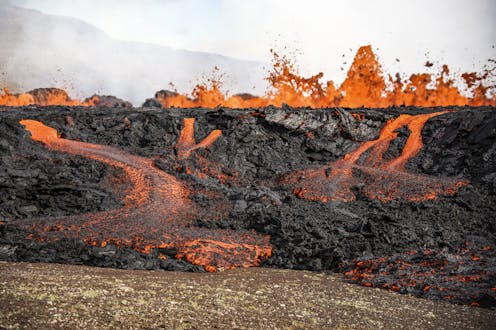
The Fagradalsfjall volcano in Iceland began erupting again on Wednesday after eight months of slumber – so far without any adverse impacts on people or air traffic.
The eruption was expected. It’s in a seismically active (uninhabited) area, and came after several days of earthquake activity close to Earth’s surface. It’s hard to say how long it will continue, although an eruption in the same area last year lasted about six months.
Climate change is causing the widespread warming of our land, oceans and atmosphere. Apart from this, it also has the potential to increase volcanic activity, affect the size of eruptions, and alter the “cooling effect” that follows volcanic eruptions.
Any of these scenarios could have far-reaching consequences. Yet we don’t fully understand the impact a warming climate could have on volcanic activity.
The Fagradalsfjall volcano is located some 30km from Iceland’s capital, Reykjavik.Cold volcanic regions
First, let’s take a look at volcanic regions covered in ice. There’s a long-established link between the large-scale melting of ice in active volcanic regions and increased eruptions.
Research on Iceland’s volcanic systems has identified a heightened period of activity related to the large-scale ice melt at the end of the last ice age. The average eruption rates were found to be up to 100 times higher after the end of the last glacial period, compared to the earlier colder glacial period. Eruptions were also smaller when ice cover was thicker.
But why is this the case? Well, as glaciers and ice sheets melt, pressure is taken off Earth’s surface and there are changes in the forces (stress) acting on rocks within the crust and upper mantle. This can lead to more molten rock, or “magma”, being produced in the mantle – which can feed more eruptions.
The changes can also affect where and how magma is stored in the crust, and can make it easier for magma to reach the surface.
Magma generation beneath Iceland is already increasing due to a warming climate and melting glaciers.
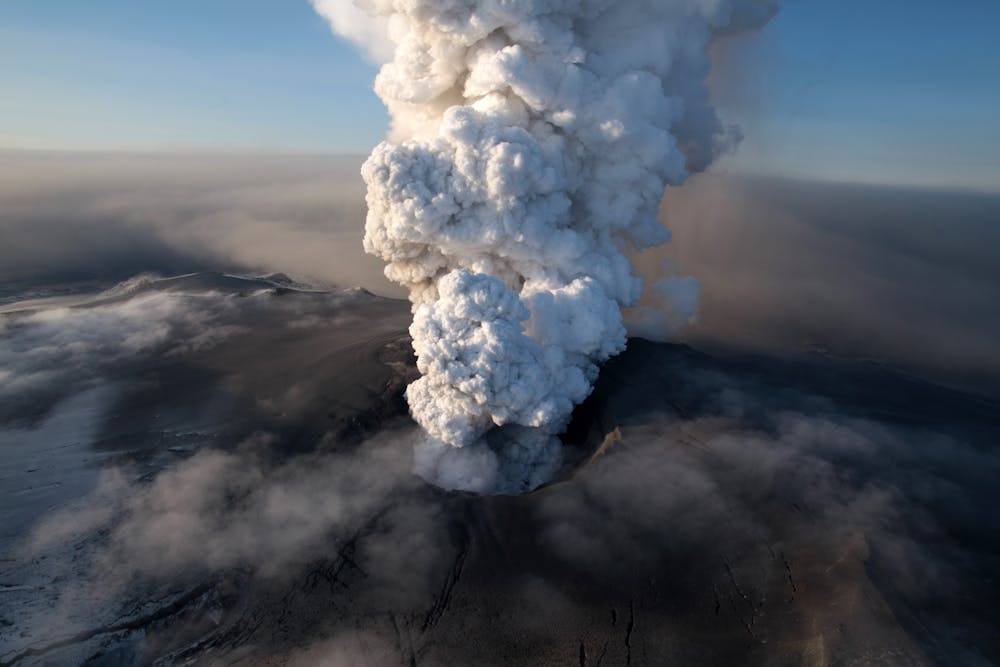
The intense ash-producing eruption of Iceland’s Eyjafjallajökull volcano in 2010 was the result of an explosive interaction between hot magma and cold glacial melt water. Based on what we know from the past, an increase in Iceland’s melting ice could lead to larger and more frequent volcanic eruptions.
Weather-triggered eruptions
But what about volcanic regions that aren’t covered in ice – could these also be affected by global warming?
Possibly. We know climate change is increasing the severity of storms and other weather events in many parts of the world. These weather events may trigger more volcanic eruptions.
On December 6 2021, an eruption at one of Indonesia’s most active volcanoes, Mount Semeru, caused ashfall, pyroclastic flows and volcanic mudflows (called “lahars”) that claimed the lives of at least 50 people.
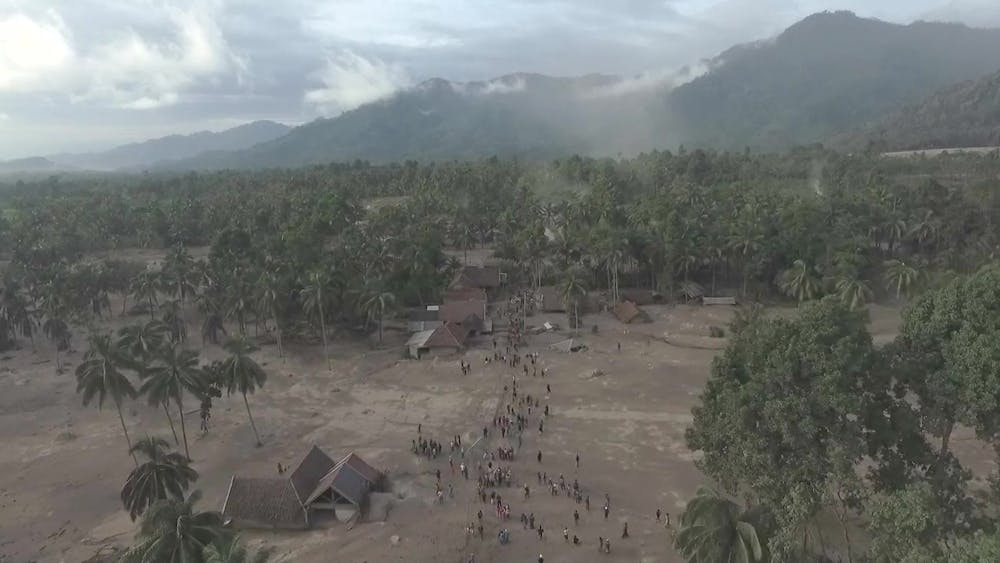 The Semeru eruption left nearby villages covered in ash – forcing residents to flee.
Antara TV/Wikimedia Commons, CC BY
The Semeru eruption left nearby villages covered in ash – forcing residents to flee.
Antara TV/Wikimedia Commons, CC BY
Local authorities hadn’t expected the scale of the eruption. As for the cause, they said several days of heavy rain had destabilised the dome of lava in the volcano’s summit crater. This led to the dome collapsing, which reduced pressure on the magma below and triggered an eruption.
Signals of volcanic unrest are usually obtained from changes in volcanic systems (such as earthquake activity), changes in gas emissions from the volcano, or small changes in the shape of the volcano (which can be detected by ground-based or satellite monitoring).
Predicting eruptions is already an incredibly complex task. It will become even more difficult as we begin to factor in risk posed by severe weather which could destabilise parts of a volcano.
Read more: Mount Semeru's deadly eruption was triggered by rain and storms, making it much harder to predict
Some scientists suspect increased rainfall led to the damaging 2018 Kīlauea eruption in Hawaii. This was preceded by months of heavy rainfall, which infiltrated the earth and increased underground water pressure within the porous rock. They believe this could have weakened and fractured the rock, facilitating the movement of magma and triggering the eruption.
But other experts disagree, and say there’s no substantial link between rainfall events and eruptions at Kīlauea volcano.
Rain-influenced volcanism has also been proposed at other volcanoes around the world, such as the Soufrière Hills volcano in the Caribbean, and Piton de la Fournaise on Réunion Island in the Indian Ocean.
Changes to the ‘cooling effect’
There’s another layer we can’t ignore when it comes to assessing the potential link between climate change and volcanic activity. That is: volcanoes themselves can influence the climate.
An eruption can lead to cooling or warming, depending on the volcano’s geographical location, the amount and composition of ash and gas erupted, and how high the plume reaches into the atmosphere.
Volcanic injections that were rich in sulphur dioxide gas have had the strongest climatic impact recorded in historic times. Sulphur dioxide eventually condenses to form sulfate aerosols in the stratosphere – and these aerosols reduce how much heat reaches Earth’s surface, causing cooling.
As the climate warms, research shows this will change how volcanic gases interact with the atmosphere. Importantly, the outcome won’t be the same for all eruptions. Some scenarios show that, in a warmer atmosphere, small to medium-sized eruptions could reduce the cooling effect of volcanic plumes by up to 75%.
These scenarios assume the “tropopause” (the boundary between the troposphere and stratosphere) will increase in height as the atmosphere warms. But since the volcano’s eruption column will stay the same, the plume carrying sulphur dioxide will be less likely to reach the upper atmosphere – where it would have the largest impact on the climate.
On the other hand, more powerful but less frequent volcanic eruptions could lead to a greater cooling effect. That’s because as the atmosphere gets warmer, plumes of ash and gas emitted from powerful eruptions are predicted to rise higher into the atmosphere, and spread rapidly from the tropics to higher latitudes.
One recent study has suggested the major Hunga Tonga-Hunga Ha’apai volcanic eruption in January may contribute to global warming, by pumping massive amounts of water vapour (a greenhouse gas) into the stratosphere.
Read more: How a volcanic bombardment in ancient Australia led to the world's greatest climate catastrophe
Authors: Heather Handley, Associate Professor of Volcanology and Geoscience Communication, University of Twente and Adjunct Associate Professor, Monash University


















