

How Salman Rushdie has been a scapegoat for complex historical differences
- Written by: Vijay Mishra, Emeritus Professor of English and Comparative Literature, Murdoch University
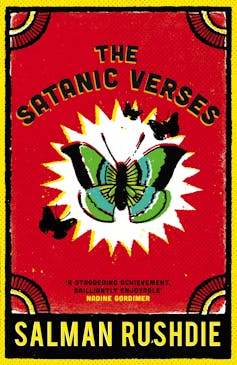
The Chautauqua Institution, southwest of Buffalo in New York State, is known for its summer lectures – and as a place where people come seeking peace and serenity. Salman Rushdie, the great writer and influential public intellectual, had spoken at the centre before.
On Friday August 12, he was invited to speak on a subject very close to his heart: the plight of writers in Ukraine and the ethical responsibility of liberal nation-states towards them. Rushdie has been an outspoken defender of writers’ freedom of expression throughout his career.
In the audience of around 2,500 at Chautauqua was Hadi Matar, 24, of New Jersey, who jumped on stage and stabbed Rushdie in the neck and the abdomen.
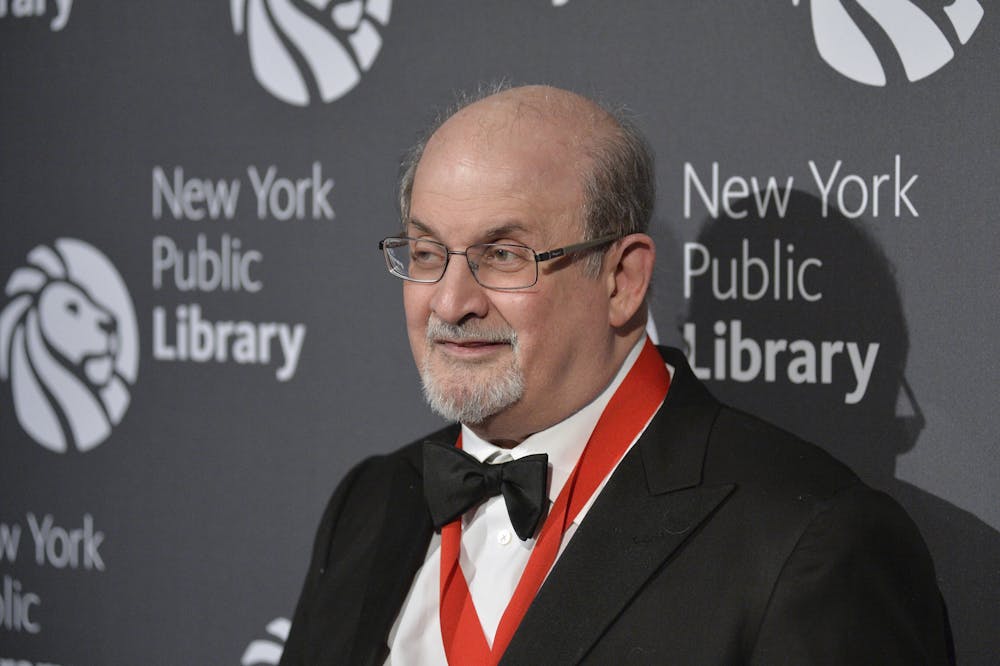
The fatwa and the spectre of death
It was more than 30 years ago – February 14, 1989 (Valentine’s Day) – when Ayatollah Ruhollah Khomeini, 88, the then spiritual ruler of Iran, condemned Rushdie to death via a fatwa, a legal ruling under Sharia Law. His crime was blasphemy against Prophet Muhammad in his novel The Satanic Verses, on a number of levels.
The most serious was the suggestion that Muhammad didn’t solely edit the message of Angel Gibreel (Gabriel) – that Satan himself had a hand in occasionally distorting that message. These, of course, are presented as hallucinatory recollections by the novel’s seemingly deranged character, Gibreel Farishta. But because of a common belief in the shared identity of author and narrator, the author is deemed to be responsible for a character’s words and actions. And so the author stood condemned.
Blasphemy against Muhammad is an unpardonable crime in Islam: a kind of divine sanctity surrounds the Prophet of Islam. The latter is captured in the well-known Farsi saying, Ba khuda diwana basho; ba muhammad hoshiyar (Take liberties with Allah as you wish; but be careful with Muhammad).
Since the fatwa, the spectre of death has followed Rushdie – and he knew it, even when the Iranian government ostensibly withdrew its support for the fatwa. (But without the important step of conceding that a fatwa by a qualified scholar of Islam – which Khomeini was – could be revoked.) Rushdie himself had not taken the occasional threats to his life seriously. He had lived more freely in recent years, often dispensing with security guards for protection.
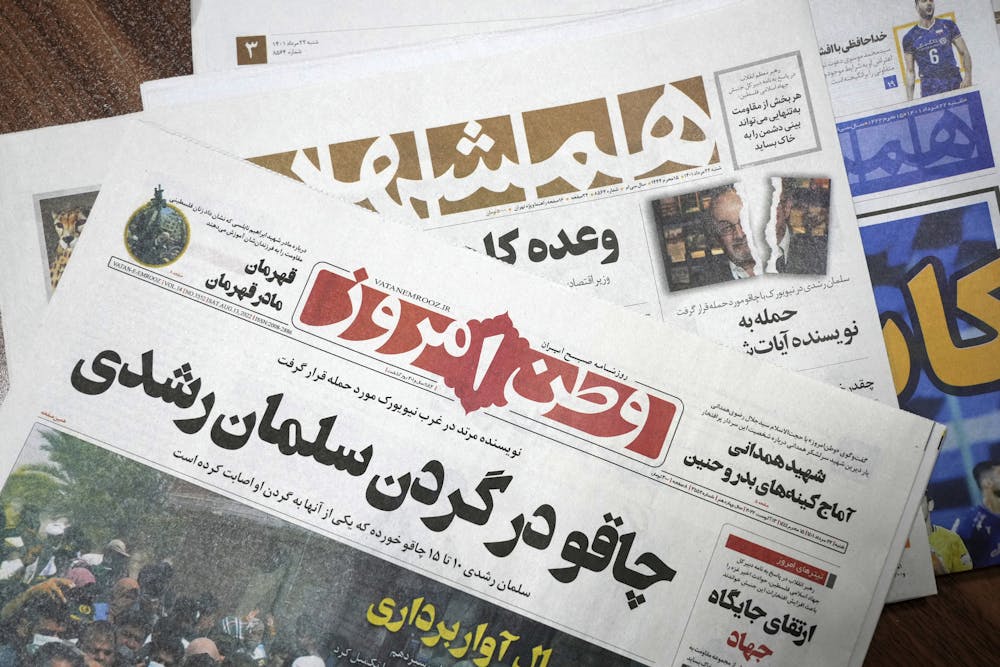 The front pages of the August 13 2022 edition of Iranian newspapers. One title reads in Farsi, ‘Knife in the neck of Salman Rushdie’.
Vahid Salemi/AP
The front pages of the August 13 2022 edition of Iranian newspapers. One title reads in Farsi, ‘Knife in the neck of Salman Rushdie’.
Vahid Salemi/AP
Although Rushdie is now off a ventilator, his wounds remain serious. As his agent Andrew Wylie has said, he may lose an eye and perhaps even the use of an arm. He will recover, but it seems unlikely he’ll return as the raconteur of old (as I knew him during my visits to Emory University, Georgia, where for five years during 2006-2011 he was a short-term writer-in-residence, and where his archive had been installed).
Read more: Why Salman Rushdie’s ‘The Satanic Verses’ remains so controversial decades after its publication
Exposing fault lines between East and West
We do not know what motivated Hadi Matar to act in the manner in which he did, but his action cannot be de-linked from the 1989 fatwa, reported by Time magazine in a lead essay titled “Hunted by An Angry Faith: Salman Rushdie’s novel cracks open a fault line between East and West”.
Rushdie made it to the cover of Time on September 15, 2017, when the magazine profiled him, and praised his new novel, The Golden House. In the profile, Rushdie reflected on the effect of the fatwa and the controversy around The Satanic Verses on people’s perceptions of his writing. The humour in his books was overlooked, he said, and his later works began to acquire the “shadow of the attack” on The Satanic Verses.
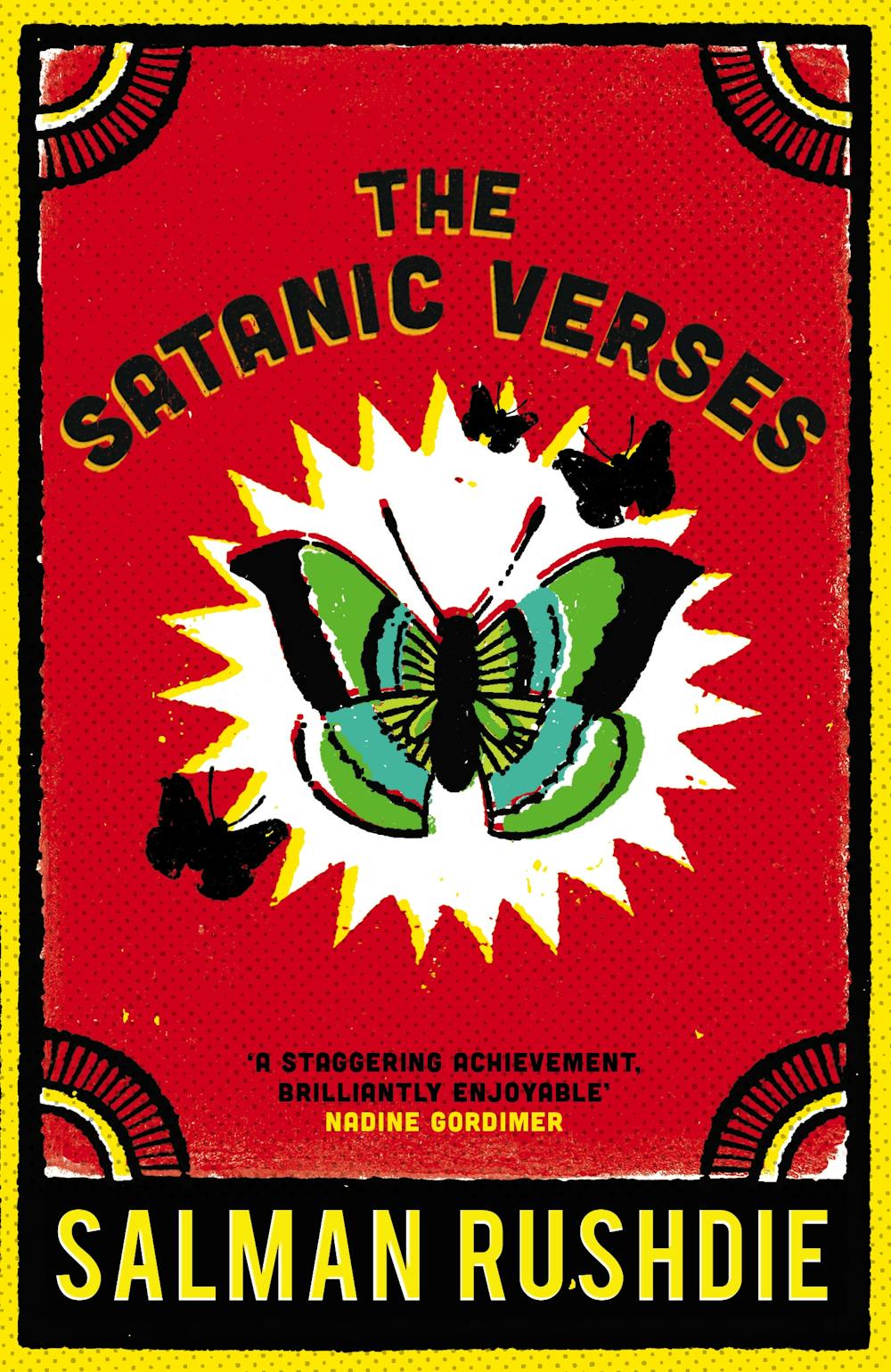 The Satanic Verses was published more than 30 years ago – some years before Rushdie’s attacker, Hadi Matar, was born. But the insult to Islam felt by Rushdie’s detractors seems to have endured regardless of the decades that have passed.
The ongoing debate over Rushdie (as the 1989 Time essay on the fatwa implied) has exposed fault lines between the West and Islam that had once remained hidden. These fault lines insinuated, the argument went, a radical difference between what constitutes artistic responsibility in the West and in the East (the latter narrowly defined as the Islamic Orient and what V.S. Naipaul called the nations of Islamic “converts”).
This discourse of radical difference had already entered European humanist scholarship, as Edward Said recorded in his magisterial 1979 book, Orientalism. Many have argued Salman Rushdie’s Satanic Verses gave the debate a focus – and a tangible object that could be pointed to as a definitive example of the West’s antagonism towards Islam.
To most readers who value the relative autonomy of the novel as a work of art, this is a false, even misleading reading of the mediated nature of the relationship between art and history. But as Rushdie’s recent stabbing shows, the reading is still potent.
Sadly, Rushdie is overwhelmingly identified (by some) with anti-Islamic sentiments. This has distracted from his achievement as a writer of some of the finest novels written in the long 20th century – a great writer whose name is regularly put forward as a likely recipient of the Nobel Prize for Literature.
Read more:
Why I still support Charlie Hebdo
More than a writer
Salman Rushdie, an Indian Muslim, was born into a secular Muslim household, and grew up with books and cinema. The long-held wish of his father, Ahmed Rushdie, was to reorganise the Qur'an chronologically.
The Satanic Verses was published more than 30 years ago – some years before Rushdie’s attacker, Hadi Matar, was born. But the insult to Islam felt by Rushdie’s detractors seems to have endured regardless of the decades that have passed.
The ongoing debate over Rushdie (as the 1989 Time essay on the fatwa implied) has exposed fault lines between the West and Islam that had once remained hidden. These fault lines insinuated, the argument went, a radical difference between what constitutes artistic responsibility in the West and in the East (the latter narrowly defined as the Islamic Orient and what V.S. Naipaul called the nations of Islamic “converts”).
This discourse of radical difference had already entered European humanist scholarship, as Edward Said recorded in his magisterial 1979 book, Orientalism. Many have argued Salman Rushdie’s Satanic Verses gave the debate a focus – and a tangible object that could be pointed to as a definitive example of the West’s antagonism towards Islam.
To most readers who value the relative autonomy of the novel as a work of art, this is a false, even misleading reading of the mediated nature of the relationship between art and history. But as Rushdie’s recent stabbing shows, the reading is still potent.
Sadly, Rushdie is overwhelmingly identified (by some) with anti-Islamic sentiments. This has distracted from his achievement as a writer of some of the finest novels written in the long 20th century – a great writer whose name is regularly put forward as a likely recipient of the Nobel Prize for Literature.
Read more:
Why I still support Charlie Hebdo
More than a writer
Salman Rushdie, an Indian Muslim, was born into a secular Muslim household, and grew up with books and cinema. The long-held wish of his father, Ahmed Rushdie, was to reorganise the Qur'an chronologically.
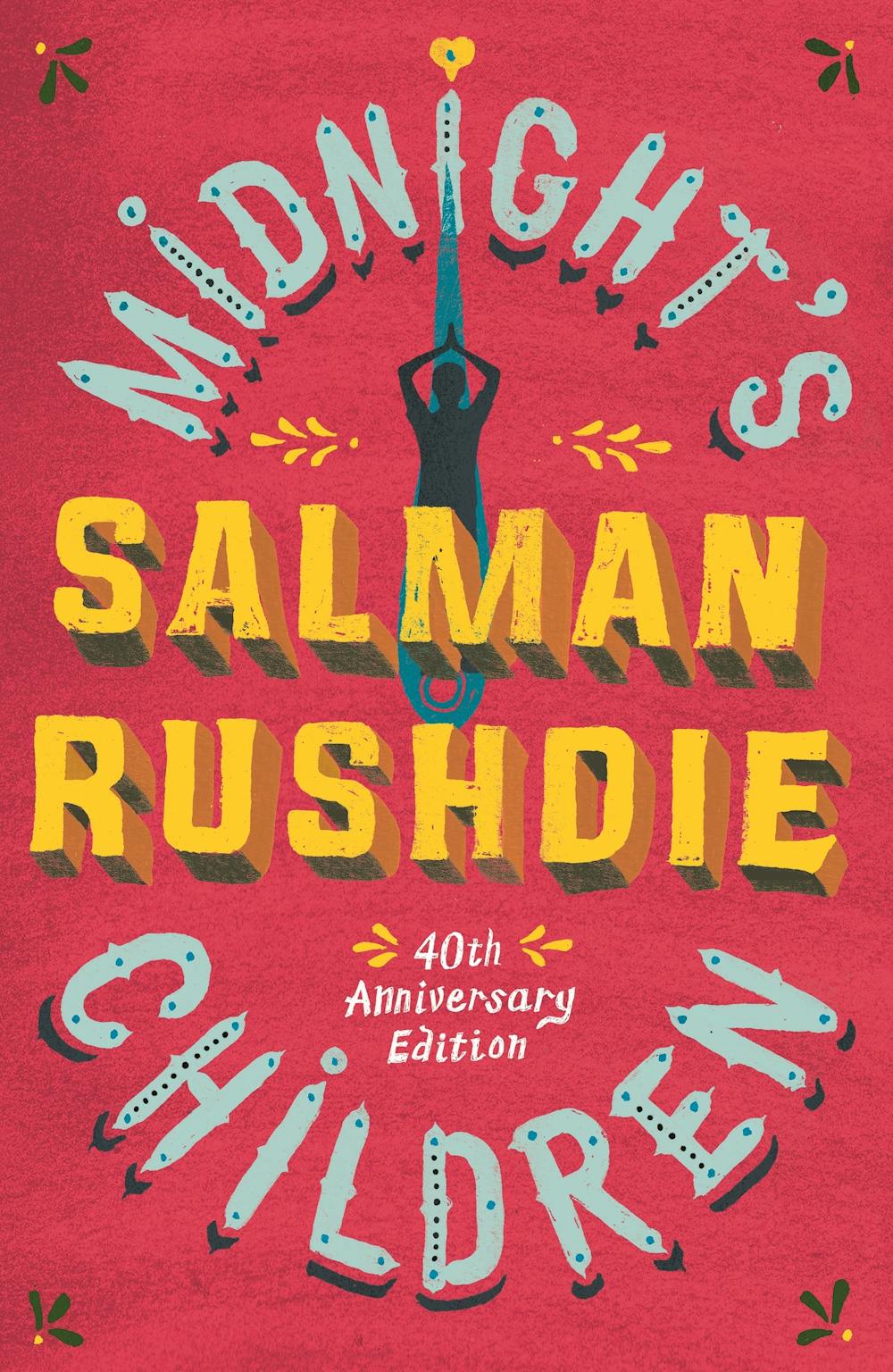 Rushdie was born a few months before India gained its independence. The India he experienced before he left for prestigious English boarding school, Rugby, in 1961 was the unquestionably secular India of Nehru. That Nehruvian liberal vision, which India seems to have now lost, guided his writing and was the inspiration behind the spectacular success of his Booker prize-winning second novel, Midnight’s Children (1981) – and the critical acclaim that followed his more creative novels, namely, Shame (1983), The Moor’s Last Sigh (1995), The Ground Beneath Her Feet (1999) and The Enchantress of Florence (2008).
Like another writer of the global Indian diaspora, V.S. Naipaul, Rushdie had come to the West with the express purpose of becoming a novelist. The fatwa dramatically turned him into something more than a writer: in fact, into a cultural icon representing the importance of a writer’s freedom of expression.
This claim to freedom is different from the general freedom of speech enjoyed by all in liberal democracies. A writer’s freedom is of a different order. It is a freedom earned through labour and artistic excellence. This freedom is conditional: it is not available to any writer. It has to be earned, by entering the canon of world literature – though not necessarily in terms of a European definition of literariness. Rushdie’s body of work indicates that he has earned it.
But we cannot leave it at that. The Rushdie experience also presents the challenge of how to negotiate that freedom across cultures – especially with cultures governed by carefully defined moral and religious absolutes.
The violent hysteria engendered by Rushdie’s magical treatment of Muhammad in The Satanic Verses was ultimately limited to a small minority. But it is often this small minority that fails to read absolutes allegorically, as intended.
The Chautauqua incident should not have happened, but it did. It is a price that art periodically pays, especially when it is taken as an easy scapegoat for more complex historical differences.
Authors: Vijay Mishra, Emeritus Professor of English and Comparative Literature, Murdoch University
Rushdie was born a few months before India gained its independence. The India he experienced before he left for prestigious English boarding school, Rugby, in 1961 was the unquestionably secular India of Nehru. That Nehruvian liberal vision, which India seems to have now lost, guided his writing and was the inspiration behind the spectacular success of his Booker prize-winning second novel, Midnight’s Children (1981) – and the critical acclaim that followed his more creative novels, namely, Shame (1983), The Moor’s Last Sigh (1995), The Ground Beneath Her Feet (1999) and The Enchantress of Florence (2008).
Like another writer of the global Indian diaspora, V.S. Naipaul, Rushdie had come to the West with the express purpose of becoming a novelist. The fatwa dramatically turned him into something more than a writer: in fact, into a cultural icon representing the importance of a writer’s freedom of expression.
This claim to freedom is different from the general freedom of speech enjoyed by all in liberal democracies. A writer’s freedom is of a different order. It is a freedom earned through labour and artistic excellence. This freedom is conditional: it is not available to any writer. It has to be earned, by entering the canon of world literature – though not necessarily in terms of a European definition of literariness. Rushdie’s body of work indicates that he has earned it.
But we cannot leave it at that. The Rushdie experience also presents the challenge of how to negotiate that freedom across cultures – especially with cultures governed by carefully defined moral and religious absolutes.
The violent hysteria engendered by Rushdie’s magical treatment of Muhammad in The Satanic Verses was ultimately limited to a small minority. But it is often this small minority that fails to read absolutes allegorically, as intended.
The Chautauqua incident should not have happened, but it did. It is a price that art periodically pays, especially when it is taken as an easy scapegoat for more complex historical differences.
Authors: Vijay Mishra, Emeritus Professor of English and Comparative Literature, Murdoch University 

















