

what will motivate landlords to fix cold and costly homes for renters?
- Written by: Michaela Lang, Postdoctoral Researcher, Monash Sustainable Development Institute, Monash University
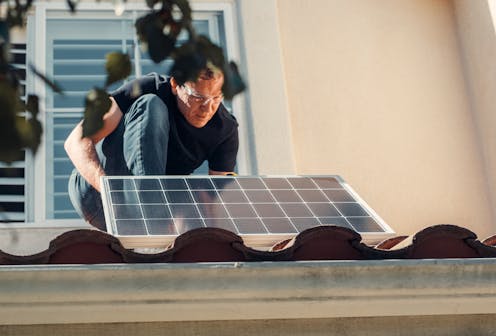
Cold weather and rising energy costs, combined with poor-quality housing, have left many renters struggling to keep warm this winter. The Cold and Costly report released this week by Better Renting shows how cold, mouldy homes and high energy bills take a toll on the physical and mental health of renters who live in homes that have often been likened to “glorified tents”.
Landlords are responsible for maintaining and improving rental properties. We interviewed landlords in Victoria about how they make decisions that affect the energy efficiency of their rental properties. Some might be surprised by what our research revealed: landlords who retrofit homes generally do it to improve renters’ comfort, rather than being motivated by increased rents.
However, a major issue is that many landlords who use property managers are unaware of tenants’ discomfort.
Many rented homes are dangerously cold
Renters are more likely than home owners to live in cold houses. The cold is typically due to substandard insulation and a lack of energy-saving features and solar panels to keep energy costs down.
The World Health Organisation recommends that homes be kept at or above 18℃. By that standard, about one in five renters live in homes that are dangerously cold. Low-income renters are especially likely to live in homes they can’t keep warm.
Cold homes contribute to respiratory illnesses and even deaths. In fact, cold plays a role in almost 7% of deaths in Australia.
Read more: Forget heatwaves, our cold houses are much more likely to kill us
Improving rented homes is landlords’ responsibility
While there are some things renters can do to keep warm in a cold home, they don’t have much power to make property improvements. Tenancy rules vary across Australia, but generally tenants are not allowed to make permanent changes to the house.
However, landlords do not benefit directly from improving the comfort or energy efficiency of their rental properties. So why do some landlords retrofit?
Our interviewees included landlords who had retrofitted improvements and those who had not, as well as landlords who owned high-cost and low-cost rental properties.
Our research shows that, in general, landlords are not motivated to retrofit for increased rent. Nor are they motivated by environmental benefits. However, they are motivated to retrofit to improve renters’ comfort, particularly thermal comfort.
What did landlords tell us?
Improving renters’ comfort can benefit the landlord financially if renters stay longer in the property because this avoids vacancies and advertising costs. One landlord explained:
“I get loyalty out of them. It’s difficult always to find new tenants. It’s time. It’s money involved. I prefer that I have tenants who stay for the long run.”
Landlords also said they felt a responsibility to meet renters’ needs. For example, one landlord told us:
“I think you have to be attentive to your tenants’ needs. It’s pretty much as simple as that.”
However, landlords can only make changes to improve renters’ comfort if they are aware of renters’ discomfort. We found landlords who used a professional property manager – as about three-quarters of landlords do – generally knew very little about the conditions in their property and the people living in it. As one landlord said:
“I know their name and that’s about it. I’ve never actually met them.”
Landlords who use property managers are generally unaware of problems until renters submit a formal complaint or ask for improvements. Renters are often reluctant to request improvements because they worry about eviction or rental increases, or because their previous requests have not been met.
We also found some landlords are not concerned about renters’ comfort. These landlords are unlikely to make improvements unless governments require rental properties to meet a prescribed standard.
Read more: Chilly house? Mouldy rooms? Here's how to improve low-income renters’ access to decent housing
What can governments do?
Governments across Australia are looking at ways to improve the energy efficiency of rental properties. Specifically, governments are considering requiring that energy performance be disclosed to prospective tenants and for rental properties to meet minimum energy efficiency standards.
While energy performance disclosure may allow landlords to charge higher rents for efficient properties, our research suggests this will not motivate them to retrofit. This is consistent with findings from Europe that energy disclosure requirements are not a strong driver of retrofitting.
To improve the poorest-performing rental properties, energy efficiency disclosure must be combined with enforceable minimum standards. Some standards have been introduced in recent years. For example, rental homes in Victoria are required to have a fixed heater and those heaters will be required to meet energy efficiency standards by 2023.
Governments can also encourage landlords to do more than the bare minimum. Comprehensive retrofitting is needed to create healthy, low-energy homes. Government programs should aim to:
educate landlords about conditions in their properties
support property managers to organise retrofits
protect renters from eviction or rent increases if they speak out about uncomfortable, inefficient rental properties.
When introducing new energy-efficiency policies and incentives, governments should emphasise comfort and other benefits for tenants. Change is urgently needed to ensure Australians from all walks of life can live in comfortable, healthy and climate-resilient homes.
Authors: Michaela Lang, Postdoctoral Researcher, Monash Sustainable Development Institute, Monash University


















