

Striking firefighters are calling for systemic change, but are their demands too hot to handle for NZ employment law?
- Written by: Bernard Walker, Associate Professor in Organisations and Leadership, University of Canterbury
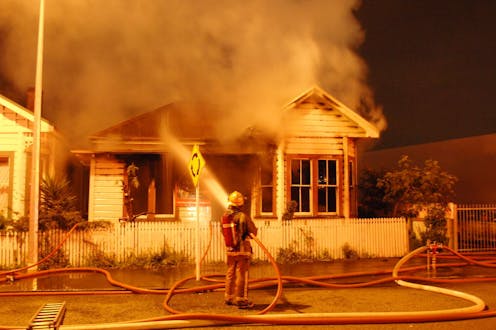
Last week saw an historic moment as New Zealand’s professional firefighters went on strike, calling for better pay, more staff and increased investment in the fire service. But will industrial action spur the deeper systemic change in New Zealand’s fire service critics call for?
The strike is part of an employment dispute. Strikes can only usually happen within a short time frame, when the collective employment agreement is expiring and the two sides are negotiating a new agreement. The firefighters and Fire and Emergency New Zealand (FENZ) reached an impasse in their negotiations, leading to this action.
Traditionally, employment disputes are often called “pay negotiations”, focusing narrowly around remuneration and benefits. But a defining aspect in this current case is the breadth of issues involved, and the far-reaching consequences. The firefighters have described shortfalls across a wide range of areas in their working environment.
Crucially, they have raised questions about whether the country’s fire service can adequately protect the lives and property of everyday New Zealanders. The scope of these issues makes this industrial action relatively unique – and raises the question of whether employment negotiations are the best place to address significant concerns about how a core emergency service functions.
More than pay
For months, firefighters have been highlighting how their vehicles and equipment are often well past their replacement date. Official reports confirm these issues, and firefighters say equipment breakdowns are affecting their ability to deal with emergencies.
The striking workers have also described dangerous over-work situations and burnout, with excessive hours and serious staff shortages. The union representing firefighters has said that at times there are not sufficient staff to operate trucks, leaving some neighbourhoods without a fire crew.
Read more: The aching red: Firefighters often silently suffer from trauma and job-related stress
Firefighters’ jobs have also changed radically, seeing them often become medical first responders. This expanded and intensified role involves new skill levels and heightened job demands. And working with trauma brings mental health risks that require high levels of wellbeing support for staff.
Firefighters believe those aspects have not been adequately addressed by FENZ, leaving the service lagging behind other comparable agencies such as the police – so much so that their mental and physical health is compromised.
Firefighters are a strongly unionised group. But unlike other organisations, they have not tested cases in the Employment Relations Authority or Employment Court to spell out exactly what makes a safe workplace and safe work practices.
Strikers or whistle blowers?
The strike action therefore draws attention to major concerns about the capability and reliability of a core emergency service.
It could be argued that the firefighters are, in fact, whistle blowers, alerting the public to serious issues affecting the safety and wellbeing of the wider community.
That raises the question of how these matters should be addressed and resolved. Given the issues are so significant and wide ranging, can collective bargaining legally or practically extend to cover this situation?
Normally, serious whistle-blowing claims would shift the focus away from the worker-management relationship and put the spotlight on the organisation’s overall governance.
Read more: A high-adrenaline job: 5 questions answered about fighting wildfires
Raising governance issues in the context of collective bargaining creates an intriguing precedent. It is part of a wider pattern, with nurses also raising national safety issues in their negotiations.
But the firefighters’ strike introduces an additional complexity. While health funding is directly controlled by government, FENZ is mostly funded from insurance levies. This limits the government’s ability to get involved.
Within the boundaries of NZ law
In terms of what the law permits, the collective bargaining provisions of the Employment Relations Act could be widely interpreted. According to the act, “a collective agreement may contain such provisions as the parties to the agreement mutually agree on”.
Arguably, collective agreements could extend to cover a very broad range of aspects of a working environment, perhaps even the concerns raised in the current firefighters’ negotiations with FENZ.
That, however, is dependent on both parties achieving consensus about the issues. That has not featured in the firefighters’ negotiations, which have already extended over 14 months. And despite mediation assistance, it seems the parties are still miles apart.
A more likely scenario is that the authority will agree to intervene, based on the protracted nature of negotiations or the the danger to “the life, safety, or health of persons”, as outlined by the Act.
The Authority could provide facilitation assistance similar to mediation, but with the option of making recommendations about the process for reaching agreement and/or outlining the actual terms of the employment agreement.
In that scenario, the main question would be whether the Authority will accept the set of issues as part of an employment agreement, or whether it will recommend an independent investigation of the wider assertions.
Ultimately, this will become a test of how a major challenge regarding the adequacy of fire and emergency services is handled.
Those issues have been raised in an employment forum, but a key question will be whether employment negotiations can or should be able to deal with such wide ranging issues – especially when they are so vital to the safety of the community.
Authors: Bernard Walker, Associate Professor in Organisations and Leadership, University of Canterbury


















