

Luke Carman, the circle of life, and the world as an ecstatic masterpiece
- Written by: Claire Corbett, Lecturer, Creative Writing, University of Technology Sydney
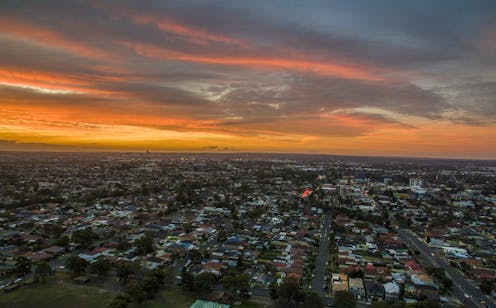
It’s one of those circle of life kind of things, the antagonist Hopper says in Pixar’s A Bug’s Life, explaining how his gang of marauding grasshoppers exploit the ants with a dry cynicism that Luke Carman might appreciate. It wasn’t until I reached the final story in Carman’s collection An Ordinary Ecstasy that this phrase came to mind, as the structure of the book resolved itself into an Ouroboros: the snake biting its own tail that represents, well, the cycle of destruction and birth.
Review: An Ordinary Ecstasy – Luke Carman (Giramondo)
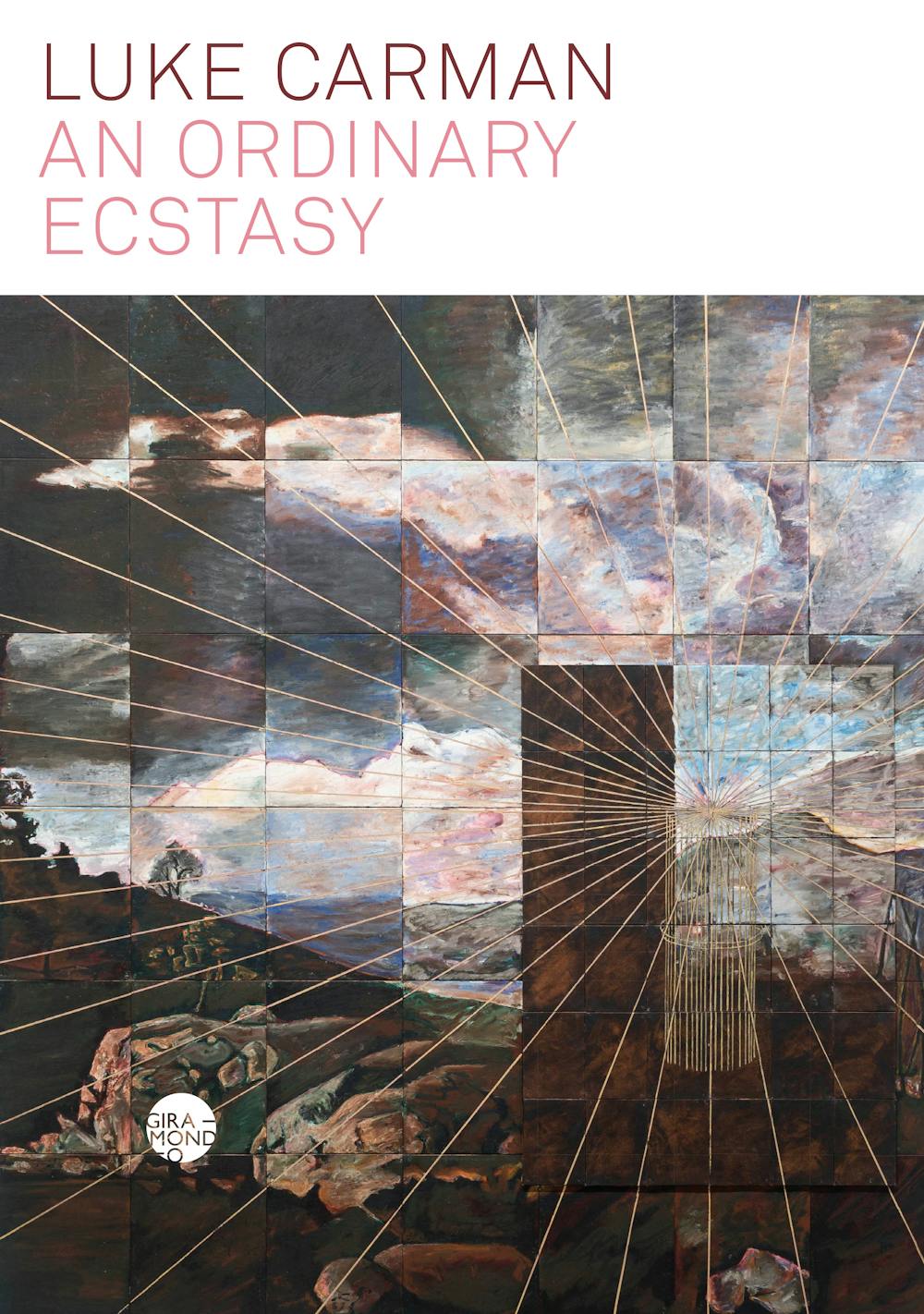
 Luke Carman.
Marnya Rothe/Giramondo Publishing
The second story, the title story, asks for a decision in its first line. Holly, a teacher in the middle of her life, is asked a cheesy but intriguing question through a dating app: “what’s the MOST beautiful THING you’ve ever seen?”
This is enough tension to sustain pages of reflection, not least because there can be no answer. Holly finds it easy enough to think of the worst thing she’s ever seen. She decides, of course, on a stock response which is also true: the most beautiful thing she has seen is the birth of a baby. But this is no answer at all. Birth is momentous and wondrous but also horrifying – and all points on the journey towards birth (especially facing what it means to be a parent and how that is shaped by your own childhood) can also be wondrous and horrifying. Birth is sublime in Edmund Burke’s sense: it rips at the seams of life and death in a way that isn’t covered by the idea of the beautiful. We are left wondering, for Holly and ourselves, what is the MOST beautiful THING you’ve ever seen? Contemplating that question provides a life’s work for an artist.
Read more:
Friday essay: empathy or division? On the science and politics of storytelling
Paragraphs, not sentences
The collection’s third story, Tears on Main Street, is the most immersive. It’s a novella, the book’s centrepiece. A Beckoning Candle, at 53 pages, also nears novella length. Between them, the first three stories account for well over half the book.
The narrator of Tears on Main Street tells us about a trip to Byron Bay with an old friend, the improbably named August Augustine, who is seeking revenge on someone from school. The reader may have encountered this character years ago, as he closely resembles Arnold Augustine, also Fijian, who turns up in An Elegant Young Man.
At first, I resisted the story: another observing narrator with nothing at stake. Even the narrator seems to critique the story’s premise:
The first question I had for August […] was why he’d decided to dedicate his energies to addressing a slight he’d suffered back in ninth grade. I crowned my question with a quotation from Patrick White.
But by the time we reached the Big Banana in Coffs Harbour I was entranced, feeling as if I had been drawn into my own past, both distant and recent: family holidays as a child in Northern NSW, a more recent holiday in Byron Bay. This past, personal and social, is evoked and exploited to this day in the “alternative” gloss of Byron Bay, Bellingen and Nimbin, as if sub-tropical NSW represents a halcyon time many Sydney people wish they could relive, a return barred ever more firmly by the intensifying climate catastrophe.
Luke Carman.
Marnya Rothe/Giramondo Publishing
The second story, the title story, asks for a decision in its first line. Holly, a teacher in the middle of her life, is asked a cheesy but intriguing question through a dating app: “what’s the MOST beautiful THING you’ve ever seen?”
This is enough tension to sustain pages of reflection, not least because there can be no answer. Holly finds it easy enough to think of the worst thing she’s ever seen. She decides, of course, on a stock response which is also true: the most beautiful thing she has seen is the birth of a baby. But this is no answer at all. Birth is momentous and wondrous but also horrifying – and all points on the journey towards birth (especially facing what it means to be a parent and how that is shaped by your own childhood) can also be wondrous and horrifying. Birth is sublime in Edmund Burke’s sense: it rips at the seams of life and death in a way that isn’t covered by the idea of the beautiful. We are left wondering, for Holly and ourselves, what is the MOST beautiful THING you’ve ever seen? Contemplating that question provides a life’s work for an artist.
Read more:
Friday essay: empathy or division? On the science and politics of storytelling
Paragraphs, not sentences
The collection’s third story, Tears on Main Street, is the most immersive. It’s a novella, the book’s centrepiece. A Beckoning Candle, at 53 pages, also nears novella length. Between them, the first three stories account for well over half the book.
The narrator of Tears on Main Street tells us about a trip to Byron Bay with an old friend, the improbably named August Augustine, who is seeking revenge on someone from school. The reader may have encountered this character years ago, as he closely resembles Arnold Augustine, also Fijian, who turns up in An Elegant Young Man.
At first, I resisted the story: another observing narrator with nothing at stake. Even the narrator seems to critique the story’s premise:
The first question I had for August […] was why he’d decided to dedicate his energies to addressing a slight he’d suffered back in ninth grade. I crowned my question with a quotation from Patrick White.
But by the time we reached the Big Banana in Coffs Harbour I was entranced, feeling as if I had been drawn into my own past, both distant and recent: family holidays as a child in Northern NSW, a more recent holiday in Byron Bay. This past, personal and social, is evoked and exploited to this day in the “alternative” gloss of Byron Bay, Bellingen and Nimbin, as if sub-tropical NSW represents a halcyon time many Sydney people wish they could relive, a return barred ever more firmly by the intensifying climate catastrophe.
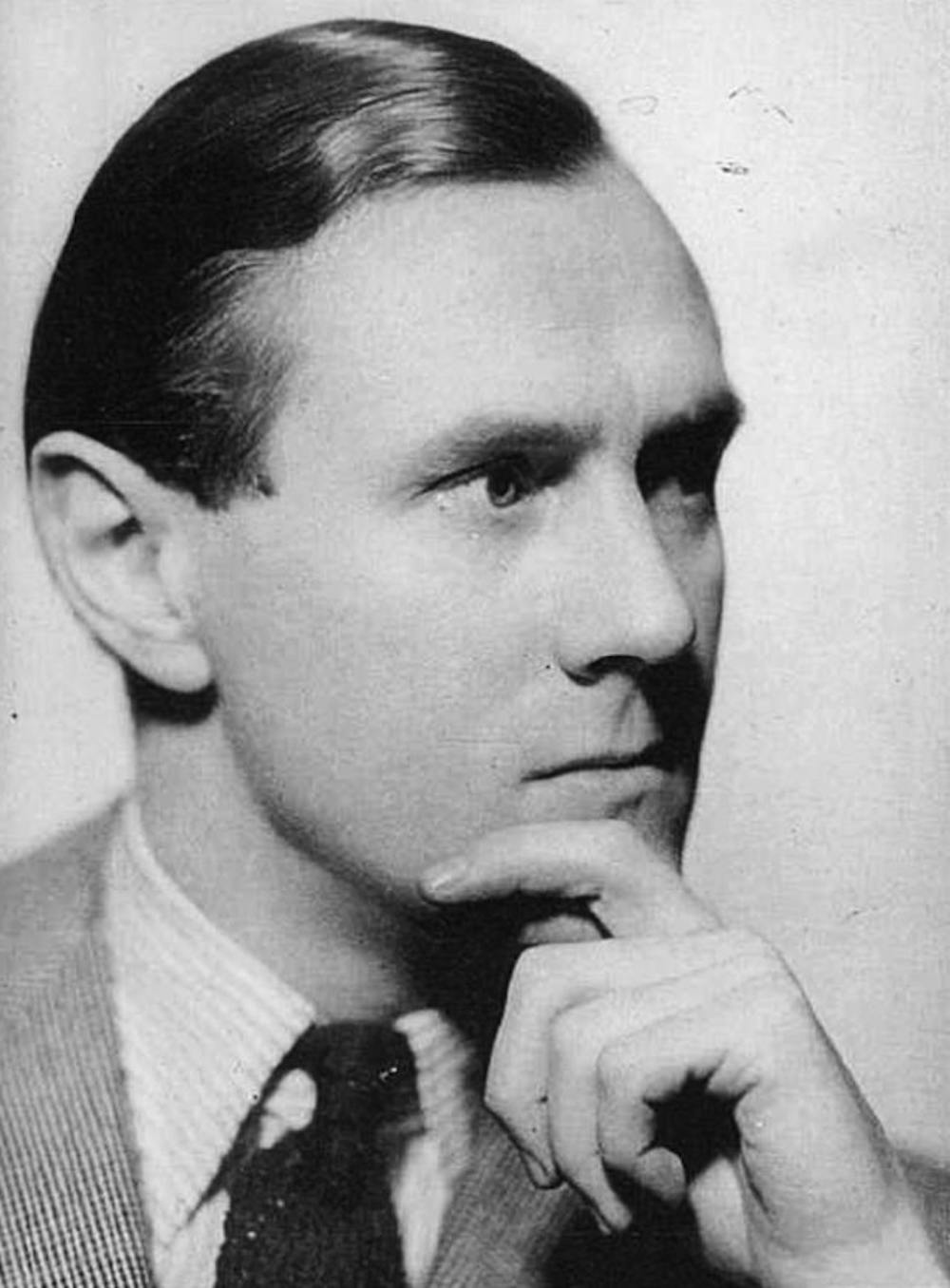 Patrick White c.1940.
One reason the story works is the way Carman uses paragraphs. Paragraphing is an aspect of writing that is changing faster than most others – look at A.S. Byatt’s Sugar and Other Stories (1992), for example, and you will be struck by how much more complex and demanding the paragraphs are, down to the way different speakers are enclosed within the one paragraph, something Carman also does. It’s wonderful to sink into simmering paragraphs that bubble on for pages, demanding and conferring a seamless absorption that, especially in this story, is cinematic. The technique works so well because the story is a journey, inner and outer, spatial and temporal (up the coast and into the past), but also because sequences, such as the ingestion of hash cookies and the ensuing trip, mirrored in a subsequent journey through the rainforest, then a climactic night in the club and the scenes in a gym, all have a dreamlike, surreal quality.
Short paragraphs can confer a propulsive simplicity, but with too many short paragraphs or line breaks, attention is wearied; not everything can be equally significant. Too many short lines and paragraphs are as exhausting as reading something in all caps or having someone shout at you. By using long paragraphs, the literary equivalent of art films made up of a few long takes, Carman makes the flow the point. The style embodies the project of the book, if we think that project is in its title: an ordinary ecstasy. What is ecstasy but a moment of transport, a timeless rapture without boundaries, an “oceanic feeling”? It hardly needs to be said (but it does) that this feels like a strategy to counteract the increasing difficulty of concentrating, of reading deeply rather than skimming.
Read more:
Noir and nostalgia inform Chris Womersley's tale of forgery, grief, and the seamy side of urban life
Literature as conversation
Literature converses with itself, among other things, and Carman’s work revels in the discussion; the earthy mundanities of life in Western Sydney exist alongside an insistence that his characters are also in conversation with Walt Whitman, Jack Kerouac, Bob Dylan, Cormac McCarthy and Patrick White.
Patrick White c.1940.
One reason the story works is the way Carman uses paragraphs. Paragraphing is an aspect of writing that is changing faster than most others – look at A.S. Byatt’s Sugar and Other Stories (1992), for example, and you will be struck by how much more complex and demanding the paragraphs are, down to the way different speakers are enclosed within the one paragraph, something Carman also does. It’s wonderful to sink into simmering paragraphs that bubble on for pages, demanding and conferring a seamless absorption that, especially in this story, is cinematic. The technique works so well because the story is a journey, inner and outer, spatial and temporal (up the coast and into the past), but also because sequences, such as the ingestion of hash cookies and the ensuing trip, mirrored in a subsequent journey through the rainforest, then a climactic night in the club and the scenes in a gym, all have a dreamlike, surreal quality.
Short paragraphs can confer a propulsive simplicity, but with too many short paragraphs or line breaks, attention is wearied; not everything can be equally significant. Too many short lines and paragraphs are as exhausting as reading something in all caps or having someone shout at you. By using long paragraphs, the literary equivalent of art films made up of a few long takes, Carman makes the flow the point. The style embodies the project of the book, if we think that project is in its title: an ordinary ecstasy. What is ecstasy but a moment of transport, a timeless rapture without boundaries, an “oceanic feeling”? It hardly needs to be said (but it does) that this feels like a strategy to counteract the increasing difficulty of concentrating, of reading deeply rather than skimming.
Read more:
Noir and nostalgia inform Chris Womersley's tale of forgery, grief, and the seamy side of urban life
Literature as conversation
Literature converses with itself, among other things, and Carman’s work revels in the discussion; the earthy mundanities of life in Western Sydney exist alongside an insistence that his characters are also in conversation with Walt Whitman, Jack Kerouac, Bob Dylan, Cormac McCarthy and Patrick White.
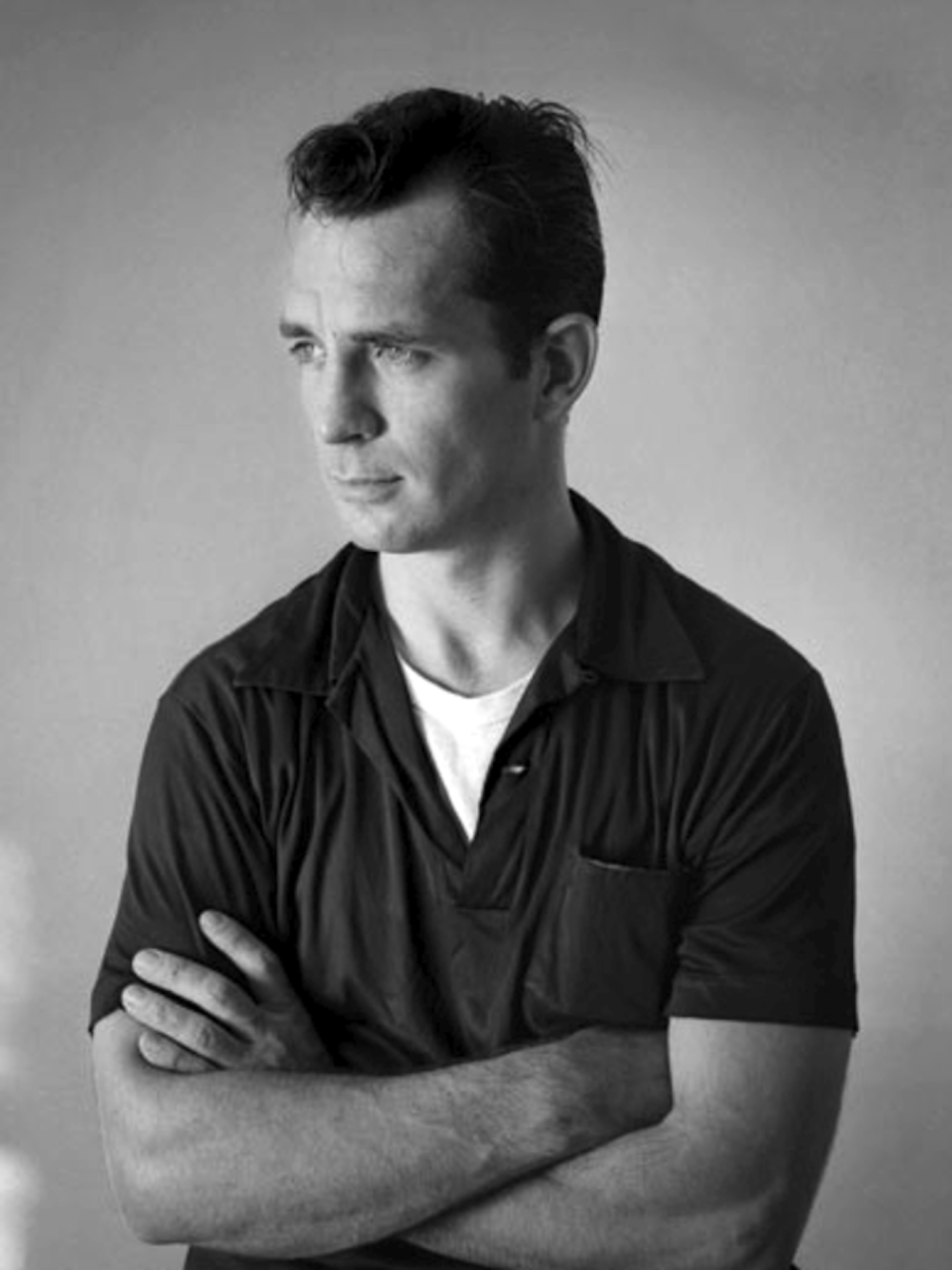 Jack Kerouac c.1956.
Tom Palumbo/Wikimedia commons, CC BY-SA
Holly, who uses remembered lines of poetry like noise-cancelling headphones to block out what she wants to ignore, thinks of T.S. Eliot; Joseph thinks of Marcus Aurelius, Dante, William Blake. The Bible is woven throughout, the wrack of a religious education perhaps. Elvis stars in an epiphanous moment. J.K. Rowling, J.R.R. Tolkien and A.E. Housman loom in later stories.
Australian writers are at a distinct disadvantage in this global conversation. In this, I love the locality of Carman’s work, coupled with its insistence on being part of the conversation and ceaseless awareness of the press of the global North. “My poem is about colonial illegitimacy,” Luke says in An Elegant Young Man.
Detailing a clutter of lawn ornaments, which includes “a mighty Atlas” holding up a birdbath, Joseph marvels at the kitsch objects creating a “loom of minute symbols stitching together the ends of the earth in all its ages”. Is there a better phrase summing up the kind of suburbia captured by mid-century Australian writers? The sentence is a beautiful example of Carman’s technical skill, his ear. It is balanced. It uses alliteration, rhythm, imagery and contrast with a skill the Elizabethan poets would have admired, the word “minute” working superbly with “loom” and “stitching” to suggest fine tapestry (this garden has been created by an old woman and is being observed by an old man) and contrasting with “the ends of the earth” and “all its ages”, the whole sentence summing up in such a short space the vastness and absurdity of the Australian settler-colonial project as a kind of simulacra.
As a teenager, I went through a phase of reading every play by Patrick White and there is something of that style in Carman’s dialogue, a heightened realism that refuses the impoverished vocabulary and constipated speech that is supposed to characterise working-class Australian men. Joseph, who says he never finished his Leaving Certificate, when told he’s “all full up with words, like a pinata”, replies:
That’s another one of those tools of modern propaganda they club people like us in the gob with – the volubility of a man and the quality of his thoughts are ships in the proverbial night. We might say speech is a form of thought, but what comes out of the mouth is only the fluttering shade of the infinite internal thing that has its range and scope outside conscious introspection.
Joseph continues in this vein for a page.
I like that Carman is not afraid to tell as well as show. His characters reflect on big themes; they think, they speak, they declaim, melding poetic and colloquial diction freely. August has a number of speeches in Tears on Main Street, at one point referring to Las Vegas as “carnivalesque” and “bacchanalian”, and the story also contains one of my favourite lines in the book, a piece of graffiti in the Australian vernacular that asks: “Have you seen the three-metre flatty?”
Rare Birds, a chapter of An Elegant Young Man, opens with one of my favourite passages by Carman:
I wandered around Penrith Plaza eating kebabs and reading On the Road and calling the world an ecstatic masterpiece until I learned that the world moves from order to disorder just like black holes and middle-class families.
It’s good to see that with this collection, Carman hasn’t given up on the idea of the world as an ecstatic masterpiece.
Authors: Claire Corbett, Lecturer, Creative Writing, University of Technology Sydney
Jack Kerouac c.1956.
Tom Palumbo/Wikimedia commons, CC BY-SA
Holly, who uses remembered lines of poetry like noise-cancelling headphones to block out what she wants to ignore, thinks of T.S. Eliot; Joseph thinks of Marcus Aurelius, Dante, William Blake. The Bible is woven throughout, the wrack of a religious education perhaps. Elvis stars in an epiphanous moment. J.K. Rowling, J.R.R. Tolkien and A.E. Housman loom in later stories.
Australian writers are at a distinct disadvantage in this global conversation. In this, I love the locality of Carman’s work, coupled with its insistence on being part of the conversation and ceaseless awareness of the press of the global North. “My poem is about colonial illegitimacy,” Luke says in An Elegant Young Man.
Detailing a clutter of lawn ornaments, which includes “a mighty Atlas” holding up a birdbath, Joseph marvels at the kitsch objects creating a “loom of minute symbols stitching together the ends of the earth in all its ages”. Is there a better phrase summing up the kind of suburbia captured by mid-century Australian writers? The sentence is a beautiful example of Carman’s technical skill, his ear. It is balanced. It uses alliteration, rhythm, imagery and contrast with a skill the Elizabethan poets would have admired, the word “minute” working superbly with “loom” and “stitching” to suggest fine tapestry (this garden has been created by an old woman and is being observed by an old man) and contrasting with “the ends of the earth” and “all its ages”, the whole sentence summing up in such a short space the vastness and absurdity of the Australian settler-colonial project as a kind of simulacra.
As a teenager, I went through a phase of reading every play by Patrick White and there is something of that style in Carman’s dialogue, a heightened realism that refuses the impoverished vocabulary and constipated speech that is supposed to characterise working-class Australian men. Joseph, who says he never finished his Leaving Certificate, when told he’s “all full up with words, like a pinata”, replies:
That’s another one of those tools of modern propaganda they club people like us in the gob with – the volubility of a man and the quality of his thoughts are ships in the proverbial night. We might say speech is a form of thought, but what comes out of the mouth is only the fluttering shade of the infinite internal thing that has its range and scope outside conscious introspection.
Joseph continues in this vein for a page.
I like that Carman is not afraid to tell as well as show. His characters reflect on big themes; they think, they speak, they declaim, melding poetic and colloquial diction freely. August has a number of speeches in Tears on Main Street, at one point referring to Las Vegas as “carnivalesque” and “bacchanalian”, and the story also contains one of my favourite lines in the book, a piece of graffiti in the Australian vernacular that asks: “Have you seen the three-metre flatty?”
Rare Birds, a chapter of An Elegant Young Man, opens with one of my favourite passages by Carman:
I wandered around Penrith Plaza eating kebabs and reading On the Road and calling the world an ecstatic masterpiece until I learned that the world moves from order to disorder just like black holes and middle-class families.
It’s good to see that with this collection, Carman hasn’t given up on the idea of the world as an ecstatic masterpiece.
Authors: Claire Corbett, Lecturer, Creative Writing, University of Technology Sydney 

















