

Les Murray said his autism shaped his poetry – his late poems offer insights into his creative process
- Written by: Amanda Tink, PhD Candidate, Western Sydney University
An autistic author recently tweeted:
I filled out an autism quotient questionnaire for my upcoming assessment and one of the questions was about if I am fascinated by dates and I said no BUT now I want to go to the supermarket and buy some dates and see how fascinating they really are.
Reading this, I decided that a personal reevaluation of dates was definitely in order, despite our previous incompatibilities.
For me, the first hurdle in even tolerating any food is the physical experience of eating it – its initial combination of textures, and how they change during the eating process. Like Les Murray’s son Alexander, I hated “orange juice with bits in it” throughout my childhood. I still dislike the bits, but I have learned to endure them for the taste, which is my process for at least half of what I eat.
My memory of the taste of dates when I tried them as a child is sugary dirt, so they were never worth their gluey gelatinousness. But perhaps they, or I, would be different now. Intrigued by this idea, I sent the “dates” tweet to my partner, who describes himself as “having more than a hint of neuroatypicality”. He replied that he had always thought that that question referred to going out to a romantic dinner.
Of course, the non-autistic designers of the autism quotient test intended “dates” to refer only to the day, month and year of an event.
Autism and detail
These differences in word association are one reason that Les Murray identified autism as “the part of my brain […] which is mostly the part my poetry comes from”.
They also emphasise the role of context in interpretation. Though being autistic enabled the intimate relationship with detail and uncommon relationship with the world that are characteristic of Murray’s poetry, his autism often went unacknowledged when his poetry was interpreted.
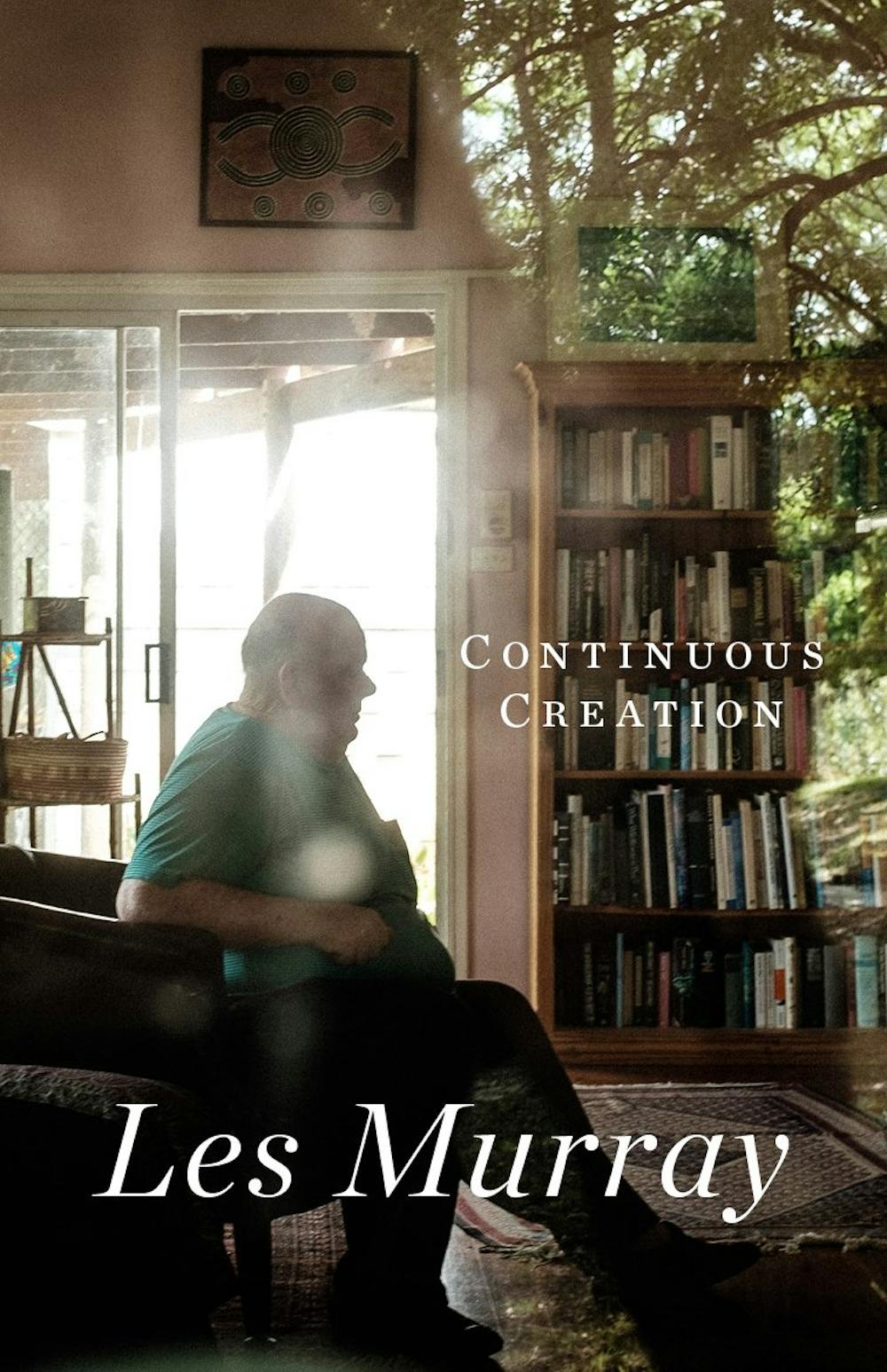
Having explored the influences of autism in Murray’s poetry for a number of years, I was intrigued that autism and recontextualisation were of particular interest to him in his final collection Continuous Creation, where they often intertwine.
While Murray explicitly foregrounds his autism, some of his intentions regarding context are unclear. One example of this uncertainty is the poem Cherry Soldiers, which appears at the halfway point of the book. Here it is, in its two-line entirety:
Chokecherry, chokecherry, makin a stand:I got your little pokeberry eatin from my hand.
Caroline Overington labels this poem “fun”, which may well be the experience Murray intended it to convey as a singular poem in this collection. For me, however, it evokes the unease that I feel whenever I read it in Fredy Neptune.
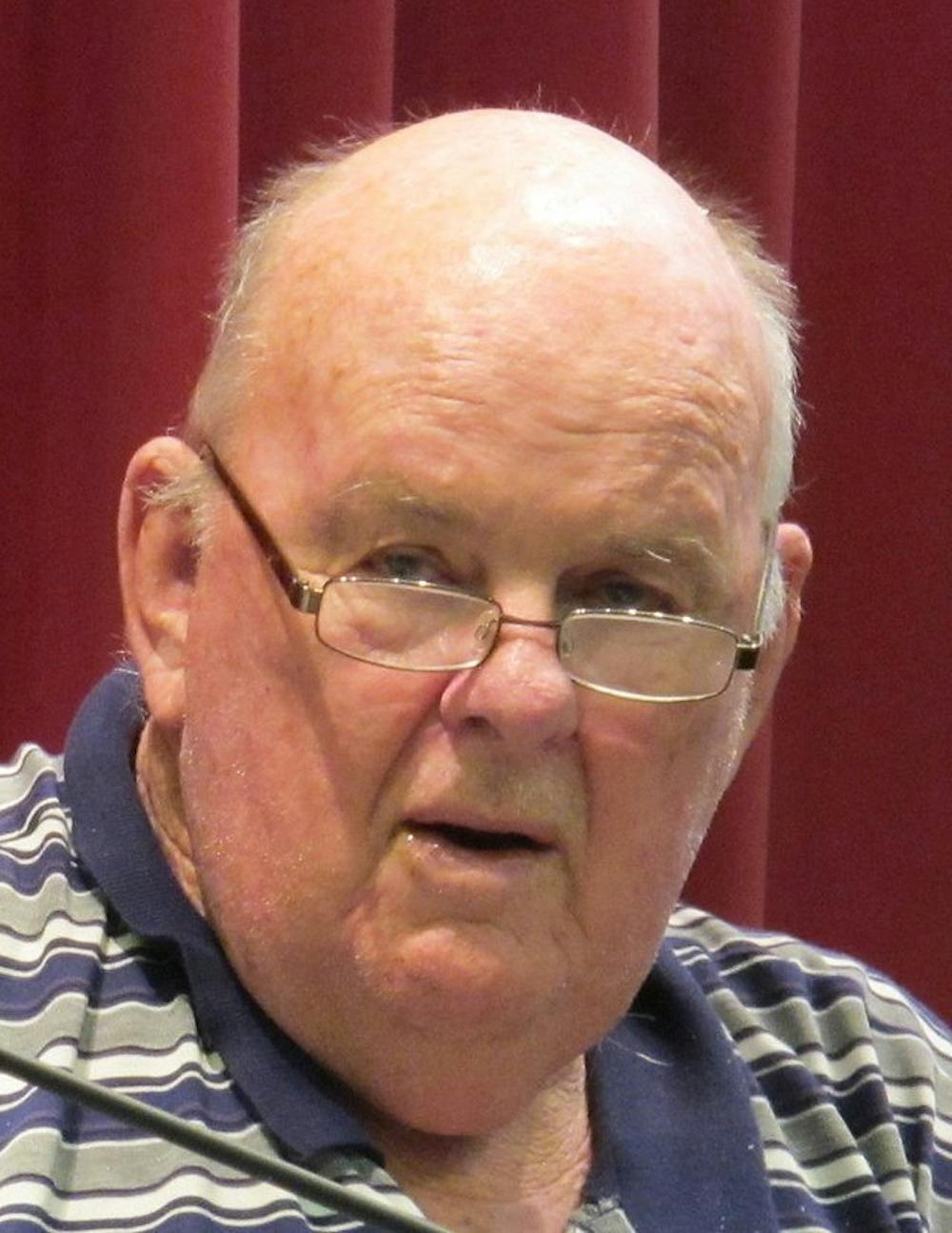 Les Murray in Munich, 2014.
Wikimedia commons, CC BY
Read more:
Gwen Harwood was one of Australia's finest poets – she was also one of the most subversive
Creation as continuous
If Murray intended for these poems to be published, this represents a striking change in the presentation of his writing. Throughout most of his six-decade career, he continually adjusted his body of work to represent his current position on and in the world. Within this process, there was a connection between Murray of the past and Murray of the present that was stretched but not broken. When a break occurred, Murray deleted commas, lines, stanzas and entire poems to reestablish an alignment between his poetry as a whole and himself.
Les Murray in Munich, 2014.
Wikimedia commons, CC BY
Read more:
Gwen Harwood was one of Australia's finest poets – she was also one of the most subversive
Creation as continuous
If Murray intended for these poems to be published, this represents a striking change in the presentation of his writing. Throughout most of his six-decade career, he continually adjusted his body of work to represent his current position on and in the world. Within this process, there was a connection between Murray of the past and Murray of the present that was stretched but not broken. When a break occurred, Murray deleted commas, lines, stanzas and entire poems to reestablish an alignment between his poetry as a whole and himself.
 But I am unaware of rearrangement to this degree in his previous books. It might imply an interest in expanding from a conception of the process of creation as continuous to a conception of each individual creation as continuous.
There is further evidence for this in Waiting for the Past, which also originated in 2015 as a line in a poem. Murray used the line to title his other collection from that year. In Continuous Creation, Waiting for the Past is the title of a poem, and it has developed into a refrain on the subject of remembering.
Waiting for the Past describes how the many details of Murray’s “great memory”, which he noted when publicly declaring his autism in the poem The Tune on Your Mind (2006), have faded. Yet “flesh tells what mind forgets”.
In other words, perhaps in response to critics who have suggested that Murray should move on from long-ago arguments, this poem replies that with an autistic memory it is not so easy.
Another property of autistic minds is referred to in Polo Solved. Murray suggests that the absence of the Great Wall from Marco Polo’s extensive lists of what he observed during his 17 years in China was because:
if you are autistic
things that you’ve missedseem not to exist.
This is a well-documented difference between non-autistic and autistic perception. Autistic author Star Ford calls them “forest-first” and “trees-first”, in order to value both approaches. Non-autistic people begin with an undifferentiated scene, then become aware of some details. Autistic people begin with one detail, and then add another and another, until they become aware of a scene.
This is one reason that autistic people might not notice details that seem obvious to non-autistic people, and vice versa. It is also the reason that Murray became the “delicately detailed describer of the earth” that, as Lyn McCredden notes, “even Murray-sceptics admire”.
Polo Solved is a reminder that Murray was autistic and it affirms that, to the end, autism was one of his strongest poetic themes. He first explicitly wrote on autism in Portrait of the Autist as a New World Driver in 1974. He continued writing poems on his own autism, such as Self-Portrait from a Photograph, The Shield-Scales of Heraldry, and The Tune on Your Mind. In Fredy Neptune, he explored the experience of being autistic before this way of being in the world was medicalised.
He also wrote poems on his son’s autism, including It Allows a Portrait in Line Scan at Fifteen, Like the Joy at his First Lie, and To One Outside the Culture.
As a part of his final collection, Polo Solved is a note on the role of context in “all that will outlast us”. For autistic writers, it is a reminder that Murray created, not just a path, but a field for us. It is a reminder for everyone to stay curious and to keep considering what you believe to be present, as well as what might be missing.
Read more:
In his last poems, Les Murray offers a gentle, gracious bow of farewell, and just a few barbs
Authors: Amanda Tink, PhD Candidate, Western Sydney University
But I am unaware of rearrangement to this degree in his previous books. It might imply an interest in expanding from a conception of the process of creation as continuous to a conception of each individual creation as continuous.
There is further evidence for this in Waiting for the Past, which also originated in 2015 as a line in a poem. Murray used the line to title his other collection from that year. In Continuous Creation, Waiting for the Past is the title of a poem, and it has developed into a refrain on the subject of remembering.
Waiting for the Past describes how the many details of Murray’s “great memory”, which he noted when publicly declaring his autism in the poem The Tune on Your Mind (2006), have faded. Yet “flesh tells what mind forgets”.
In other words, perhaps in response to critics who have suggested that Murray should move on from long-ago arguments, this poem replies that with an autistic memory it is not so easy.
Another property of autistic minds is referred to in Polo Solved. Murray suggests that the absence of the Great Wall from Marco Polo’s extensive lists of what he observed during his 17 years in China was because:
if you are autistic
things that you’ve missedseem not to exist.
This is a well-documented difference between non-autistic and autistic perception. Autistic author Star Ford calls them “forest-first” and “trees-first”, in order to value both approaches. Non-autistic people begin with an undifferentiated scene, then become aware of some details. Autistic people begin with one detail, and then add another and another, until they become aware of a scene.
This is one reason that autistic people might not notice details that seem obvious to non-autistic people, and vice versa. It is also the reason that Murray became the “delicately detailed describer of the earth” that, as Lyn McCredden notes, “even Murray-sceptics admire”.
Polo Solved is a reminder that Murray was autistic and it affirms that, to the end, autism was one of his strongest poetic themes. He first explicitly wrote on autism in Portrait of the Autist as a New World Driver in 1974. He continued writing poems on his own autism, such as Self-Portrait from a Photograph, The Shield-Scales of Heraldry, and The Tune on Your Mind. In Fredy Neptune, he explored the experience of being autistic before this way of being in the world was medicalised.
He also wrote poems on his son’s autism, including It Allows a Portrait in Line Scan at Fifteen, Like the Joy at his First Lie, and To One Outside the Culture.
As a part of his final collection, Polo Solved is a note on the role of context in “all that will outlast us”. For autistic writers, it is a reminder that Murray created, not just a path, but a field for us. It is a reminder for everyone to stay curious and to keep considering what you believe to be present, as well as what might be missing.
Read more:
In his last poems, Les Murray offers a gentle, gracious bow of farewell, and just a few barbs
Authors: Amanda Tink, PhD Candidate, Western Sydney University 

















