

How Australian media are changing the way they report violence against women
- Written by: Annie Blatchford, PhD Candidate, Melbourne Law School, University of Melbourne
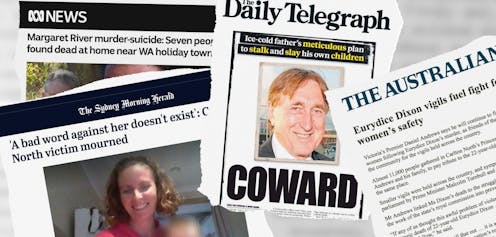
Recently in Australia there has been a horrific wave of murders of women and children. But, in the aftermath of the #metoo movement, we have seen a change in the way the media are reporting violence against women.
Witness the reporting of the murder of Eurydice Dixon, followed by the abduction and rape of a woman in Carlton, murder-suicides in Western Australia and Sydney and the murders of two women in Melbourne in one weekend.
Over this period, there were subtle but significant shifts in the way the incidents were reported. Murders were labelled as “domestic” homicides sooner, the focus shifted from the victims’ to the perpetrators’ behaviour, and the men responsible for murdering their families transformed from “good blokes” to “cowards”.
Some of these changes can be traced back to the media’s first port of call – the police. In the early stages following a crime, they provide the information and implicitly set the news agenda. Greens candidate Kathleen Maltzahn wrote in The Guardian:
In times of threat, the police speak as the state; their words reassert community standards and set the agenda for how a crime is understood.
Public outcry and the #metoo movement probably also played a part in causing the shift.
Underlying these recent developments is a decade of work by the Victorian domestic violence sector, which has engaged with the media to improve reporting of violence against women. This primary prevention work, which seeks to stop violence before it starts by changing community attitudes, has also been undertaken nationally.
The ideal article
There is a lot of research that analyses the problems with media reporting of violence against women.
According to these studies, the Australian Press Council and Our Watch guidelines, an ideal article reporting on a domestic homicide would:
contextualise the story with statistics or expert comment about violence against women
label the incident for what it was, such as “domestic violence”
humanise the story and, if possible, give a name to the victim
if relevant (and legal), report on the perpetrator’s prior violence
include domestic violence helplines.
Without these elements, the incident is represented as an isolated and random event. This leaves the responsibility with the individuals and the solution with the justice system. It allows the rest of society to dismiss it as someone else’s problem.
The work of #FixedIt powerfully captures the impact of sensationalised, inaccurate or individualised reporting of violence against women. Journalist Jane Gilmore highlights how headlines alone can reinforce victim-blaming stereotypes or sexist attitudes towards women – she “fixes” headlines to read as they should, rather than as they do.
Of course, this “ideal article” is not always feasible. Journalists are tied to what information they get from police and other sources. Legal restrictions also significantly limit what material journalists can report.
There are also constraints within the media industry itself. Limited resources and a demanding 24/7 news cycle can mean details are scant or the murder isn’t covered at all. Editorial decisions may also alter the final version of the report.
Despite all of this, there are signs that journalists are finding ways to contextualise the incidents and place the blame and responsibility in the right places.
Signs of change
1. ‘This behaviour is never justified’
After the murder of Eurydice Dixon police called on people to “be aware of their personal security”. That caused a public debate over the victim-blaming messages this response invoked.
Chief Commissioner Graham Ashton publicly acknowledged the police needed to use better language when responding to these incidents and said they had “learned a lesson”.
Not long after, a woman was abducted and sexually assaulted in the same area of Melbourne. This time, the police insisted everybody had a right to go about living their lives safely. They shifted their focus from the victim to the behaviour of the men responsible.
The Herald Sun quoted North West Metro Acting Commander Lisa Hardeman who said:
Pressuring or forcing somebody into unwanted sexual activity is a serious crime … This behaviour is never justified.
While the media have been criticised for over-relying on police as a source, police are, at the early stages of these crimes, the main source of information.
In Victoria at least, Margaret Simons’ and Jenny Morgan’s research has shown that cultural change in the police force has played a part in positively influencing media agendas.
2. ‘Good bloke’ to ‘coward’
In Margaret River, Peter Miles allegedly shot his wife, daughter and four grandchildren. Yet the media quoted family and friends who said he was a “good bloke”.
This description caused widespread outrage, including a Media Watch episode advising journalists to proceed with caution in the future.
Sadly, not long after the Margaret River tragedy, another unfolded in West Pennant Hills, Sydney, where John Edwards shot his two teenage children, Jack and Jennifer, following custody disputes with his former wife, Olga Edwards.
In stark contrast to the Margaret River reporting, the coverage of the Sydney tragedy held the perpetrator to account, labelling him a “coward”. Media also reported his history of violence against other women and that he had once been subject to an apprehended violence order.
The Daily Telegraph wrote about the domestic violence police team that operated in the West Pennant Hills area. The report quoted local domestic violence statistics and the team lead, Sergeant Jerrod Luck, who said:
Why should the family have to leave home? That’s victimising the victim … We will be guided by what the victim wants, but they don’t have to pack up and leave.
These narratives can be explained by the different circumstances and character of the men and the information provided by police and other sources. Journalists should also not be expected to censor information just because it is favourable to the accused.
Regardless, the changes here suggest journalists are exercising more care in how they use material from sources – as they routinely do in other matters.
3. ‘Name it’
In Melbourne, two women were murdered within six kilometres of each other on the one weekend, both by a “man known to her”.
At the early stage after a crime, reports are brief and faceless as the media can only report on the few facts police provide. The accused is usually not identified until they appear in court.
But, in reporting the two Melbourne murders, The Age included the domestic violence helpline – 1800 RESPECT. By including this resource, not only was the murder identified as related to domestic violence, it also communicated to the audience where they can seek help.
This practice is not consistent among journalists. In the week leading up to these murders, another Fairfax report, “Shane Robertson bashed mother of his children because she wanted to leave him”, included a Lifeline and BeyondBlue helpline, but no domestic violence resource.
The murders did not disappear from the news cycle either, as has been too often the case. Instead, the media spoke up on behalf of the victims and the 34 women in total killed in Australia this year. Other reports analysed how the community interpreted these events.
ABC radio host Jon Faine dedicated part of his show two mornings in a row to discussing violence against women. The Drum spent half an episode unpacking the public conversation around domestic violence. The list goes on.
Credit where it’s due
As put by Our Watch ambassador Tarang Chawla, whose family had to bear the brunt of unethical, inaccurate and racist media reporting after his sister Nikita’s murder, it is no easy task for the media and society to unlearn entrenched stereotypes and messages that excuse or dismiss violence against women.
But, when journalists get it right, they should be acknowledged and congratulated in the hope it can create permanent change.
The National Sexual Assault, Family & Domestic Violence Counselling Line – 1800 RESPECT (1800 737 732) – is available 24 hours a day, seven days a week for any Australian who has experienced, or is at risk of, family and domestic violence and/or sexual assault.
Authors: Annie Blatchford, PhD Candidate, Melbourne Law School, University of Melbourne


















