

Murdoch v Crikey highlights how Australia's defamation laws protect the rich and powerful
- Written by: Denis Muller, Senior Research Fellow, Centre for Advancing Journalism, The University of Melbourne
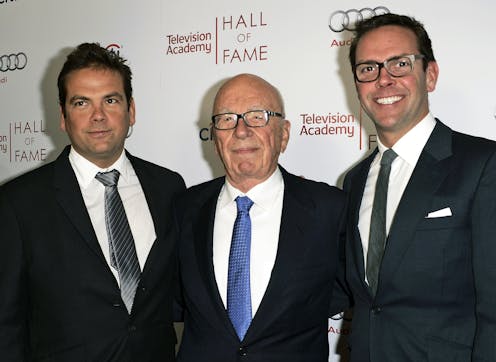
There is no better example of how Australia’s defamation laws enable the rich and powerful to intimidate their critics than Lachlan Murdoch suing Crikey.com over a comment piece concerning Fox News, Donald Trump and the Washington insurrection of January 6 2021.
Crikey says it has published the correspondence between its lawyers and Murdoch’s in order to show how media power is abused in Australia.
The correspondence begins with a “concerns notice” Murdoch sent to Crikey, which is the essential first step in launching an action for defamation. In it, Murdoch claims that the Crikey commentary by Bernard Keane, published on June 29 2022, conveyed 14 meanings that were defamatory of Murdoch.
Murdoch’s allegation and Crikey’s defence
According to Murdoch’s claims, Keane’s piece alleges that Lachlan Murdoch illegally conspired with Donald Trump to overturn the 2020 US presidential election result and incite an armed mob to march on the Capitol to prevent the result from being confirmed.
Read more: Web activists Avaaz put Lachlan Murdoch's media interests under the spotlight
Crikey has responded by disputing that these meanings are conveyed, saying they are “contrived and do not arise”. Crikey also argues that whatever it published could not possibly have done serious harm to Lachlan Murdoch’s reputation.
In order to get an action for defamation off the ground, Murdoch, the plaintiff in this case, has to satisfy the court that serious reputational harm has been done. The court may well decide this is the case.
Crikey says that given what much bigger media companies such as the Washington Post, the New York Times and the ABC (American Broadcasting Company) have already published about Murdoch’s Fox News and its propagation of the “Big Lie” that the 2020 presidential election had been stolen, what Crikey has published cannot further harm Murdoch’s reputation.
US vs Australian defamation protections
This brings us to the first way Australia’s defamation laws facilitate intimidatory action by the rich and powerful.
Since those two big American newspapers have published similar material to that published by Crikey, the question naturally arises: why has Lachlan Murdoch not sued them? The answer is that in the United States, there is a “public figure” defence to defamation.
In the US, Lachlan Murdoch would easily qualify as a public figure, being executive chairman and CEO of Fox Corporation. If he sued there, he would have to prove malice on the part of the newspapers. That means he would have to prove that the newspapers lied or were recklessly indifferent to the truth.
No such defence is available to the media in Australia, despite decades of intermittent campaigning by the media that it is needed. The reasons these efforts have gone nowhere are twofold.
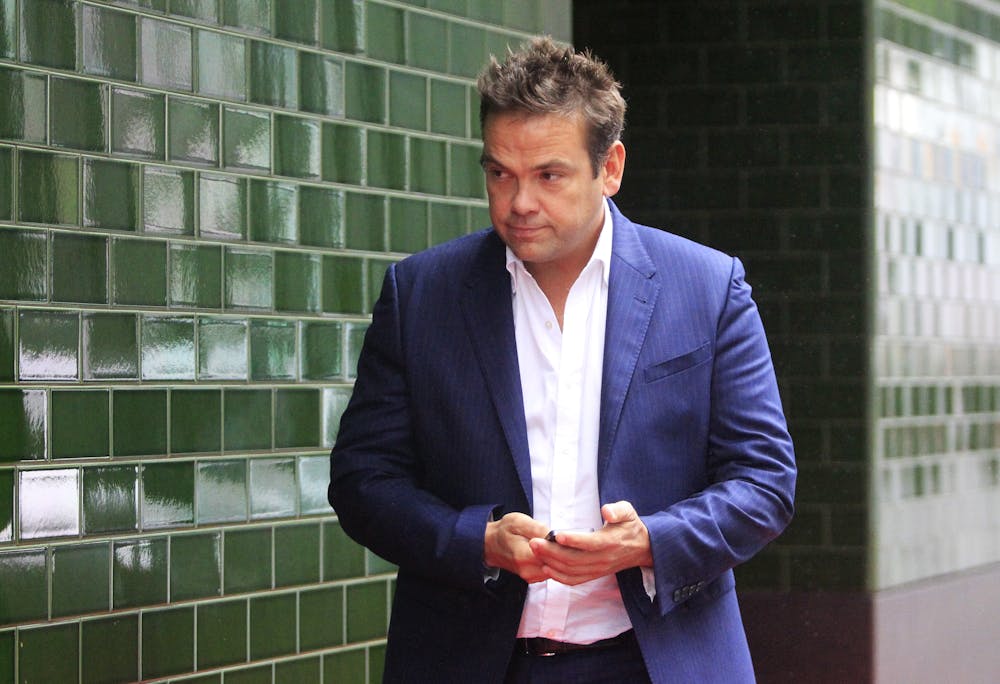
First, Australian politicians are among the most avid users of defamation laws, and it would be unrealistic to expect they would change this convenient state of affairs. This has been illustrated recently by the successful defamation action taken by the former deputy premier of NSW, John Barilaro, against an online satirist, Jordan Shanks, aka friendlyjordies.
Second, the tradition of accountability in public life is weak in Australia and the tradition of secrecy is strong, as vividly demonstrated by Scott Morrison’s behaviour in the affair of the multiple portfolios.
Another major factor in the chilling effect that the Australian defamation laws exert on the media is the extravagant damages the courts have awarded to plaintiffs that sue media companies, as well as the high cost of litigation. This has caused large media companies to settle cases even when they had an arguable prospect of defending themselves.
Read more: Australian law says the media can't spin lies – 'entertainment magazines' aren't an exception
A recent example was when the biography of the AFL player Eddie Betts was published, confirming what had happened at the now notorious training camp held by the Adelaide Crows in 2018. At the camp, Betts alleged he was targeted, abused and the camp “misused personal and sensitive information.”
However, when The Age broke the story initially, it was sued by the company that ran the camp. The newspaper issued an apology, although it did not admit the story was wrong.
The Age said its parent company, Nine Entertainment, had made a “business decision” to settle the case. In other words, it did not want to risk the costs and damages involved in contesting the suit.
Liabilities for online publication
A third main factor is the failure of the Morrison administration to bring to finality stage two of the defamation law reforms, which concern the liabilities and defences for online publication.
Currently, anyone who publishes a website or a blog is liable for the comments made there by third parties. Continuously moderating comment streams for potentially defamatory material is onerous and expensive at a time when media organisations have far fewer resources than they did in the pre-digital age.
Against this backdrop, it is hardly surprising that Lachlan Murdoch feels he can use his immense wealth and power to intimidate and silence a relatively small outfit like Crikey.com. Behind him stand corporations with a market capitalisation of billions. Crikey says its company, Private Media, is valued at less than $20 million.
Murdoch’s demands
Murdoch wants Crikey to take down the story and issue an apology. In pursuit of his case, he has filed suit in the Federal Court.
In defiance of Murdoch’s claim, Crikey has published his 2014 oration at the State Library of Victoria named in honour of his grandfather, Sir Keith Murdoch, as part of its publishing of the legal correspondence:
Censorship should be resisted in all its insidious forms. We should be vigilant of the gradual erosion of our freedom to know, to be informed and make reasoned decisions in our society and in our democracy. We must all take notice and, like Sir Keith, have the courage to act when those freedoms are threatened.
Quite.
Authors: Denis Muller, Senior Research Fellow, Centre for Advancing Journalism, The University of Melbourne


















