

welcome to the world of Ottessa Moshfegh's Lapvona
- Written by Julian Novitz, Senior Lecturer, Writing, School of Media and Communication, Swinburne University of Technology
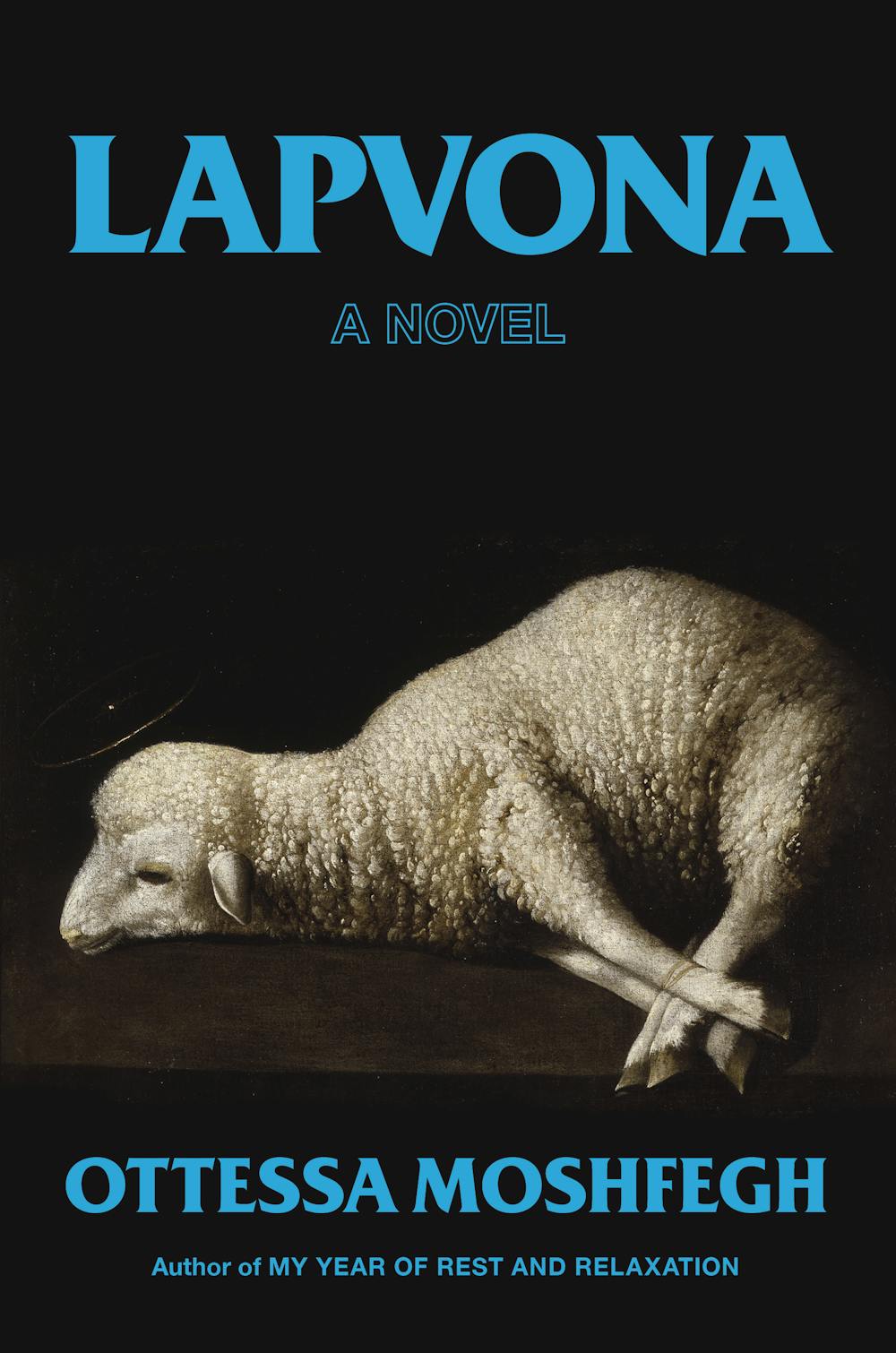
Whether taken as a good or bad quality, Ottessa Moshfegh’s Lapvona is a confounding novel. In a recent survey of critical responses, writer Rich Juzwiak noted that there is strikingly little consensus among reviewers:
Go down the Lapvona blurbs on Bookmarks and it’s like every reviewer read a different book. Lapvona is “utterly odd, wickedly funny, and sharply satirical.” In Lapvona, “what’s gone missing is Moshfegh’s destroying wit.” It’s “deliriously quirky.” It’s “too puerile and dumb to excite any reaction beyond impatience.”
“Some of her sentences dazzled me so much I had to put the book down and sun myself in the light of her prose for a moment,” writes one reviewer. “The prose, as elsewhere in Moshfegh’s oeuvre, is occasionally vivid, but mostly lazy,” writes another.
Juzwiak is delighted by this reception, noting the unusual intensity of these opinions and reactions, dubbing Lapvona “the feel-bad hit of the Summer.”
Review: Lapvona – Ottessa Moshfegh (Penguin Press).
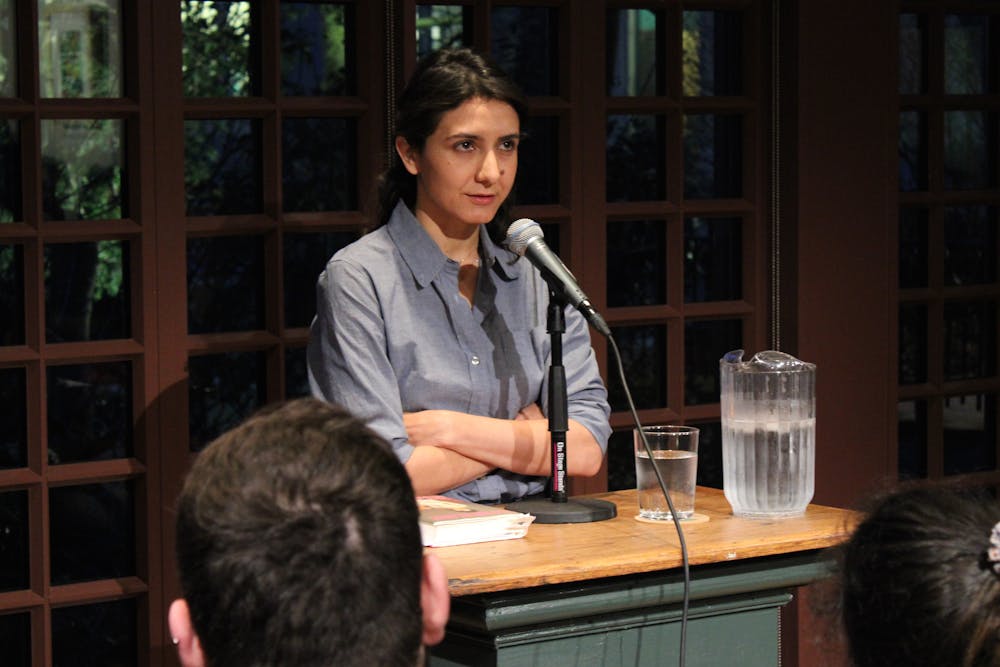 Ottessa Moshfegh at the Kelly Writers House, Philadelphia, March 2020.
Wikimedia commons, CC BY-SA
Read more:
Anti-Semitism, opportunism, and political intrigue: Olga Tokarczuk's whirlwind tour of the 18th century
The Gothic element
This summary doesn’t even touch on the novel’s other elements and subplots, like the blind village witch and midwife Inga, who has nursed Marek throughout his childhood and adolescence out of guilt at helping Agata attempt to abort her pregnancy years before, or Jacob’s former servant Lisbeth and her poisonous hatred of Marek, or Villiam’s wife Dibra and her dangerous affair with the stable hand Luka, or the horrifying nature of Jude’s “marriage” to Agata, or the equally horrifying truth of Marek’s origins.
The complex tangle of interrelated subplots has prompted some reviewers to liken Lapvona to the Gothic tales and novels of the 18th and 19th centuries. The novel’s loosely medieval setting, its supernatural occurrences, and the moments of graphic violence and depravity are all hallmarks of the Gothic.
One common Gothic element that is largely missing from Lapvona, however, is any kind of mystery. The novel’s floating third-person narration operates as an eager and obtrusive spoiler, swiftly and efficiently revealing the hidden natures, secrets and histories of characters almost as soon as they are introduced. We learn, almost from the outset, that Jude has lied to Marek about Agata’s death, that Villiam and Jude are distantly related, and that Villiam himself has hired the bandits who regularly raid the village, who slaughter any troublemakers and pay for his luxuries with their plunder.
Even the eventual discovery of these secrets by other characters comes with little drama. No one is particularly concerned by the knowledge that Jude and Villiam are long lost cousins. The revelation that Agata lives does not lead to any conflict between Jude and Marek. And the righteous anger of the one villager who successfully deduces the extent of Villiam’s corruption swiftly gives way to weary acceptance and passivity.
As a genre, the Gothic typically builds its strangeness and menace from buried histories that reemerge to destabilise the present. But no revelation seems able to disrupt the complacent stasis of Lapvona; its insular, isolated characters can only respond to the intrusion of the past with indifference.
Read more:
In The Candy House, Jennifer Egan delivers an inventive novel for a digital age
Extremes, grotesqueries and degradations
Ottessa Moshfegh at the Kelly Writers House, Philadelphia, March 2020.
Wikimedia commons, CC BY-SA
Read more:
Anti-Semitism, opportunism, and political intrigue: Olga Tokarczuk's whirlwind tour of the 18th century
The Gothic element
This summary doesn’t even touch on the novel’s other elements and subplots, like the blind village witch and midwife Inga, who has nursed Marek throughout his childhood and adolescence out of guilt at helping Agata attempt to abort her pregnancy years before, or Jacob’s former servant Lisbeth and her poisonous hatred of Marek, or Villiam’s wife Dibra and her dangerous affair with the stable hand Luka, or the horrifying nature of Jude’s “marriage” to Agata, or the equally horrifying truth of Marek’s origins.
The complex tangle of interrelated subplots has prompted some reviewers to liken Lapvona to the Gothic tales and novels of the 18th and 19th centuries. The novel’s loosely medieval setting, its supernatural occurrences, and the moments of graphic violence and depravity are all hallmarks of the Gothic.
One common Gothic element that is largely missing from Lapvona, however, is any kind of mystery. The novel’s floating third-person narration operates as an eager and obtrusive spoiler, swiftly and efficiently revealing the hidden natures, secrets and histories of characters almost as soon as they are introduced. We learn, almost from the outset, that Jude has lied to Marek about Agata’s death, that Villiam and Jude are distantly related, and that Villiam himself has hired the bandits who regularly raid the village, who slaughter any troublemakers and pay for his luxuries with their plunder.
Even the eventual discovery of these secrets by other characters comes with little drama. No one is particularly concerned by the knowledge that Jude and Villiam are long lost cousins. The revelation that Agata lives does not lead to any conflict between Jude and Marek. And the righteous anger of the one villager who successfully deduces the extent of Villiam’s corruption swiftly gives way to weary acceptance and passivity.
As a genre, the Gothic typically builds its strangeness and menace from buried histories that reemerge to destabilise the present. But no revelation seems able to disrupt the complacent stasis of Lapvona; its insular, isolated characters can only respond to the intrusion of the past with indifference.
Read more:
In The Candy House, Jennifer Egan delivers an inventive novel for a digital age
Extremes, grotesqueries and degradations
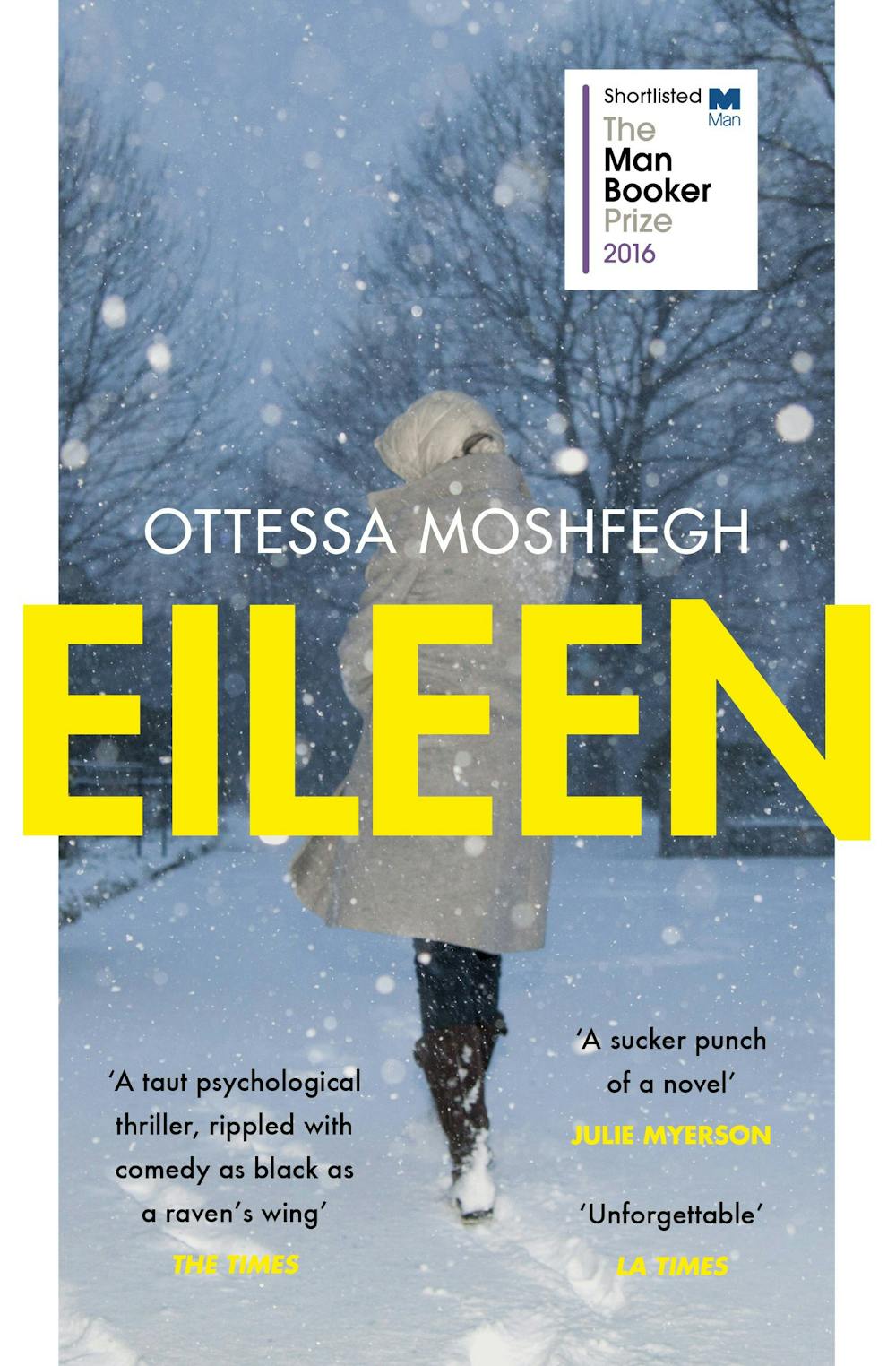 The third-person perspective is a notable departure for Moshfegh, whose previous works have all been written in the first-person, closely aligning the reader with her alienated protagonists. As a writer, Moshfegh has focused on outsiders and malcontents, like the bitter, laxative-abusing secretary from Eileen, or the drunken, possibly murderous 19th century seaman who narrates her first book McGlue.
Moshfegh is dismissive of debates around “likeability”. She argues that she allows her characters to express themselves “honestly” through their narration, articulating their worldviews and experiences without concern for propriety or appearances. The intimacy and distinctiveness of these narrative voices is one of the pleasures of Moshfegh’s earlier works. She is adept at drawing the reader into a sense of complicity with seemingly unpleasant protagonists.
By contrast, the eye-of-god perspective in Lapvona is aloof and dispassionate. None of the characters (apart from Inga, and Grigor, an unusually perceptive elderly villager who emerges in the last third of the novel) are particularly honest, perceptive or insightful, and the narrator is quick to expose their hypocrisy and ignorance. The escalating awfulness of their actions has a compelling quality, but the knowing, detached tone of the narration does not encourage much sympathy or interest in their fate, only bemused contempt.
Because of its focus on violent extremes, grotesqueries and degradation, reviewers have compared Lapvona to the Marquis de Sade’s The 120 Days of Sodom. Others have dismissed it as simply aiming to “shock” without any greater substance.
But while the torments suffered by various characters are described with a certain relish – Moshfegh has not lost her eye for physical detail and her delight in ugliness, deformity, viscera and excrement – the clinical tone of the narration never frames them as arousing or titillating.
The third-person perspective is a notable departure for Moshfegh, whose previous works have all been written in the first-person, closely aligning the reader with her alienated protagonists. As a writer, Moshfegh has focused on outsiders and malcontents, like the bitter, laxative-abusing secretary from Eileen, or the drunken, possibly murderous 19th century seaman who narrates her first book McGlue.
Moshfegh is dismissive of debates around “likeability”. She argues that she allows her characters to express themselves “honestly” through their narration, articulating their worldviews and experiences without concern for propriety or appearances. The intimacy and distinctiveness of these narrative voices is one of the pleasures of Moshfegh’s earlier works. She is adept at drawing the reader into a sense of complicity with seemingly unpleasant protagonists.
By contrast, the eye-of-god perspective in Lapvona is aloof and dispassionate. None of the characters (apart from Inga, and Grigor, an unusually perceptive elderly villager who emerges in the last third of the novel) are particularly honest, perceptive or insightful, and the narrator is quick to expose their hypocrisy and ignorance. The escalating awfulness of their actions has a compelling quality, but the knowing, detached tone of the narration does not encourage much sympathy or interest in their fate, only bemused contempt.
Because of its focus on violent extremes, grotesqueries and degradation, reviewers have compared Lapvona to the Marquis de Sade’s The 120 Days of Sodom. Others have dismissed it as simply aiming to “shock” without any greater substance.
But while the torments suffered by various characters are described with a certain relish – Moshfegh has not lost her eye for physical detail and her delight in ugliness, deformity, viscera and excrement – the clinical tone of the narration never frames them as arousing or titillating.
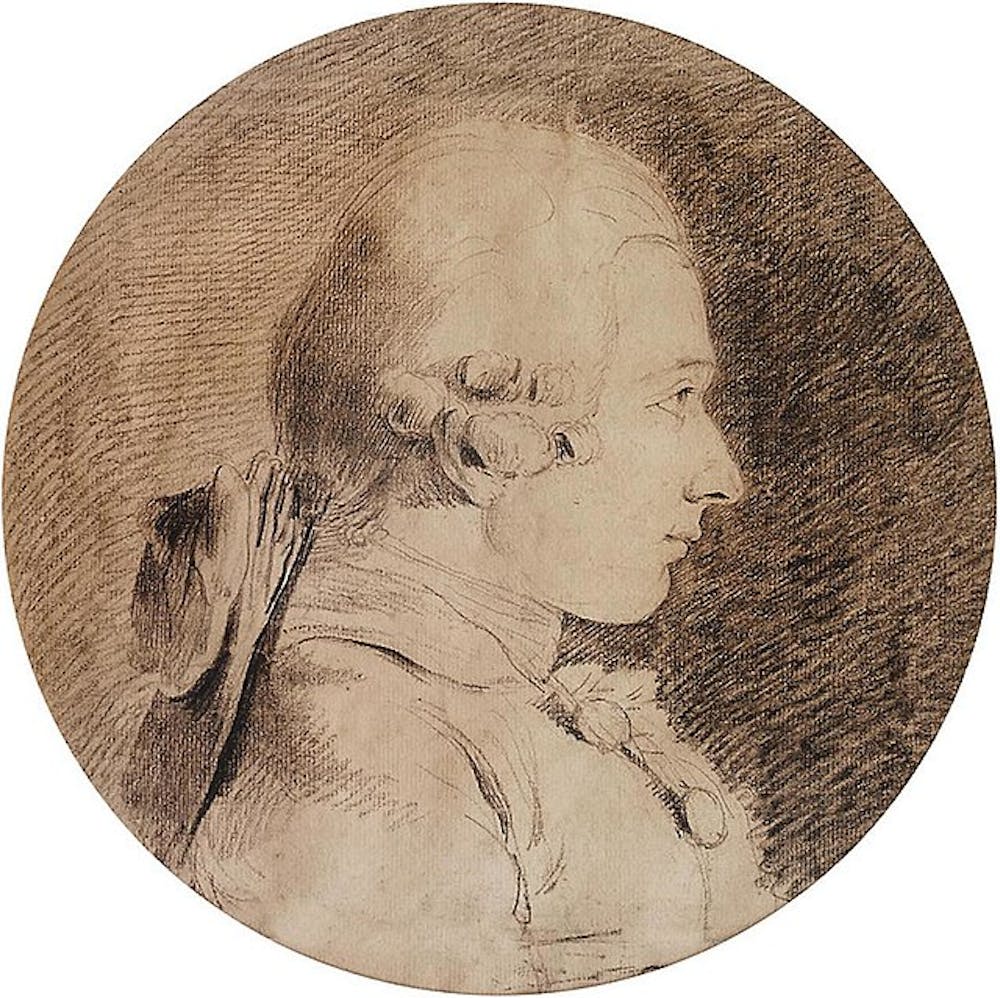 Donatien Alphonse François, better known as the Marquis de Sade (1740-1814), author of 120 Days of Sodom.
Public domain
For me, Lapvona was most reminiscent of the fantastical Sade pastiche that runs through A.S. Byatt’s Babel Tower. Both narratives feature vaguely defined time periods and geography. Both contain horrible events that are described by an arch, ironically detached narrator. Both confine more worldly and sensible older characters to the role of passive spectators and have bleak endings that serve to underpin the senselessness of all that has occurred.
In Babel Tower, the Sadean novel-within-a-novel is at least partially a parody. It skewers the empty pretension that often drives deliberately provocative fiction and the equally hollow and sanctimonious attempts to suppress such works. There seems to be a similar satirical edge to the narrative and language in Lapvona; it is all too heightened and extreme to be taken entirely seriously. But what, precisely, is being parodied?
As Hari Kunzru observes, the medieval setting of Lapvona is too thin and imprecise for it to be taken as a standard work of historical fiction. The novel demands to be received as a dark parable of some kind, but its commentary is unclear.
To view it as a simple satire of contemporary inequalities and exploitation – through the lens of Villiam’s callous and self-indulgent aristocratic privilege – would be almost trite. Indeed, the deliberately apolitical nature of Moshfegh’s work, explored in critic Andrea Long Chu’s blistering take-down of Lapvona, makes such an interpretation seem unlikely.
Read more:
Here comes the pandemic fiction: murder, disease and life after death in Steve Toltz's Here Goes Nothing
Persistent stupidity
If there is a message or meaning to be found in Lapvona then it possibly lies in the fact that Moshfegh’s extended descriptions of violent and horrific acts are not really the most “shocking” elements of the novel. What makes it more substantially confronting and difficult is the blunt, persistent stupidity of its characters.
It can be a struggle to read about stupid people doing stupid things and every resident of the fiefdom of Lapvona is very stupid, as the narrator takes pains to point out. Marek and Jude are both stupid in their religious faiths, which offer no protection from the vicissitudes of the world and blind them to their own brutality. Villiam’s delight in puerile entertainment is portrayed as stupid, as is Jacob’s naive belief in his youthful invulnerability.
Father Barnabas derides the stupidity of his parishioners, but the narrator is quick to note that he is himself a profoundly stupid and ignorant man. Even the characters who appear wise, Inga and Grigor, manage to convince themselves that they can only accept the stupidity around them, which is perhaps the most stupid act of all.
This may prove to be a stumbling block with Lapvona, even for readers who enjoyed Moshfegh’s earlier works. While those novels also deal with “unlikable” characters and dreadful, disgusting subjects, their first-person perspectives provide access to engaging, if unconventional, voices and minds.
Donatien Alphonse François, better known as the Marquis de Sade (1740-1814), author of 120 Days of Sodom.
Public domain
For me, Lapvona was most reminiscent of the fantastical Sade pastiche that runs through A.S. Byatt’s Babel Tower. Both narratives feature vaguely defined time periods and geography. Both contain horrible events that are described by an arch, ironically detached narrator. Both confine more worldly and sensible older characters to the role of passive spectators and have bleak endings that serve to underpin the senselessness of all that has occurred.
In Babel Tower, the Sadean novel-within-a-novel is at least partially a parody. It skewers the empty pretension that often drives deliberately provocative fiction and the equally hollow and sanctimonious attempts to suppress such works. There seems to be a similar satirical edge to the narrative and language in Lapvona; it is all too heightened and extreme to be taken entirely seriously. But what, precisely, is being parodied?
As Hari Kunzru observes, the medieval setting of Lapvona is too thin and imprecise for it to be taken as a standard work of historical fiction. The novel demands to be received as a dark parable of some kind, but its commentary is unclear.
To view it as a simple satire of contemporary inequalities and exploitation – through the lens of Villiam’s callous and self-indulgent aristocratic privilege – would be almost trite. Indeed, the deliberately apolitical nature of Moshfegh’s work, explored in critic Andrea Long Chu’s blistering take-down of Lapvona, makes such an interpretation seem unlikely.
Read more:
Here comes the pandemic fiction: murder, disease and life after death in Steve Toltz's Here Goes Nothing
Persistent stupidity
If there is a message or meaning to be found in Lapvona then it possibly lies in the fact that Moshfegh’s extended descriptions of violent and horrific acts are not really the most “shocking” elements of the novel. What makes it more substantially confronting and difficult is the blunt, persistent stupidity of its characters.
It can be a struggle to read about stupid people doing stupid things and every resident of the fiefdom of Lapvona is very stupid, as the narrator takes pains to point out. Marek and Jude are both stupid in their religious faiths, which offer no protection from the vicissitudes of the world and blind them to their own brutality. Villiam’s delight in puerile entertainment is portrayed as stupid, as is Jacob’s naive belief in his youthful invulnerability.
Father Barnabas derides the stupidity of his parishioners, but the narrator is quick to note that he is himself a profoundly stupid and ignorant man. Even the characters who appear wise, Inga and Grigor, manage to convince themselves that they can only accept the stupidity around them, which is perhaps the most stupid act of all.
This may prove to be a stumbling block with Lapvona, even for readers who enjoyed Moshfegh’s earlier works. While those novels also deal with “unlikable” characters and dreadful, disgusting subjects, their first-person perspectives provide access to engaging, if unconventional, voices and minds.
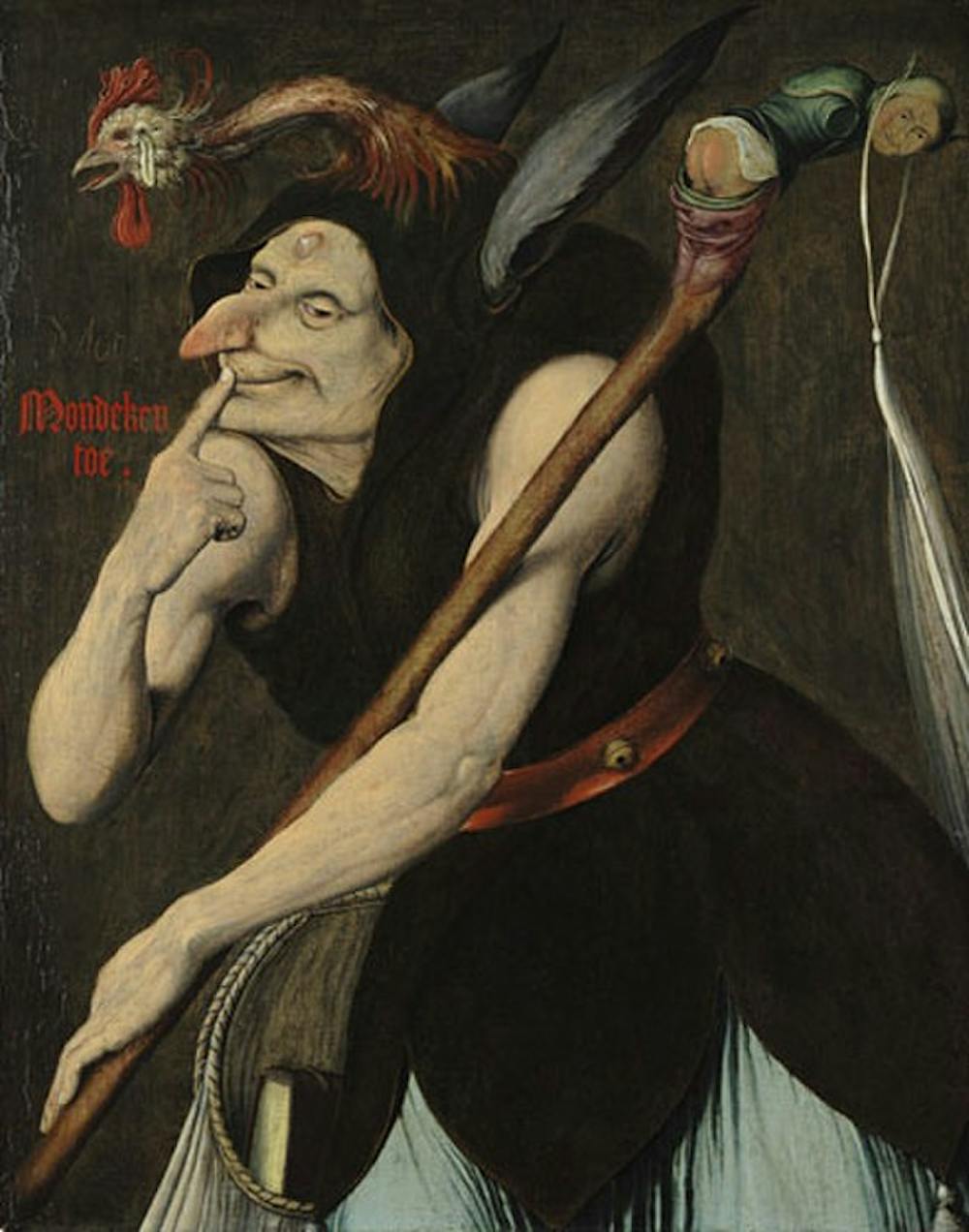 Allegory of Stupidity – Quentin Massys (c.1510).
Public domain
Literature has consistently shown us that we are able to sympathise with terrible people, if only momentarily. But how much sympathy are we able to muster for the stupid? It is a hard proposition, as Lapvona itself illustrates. As a rule, we are generally unforgiving of stupidity.
“Stupid” is our best insult and dismissal for views, opinions and beliefs that we do not want to entertain and activities we
find unpalatable. In darker moments, we give ourselves more leeway than we should to enjoy the humiliation and frustration of people that we judge to be stupid, in our personal and professional lives, in the news and media, and in fiction.
What makes it difficult to find this kind of pleasure in Lapvona’s narrative is the relentlessness with which Moshfegh hammers home her simple yet indisputable themes. Everyone is stupid. Everyone suffers.
Stupidity, as a category and tool – this handy, guilt-free way of neatly separating ourselves from others – is always a double-edged sword. How do we know that we are not the stupid ones?
Like all truly stupid people, none of the characters in Lapvona think they are stupid. But the distant, all-knowing, third-person narrator will not permit anyone their illusions of intelligence. The failings and insufficiencies of every character are coolly observed, their misapprehensions are painstakingly exposed.
Late in the novel, Villiam admits, almost touchingly, that he loves his lackey Father Barnabas, but the narrator is quick to remind the reader of his insurmountable limitations:
It wasn’t quite love that Villiam felt, but an enduring trust and a need for constant affirmation that was as good as love.
The eye of this particular god is exact and unsparing. The real shock and discomfort of Lapvona comes when you wonder what it would be like to squirm beneath its gaze. My life is all cleverness and logical development in the first-person, but any sufficiently distant and knowledgeable third-person narrator could easily break it down into thoughtless happenstance and reveal yet another deeply stupid man.
Authors: Julian Novitz, Senior Lecturer, Writing, School of Media and Communication, Swinburne University of Technology
Allegory of Stupidity – Quentin Massys (c.1510).
Public domain
Literature has consistently shown us that we are able to sympathise with terrible people, if only momentarily. But how much sympathy are we able to muster for the stupid? It is a hard proposition, as Lapvona itself illustrates. As a rule, we are generally unforgiving of stupidity.
“Stupid” is our best insult and dismissal for views, opinions and beliefs that we do not want to entertain and activities we
find unpalatable. In darker moments, we give ourselves more leeway than we should to enjoy the humiliation and frustration of people that we judge to be stupid, in our personal and professional lives, in the news and media, and in fiction.
What makes it difficult to find this kind of pleasure in Lapvona’s narrative is the relentlessness with which Moshfegh hammers home her simple yet indisputable themes. Everyone is stupid. Everyone suffers.
Stupidity, as a category and tool – this handy, guilt-free way of neatly separating ourselves from others – is always a double-edged sword. How do we know that we are not the stupid ones?
Like all truly stupid people, none of the characters in Lapvona think they are stupid. But the distant, all-knowing, third-person narrator will not permit anyone their illusions of intelligence. The failings and insufficiencies of every character are coolly observed, their misapprehensions are painstakingly exposed.
Late in the novel, Villiam admits, almost touchingly, that he loves his lackey Father Barnabas, but the narrator is quick to remind the reader of his insurmountable limitations:
It wasn’t quite love that Villiam felt, but an enduring trust and a need for constant affirmation that was as good as love.
The eye of this particular god is exact and unsparing. The real shock and discomfort of Lapvona comes when you wonder what it would be like to squirm beneath its gaze. My life is all cleverness and logical development in the first-person, but any sufficiently distant and knowledgeable third-person narrator could easily break it down into thoughtless happenstance and reveal yet another deeply stupid man.
Authors: Julian Novitz, Senior Lecturer, Writing, School of Media and Communication, Swinburne University of Technology 
















