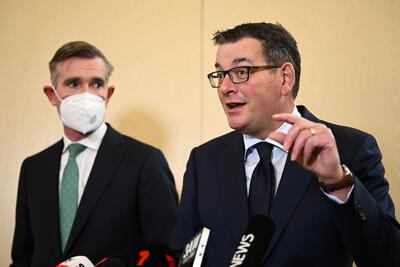
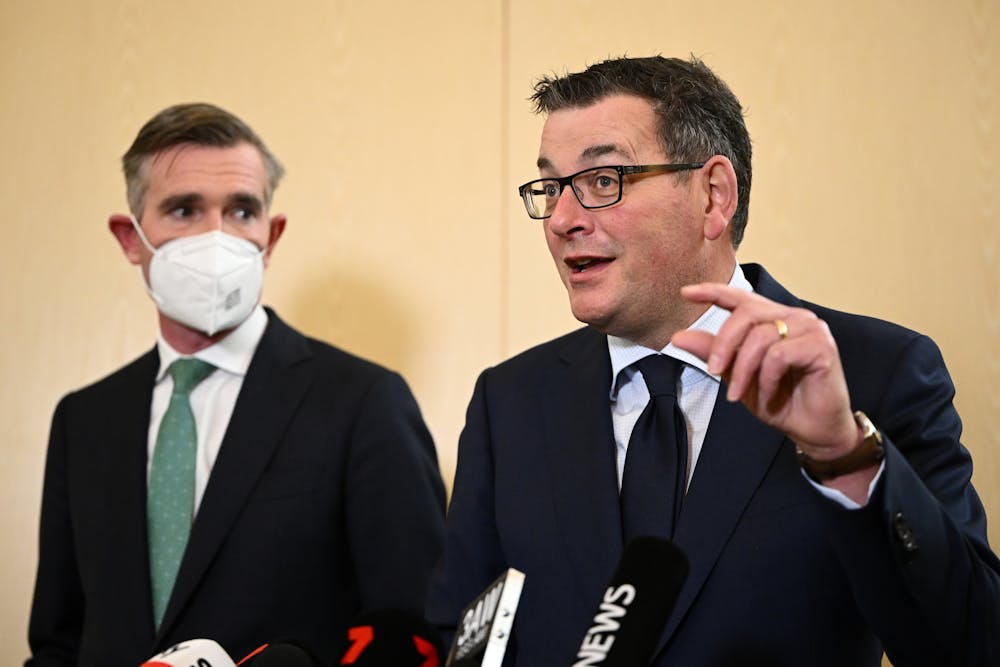
Cutting COVID isolation and mask mandates will mean more damage to business and health in the long run
- Written by Nancy Baxter, Professor and Head of Melbourne School of Population & Global Health, The University of Melbourne
From Friday September 9, the isolation requirements for people with COVID and no symptoms will be cut from seven days to five days. Masks will no longer be required on domestic flights.
While Australian Medical Association President Steve Robson called for the release of the science behind the National Cabinet decision, the change shows we are now rapidly pushing towards a “business-as-usual” pandemic. This political strategy requires the elimination of protections or restrictions, so that life and business can go “back to normal”.
But life is nowhere near normal. COVID is the third most common killer of Australians, with 11,746 deaths so far this year. And there is mounting evidence survivors of COVID face the risk of long-term health effects on the lungs, heart, brain and immune system.
In reality, there is no going back to normal now we are living with COVID.
Balancing risk
So what is driving these changes and what will the impact be?
First and foremost, there is no scientific basis for the change. We know that people vary in terms of how long they remain infectious with COVID after testing positive.
Setting a reasonable duration of isolation depends on balancing the risk to the community of ongoing transmission and the benefit of enabling individuals with COVID to go back to work, school and normal activities as quickly as possible. Seven days was already a compromise. And now New South Wales premier Dominic Perrottet has called for isolation to be scrapped altogether. Has the evidence changed with respect to this balance?
There are a number of recent studies in vaccinated people in the Omicron era evaluating how long people shed virus and are potentially infectious after testing positive for COVID. This fresh research shows a significant number of people (between one-third and one-half) remain infectious after a five-day isolation period. Another study shows two thirds are infectious after this time.
So, of the 11,734 people reported to be COVID positive on September 1, at least 3,900 would still be infectious on day five. If released from isolation, they could infect others.
With onward transmission, this could result in many additional COVID cases that would not have occurred if an isolation period of seven days had been retained.
While the reduction of the duration of isolation applies only to people who do not have symptoms, it is well accepted transmission without symptoms occurs. Unfortunately, our politicians have equated the absence of symptoms with the inability to transmit the virus to justify the changes. Decision-makers clearly need to be better informed.
Read more: Should states cut COVID isolation from 7 to 5 days? Here's what they'll need to consider
But what about businesses?
Mandatory isolation places stress on people and businesses. But with numbers of COVID cases falling from the peaks of the BA.4/5 wave throughout Australia, fewer people are now testing positive for COVID than at any time this year. The pressure on individuals and businesses due to mandatory isolation is at a low point for 2022.
So why make the change now? Perhaps the hope is that while we are experiencing reduced transmission due to the large number of people recently infected with COVID, easing our protections will not lead to an immediate increase in cases.
In this confidence trick, politicians can make these changes with no apparent impact. They will continue to do so until all mitigations against transmission are gone. This is all part of a strategy which, in the words of the NSW premier, has “less reliance on public health orders and more reliance on respecting each other”. As if the two concepts are mutually exclusive instead of mutually reinforcing.
Unfortunately, reinfection is common, and we will face another epidemic wave in the future, likely before the end of the year. Then our systematic dismantling of all existing protections will make the next wave come on sooner and affect more people.
 Passengers on domestic flights will no longer need to wear masks.
Gerrie van der Walt/Unsplash, CC BY-SA
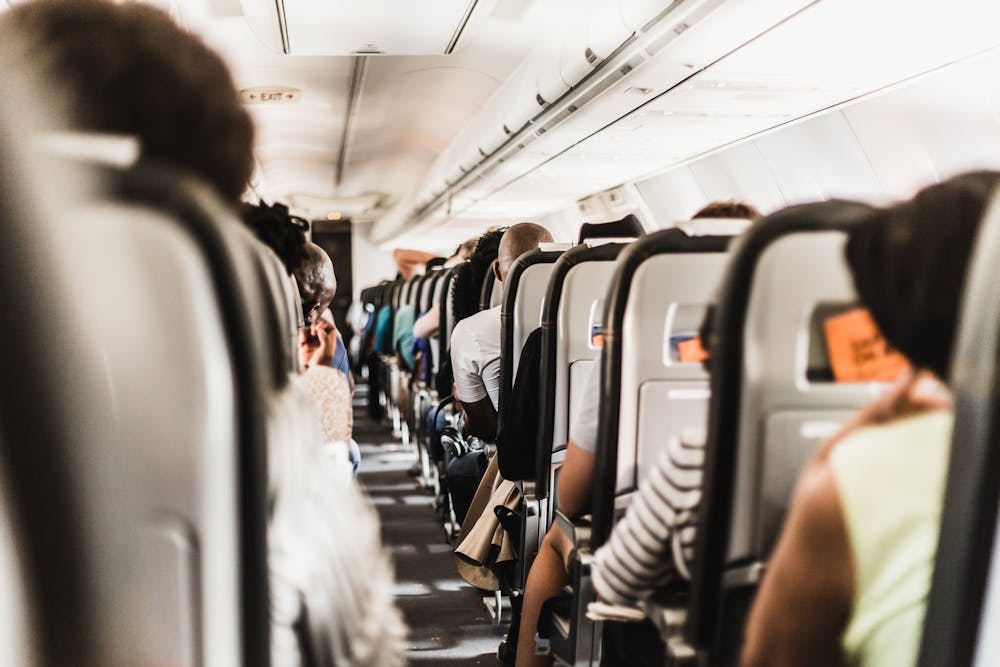
Passengers on domestic flights will no longer need to wear masks.
Gerrie van der Walt/Unsplash, CC BY-SA
Mitigate transmission instead
Allowing a substantial proportion of people to go back to work while still infectious is not a solution to solving the workforce disruptions COVID is still causing. This is because there will be an increase of infections in workplaces and schools due to the shortened isolation. When our next wave comes, this will result in even more people being furloughed because they are sick with COVID or caring for others, defeating the ultimate purpose of the change.
And, as we have learned with the BA.5 wave – the highest number of people hospitalised with COVID in Australia since the beginning of the pandemic – reintroducing mandates once they have been removed does not happen even when medically advised. Once a protection is relaxed there is no going back – it’s a one-way road.
The best way to protect business interests and keep the economy productive is to mitigate transmission of SARS-CoV-2 (the virus that causes COVID) as best we can using a vaccine-plus strategy.
In other countries that have shortened the isolation and then abandoned it altogether, such as in the United Kingdom, transmission has only been worsened and the economic impacts compounded.
Removing mask mandates on planes will mean a greater risk of having your travel disrupted by COVID and also of airport disruptions because of flight crew off sick from increased exposure.
Read more: Want to cut your chance of catching COVID on a plane? Wear a mask and avoid business class
By reducing isolation and thereby increasing workplace transmission, we make the workplace less safe. The rights of people to a safe workplace must be considered alongside business continuity.
Allowing increased transmission will impact the economy by resulting in higher numbers of people affected by long COVID. In the UK, the model we appear to be emulating, up to one in four employers are reporting their productivity is affected by long COVID.
The move to a business-as-usual pandemic leaves us unnecessarily vulnerable and will ultimately disrupt business even more.
The emergence of COVID variants that are more and more infectious and increasingly vaccine-resistant, along with the simultaneous removal of mitigations such as isolation and masks, dooms us to recurrent and disruptive waves of disease.
Our best chance of business continuity is not the one-way road to a disruptive business-as-usual pandemic but a layered strategy. This would include improved booster rates, safer indoor air, masks in public indoor settings and maintaining the current isolation period for those with COVID.
Authors: Nancy Baxter, Professor and Head of Melbourne School of Population & Global Health, The University of Melbourne