

Migration boost is bad news for Australia's environment – we mustn't ignore that
- Written by Ian Lowe, Emeritus Professor, School of Science, Griffith University
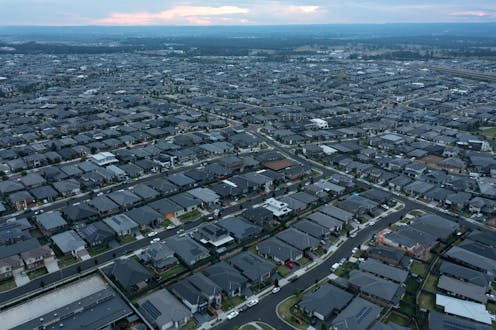
An increase in the permanent migrant intake to 195,000 this year is one of the jobs summit outcomes announced by the federal government on Friday. The business community pushed for this change, saying shortages of skilled employees are holding back the economy.
The downsides of increasing migration, which will almost certainly worsen our environmental problems, weren’t mentioned. We can expect public debate about lifting migration to pre-pandemic levels. It’s essential for this debate to consider the whole picture: the economic, social and environmental issues.
Migration has environmental impacts because it increases our population, with proportional increases in resource use and waste products. Our population has grown by 50% since 1990, from 17 million to almost 26 million today. Our energy use has risen from 4,000 petajoules a year to 6,200, increasing our greenhouse gas emissions by around 50%.
The demands of the human population are causing, directly or indirectly, all of Australia’s serious environmental problems.
Read more: View from The Hill: Summit triggers immediate action and elevates gender equality
Pressures on the environment are growing
Since 1996, there have seen six independent State of the Environment reports to the Australian government. I chaired the advisory council that produced the first.
This 1996 report found much of Australia’s environment was in good condition by international standards. But we also had serious problems: loss of biodiversity, the state of inland rivers, degradation of productive land, pressures on the coastal zone, and increasing greenhouse gas emissions.
The five reports since then have documented the worsening of those problems. The most recent report said our environment is in poor condition and deteriorating. It found “many species and ecosystems are increasingly threatened” and noted “abrupt changes in ecological systems” in recent years.
As the 1996 report said, no single government or commercial sector is to blame for our environmental problems. In a sense, we are all indirectly responsible. The issues are the cumulative consequences of the growth and distribution of our population, our lifestyle choices, the technologies we use and the demands we make on our natural resources.
The latest report observes:
“Humans drive many of the pressures on our environment. Our activities, settlements and use of resources all affect the environment and its assets in different ways.”
The report notes the particular pressures of population growth on the coastal zone, where most Australians live. Australian cities are growing faster than those in most other affluent countries, it says.
That growth has increased demand for resources such as water and energy as well as increasing impacts such as “urban heat, congestion, pollution and waste”. The demands of a growing population have led to land clearing, reduced green space, more pollution and the loss of biodiversity.
Today’s decisions shape tomorrow’s Australia
The decisions being made now have a substantial effect on what Australia will look like in the future. As a report I wrote with Jane O'Sullivan and Peter Cook in February this year said, with net migration below 60,000 a year the population would stabilise around 30-35 million by 2050. The newly announced 195,000 a year could lift it to about 40 million.
It is sometimes claimed migration simply shifts environmental impacts from one country to another and so does no extra damage to the planet. This would be true if migrants all came from countries with the same resource demands as us. But most economic migrants come to Australia precisely because our material standard of living is higher and they want to enjoy those benefits.
Pre-pandemic figures from 2016-17, for example, showed about 170,000 migrants coming from countries with much lower resource use. About 50,000 came from affluent countries in which resource use is typically about half that in Australia. Only about 5,000 were from places where material demand is similar to ours.
Read more: Chinese migrants follow and add to Australian city dwellers' giant ecological footprints
No doubt we could do many things to reduce the impacts of our growing population. We could, for instance, improve urban planning. We could also shift more rapidly to cleaner energy systems that embrace efficiency improvements recommended nearly 20 years ago to the Howard government. And we could adopt legally enforceable national environmental standards, as recommended by the 2020 Samuel review, which found our environmental laws are ineffective.
The fundamental need, though, is to upgrade our decision-making so environmental issues are always part of the calculus. Current thinking seems to presume the economy has over-riding importance and the environment just has to cope with the impacts.
Even the economic benefits are debated
Even the view that increasing migration produces economic benefits is not universal among economists. A 2016 Lowy Institute report, citing published research and a Productivity Commission report, claimed “a sustained high rate of net immigration […] appears to be necessary to stave off long-term population decline and is likely to result in higher GDP per capita and labour productivity”. On the other hand, economics professor John Quiggin points to “the net costs imposed on the community as a whole by increased migration”.
A 2014 OECD review referred to a study of impacts of migration to OECD countries. It concluded “the impact of the cumulative waves of migration that arrived over the past 50 years […] is on average close to zero”. It was positive in some cases, negative in others, “rarely exceeding 0.5 per cent of GDP”.
Read more: Is education or immigration the answer to our skills shortage? We asked 50 economists
Even those who believe increasing migration has economic benefits, such as the Lowy Institute report authors, concede that “accompanying policies are necessary to ensure that these net benefits are distributed fairly and that the social and environmental effects of increased population are managed properly”.
Increasing public hostility to high levels of migration is a direct consequence of failure to manage the social impacts. Urban infrastructure has not kept pace with increasing demands. As a result, the three in four Australians who live in our major cities see their quality of life getting worse.
We can’t ignore the big picture
Unless we reduce our demands per person, our growing population inevitably increases pressures on our environment. We need to look beyond simplistic economic assumptions and consider the whole picture.
As the latest State of the Environment report concludes:
“Our health, living standards, cultural and spiritual fulfilment and connection to country are all interconnected and are negatively impacted by our deteriorating environment.”
Authors: Ian Lowe, Emeritus Professor, School of Science, Griffith University

















