

Modern Australian
The Times

Microplastics are common in homes across 29 countries. New research shows who's most at risk

  • Written by Mark Patrick Taylor, Chief Environmental Scientist, EPA Victoria; Honorary Professor, School of Natural Sciences, Macquarie University

Microplastics are common in homes across 29 countries. New research shows who's most at risk

The evidence is clear: microplastics have contaminated every corner of the globe. We can’t escape exposure to these tiny bits of plastic (less than 5mm across) in the environment, which includes the homes where people spend most of their time.

Recent research has discovered microplastics in the blood of humans. However, the question of harm to humans remains unresolved. Despite concerns that some substances in microplastics could cause cancer or damage our DNA, we still have a poor grasp of the true risks of harm.

Our study of global microplastics exposure inside homes across 29 countries, published today, shows people living in lower-income countries and young children are at greater risk of exposure. But our analysis of the chemical composition of microplastics in the home shows the specific health risk is surprisingly low. The study covered all the continents, including Australia.

The current challenge in understanding health risks from microplastics is the very limited data on toxic effects of the petrochemicals used in plastics production.

A recurrent theme in the environmental health research literature is that early concerns about suspect chemicals and related compounds, including those found in plastics, were eventually justified. The effects of suspect substances only become clear after extensive toxicological and epidemiological research.

Read more: You're eating microplastics in ways you don't even realise

What did the new study look at?

Our study investigated three main questions relating to exposure to microplastics inside homes:

  1. what are the impacts in different countries across the world?

  2. who is most at risk?

  3. what are the specific health risks?

We reached out to residents across 29 countries to collect their indoor atmospheric dust over a one-month period. At 108 homes sampled across these countries, we also collected information about households and behaviours. This helped us to better understand possible sources and causes of microplastics in dust. These data included:

  • how often floors were cleaned

  • flooring type

  • presence or absence of children

  • number of people living in each home

  • percentage of full-time workers.

In each home, atmospheric dust particles were collected in specially cleaned and prepared glass Petri dishes. We measured the levels of microplastics in the collected dust using a suite of microscopic techniques and instruments. We used infrared spectroscopy – which identifies substances by how they interact with light – to determine the chemical composition of these microplastics.

Read more: House dust from 35 countries reveals our global toxic contaminant exposure and health risk

What did the study find?

The household dust contained a wide variety of synthetic polymer fibres. The most common were:

  • polyester (as polyethylene terephthalate) at 9.1%, which is used in clothing fabrics

  • polyamide (7.7%), which is mainly used in textiles

  • polyvinyls (5.8%), which are used in floor varnishes

  • polyurethane (4.4%), which is used in surface coatings of furniture and in bedding

  • polyethylene (3.6%), a common polymer used in food containers and reusable bags.
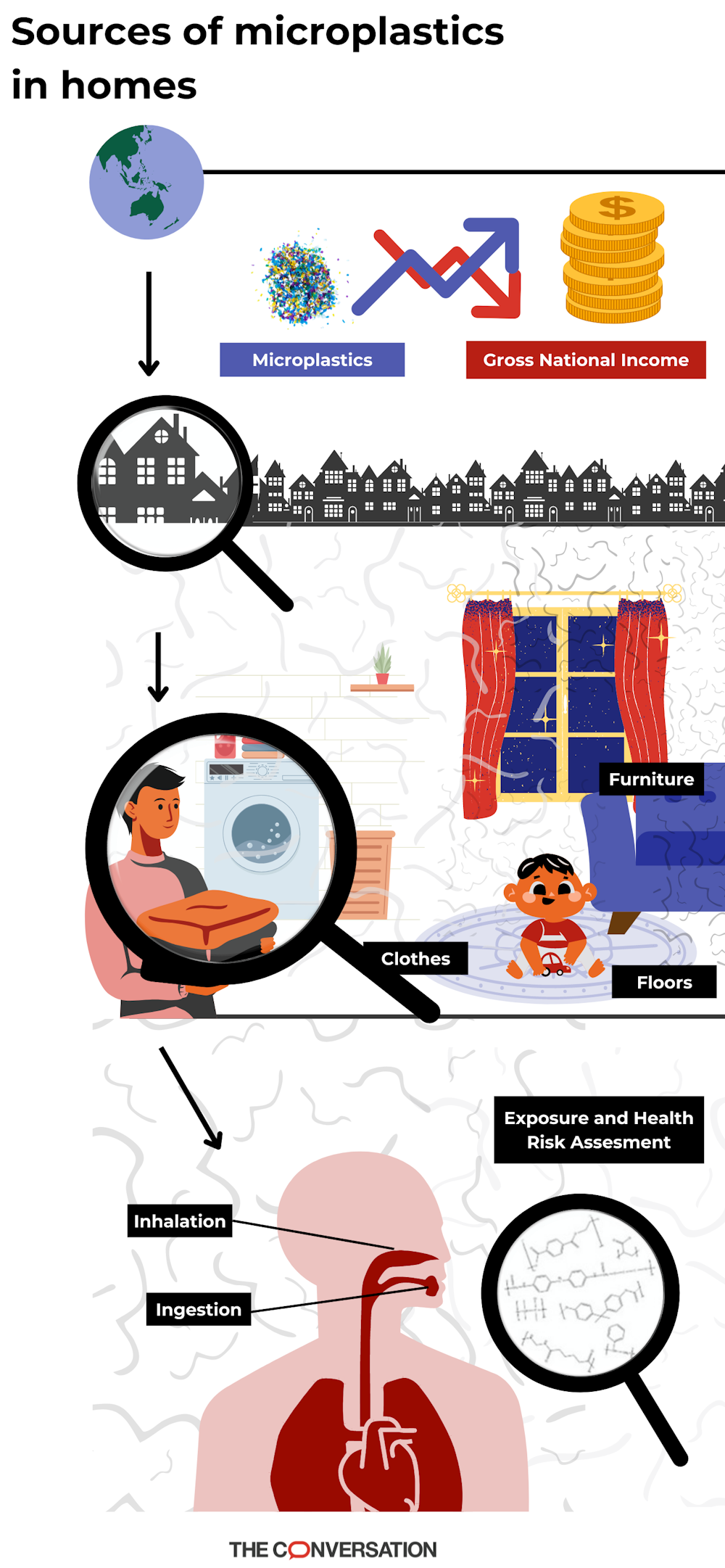
Author provided, The Conversation We examined the prevalence and risk of microplastics according to the gross national income of each country, grouped as low, medium and high-income (such as Australia). Overall, we found lower-income countries have higher loads of microplastics, which were deposited at an average daily rate of 3,518 fibres per square metre. The rates for medium-income and high-income countries were 1,268 and 1,257 fibres/m²/day. In low-income countries, the most prevalent synthetic polymer fibres were made of polyurethane (11.1% of all fibres in samples). In high-income countries, polyamide and polyester were the most prevalent microplastic types (11.2% and 9.8% respectively). So what are the health risks? For the first time we could attribute the health risk across countries according to incomes. Our analyses showed lower-income countries are at higher risk from microplastic pollution. This aligns with research findings on other toxic exposures – poorer countries and people are most at risk from pollution. Nevertheless, we found the overall risk from microplastics exposure was low. We used the US Environmental Protection Agency’s toxicity information on polymers in the microplastics to calculate health risk based on the types and levels we detected. Low-income countries had a higher lifetime risk of cancers due to indoor microplastic exposure at 4.7 people per million. High-income countries were next at 1.9 per million, with medium-income countries at 1.2 per million. We attributed these differences in cancer risk to the different percentages of carcinogenic substances in the microplastics found in household dust. We calculated the sum of the carcinogenic risk from inhalation and ingestion of the following chemicals in the microplastic fibres: vinyl chloride (polyvinyl chloride), acrylonitrile (polyacrylics) and propylene oxide (polyurethane). Because toxicity data for polymers are limited, the assessment was a minimum estimate of true risk. Children are at greater risk irrespective of income, which is true for many types of environmental exposures. This is because of their smaller size and weight, and tendency to have more contact with the floor and to put their hands in their mouths more often than adults. Our analysis indicated that the microplastics came mainly from sources inside the home, and not from outside. Synthetic polymer-based materials are used widely in high-income countries in products such as carpets, furniture, clothing and food containers. We anticipated levels of microplastic shedding in the home might be greater in these countries. However, analysis of the data showed the only factor obviously linked with levels of microplastics in deposited dust was how often they were vacuumed. Frequent vacuuming reduces microplastic levels. Vacuuming was more frequent in higher-income countries. Factors that influence the type of cleaning include people’s preference for sweeping and mopping versus vacuuming, as well as their access to and capacity to afford electronic vacuum cleaners. Person vacuuming a rug on a timber floor in the home The levels of microplastics in the home appear to be reduced by frequent vacuuming. Liliana Drew/Pexels Read more: We're all ingesting microplastics at home, and these might be toxic for our health. Here are some tips to reduce your risk What can we do to reduce the risks? Based on this and our previous study data, it is clear vacuuming regularly, instead of sweeping, is associated with less airborne microplastics indoors. Other obvious actions – such as choosing natural fibres for clothing, carpets and furnishings instead of petrochemical-based polymer fibres – can reduce the shedding of microplastics indoors. Future research needs to focus on developing more complete profiles of the harmful effects of each of the toxic petrochemical-based synthetic polymers that can produce microplastics. This will give us a better understanding of the risks of exposure to these ubiquitous pollutants. Authors: Mark Patrick Taylor, Chief Environmental Scientist, EPA Victoria; Honorary Professor, School of Natural Sciences, Macquarie University

Read more https://theconversation.com/microplastics-are-common-in-homes-across-29-countries-new-research-shows-whos-most-at-risk-189051

Why Regular Skills Updates Are Essential for Licensed Security Officers

A guard at a Brisbane shopping centre gets a call about a shoplifter who's turned aggressive.  They’ve done the job for six years. But their de-...

10 Benefits of Choosing Professional Tutoring Penrith Services

Every student has unique learning strengths, challenges, and academic goals. While classroom teaching provides essential knowledge and structure, so...

Sunshine Coast Baby Classes Prove Big Hit Among First-Time Mums

There's a movement gaining traction on the Sunshine Coast, providing a village of support, socialisation and relief for first-time mothers and babie...

Father's Day Gift Ideas for Men Who Are Hard to Buy For

Some dads are easy to buy for. Others do not want anything, already have everything, or give you the classic "don't worry about me" answer every yea...

Top 5 Mistakes That Wear Out Your Brakes Faster

Brakes don't need frequent replacements like oil changes do.   But a lot of the wear happens quietly, over months, because of habits most drivers...

Plantation Shutters vs Curtains: Which Is Better for Your New Home?

Moving into a new home is an exciting opportunity to personalise your space and make it your own. While many homeowners focus on furniture, flooring...

Celebration of Life vs Traditional Funeral: What's the Difference?

When saying goodbye to someone you love, there is no single way to honour their life. Every family has different traditions, beliefs, and preference...

Building Approval for Roofing Projects: What Homeowners Need to Know

Roofing projects are an important part of maintaining and protecting your home. Whether you're repairing storm damage, replacing an ageing roof, or ...

Chatswood Tutoring And Its Role In Academic Achievement

Academic success often requires more than classroom attendance alone. Students face increasing expectations as they progress through school, particu...

Why Laser Hair Removal Treatments Continue Growing In Popularity

Managing unwanted hair can become time-consuming and frustrating for many people, especially when shaving, waxing, and other temporary methods requi...

Choosing the Right Devices for a Flexible Workplace

For IT leaders managing large fleets, the device layer is where workforce productivity and security policy meet. The shift towards flexible and hybrid...

How Business Advisory Services Help Companies Achieve Sustainable Growth

Every business owner aims to build a profitable and sustainable organisation. While dedication, innovation, and hard work are important, achieving l...

Why Body Contouring Has Become A Popular Cosmetic Treatment

Many people maintain healthy lifestyles through regular exercise and balanced eating habits but still struggle with stubborn areas of fat that are d...

How to Choose the Right POS Hardware for Your Business in Australia

A lot of Australian business owners spend weeks researching POS software but buy hardware almost as an afterthought. That's a mistake. The wrong har...

Why Material Handling Hose Is Critical for Industrial Efficiency

A high-performance material handling hose is an essential component in industries that transport abrasive, dry, or bulk materials on a daily basis...

How to Choose the Right Lawyer in Melbourne for Your Situation

Choosing legal support can feel difficult, especially when the stakes are personal or business-related. The right lawyer in Melbourne should underst...

Hoteliers Look to Clever Value Adds to Increase Revenue

The Australian hospitality industry is still in recovery mode after a notoriously rough patch in recent years. While there has been a post-COVID tra...

Moving to Queensland? Here’s How to Prep Your Car for the Big Move North

There’s no sign of the northern migration slowing down, with thousands of southerners fleeing from chaotic lifestyles and cooler climates for a brig...

















